

Thailand reclaims top spot for Chinese tourists as Japan loses favour
Shifting travel patterns highlight how diplomatic ties, safety perceptions are reshaping spending habits
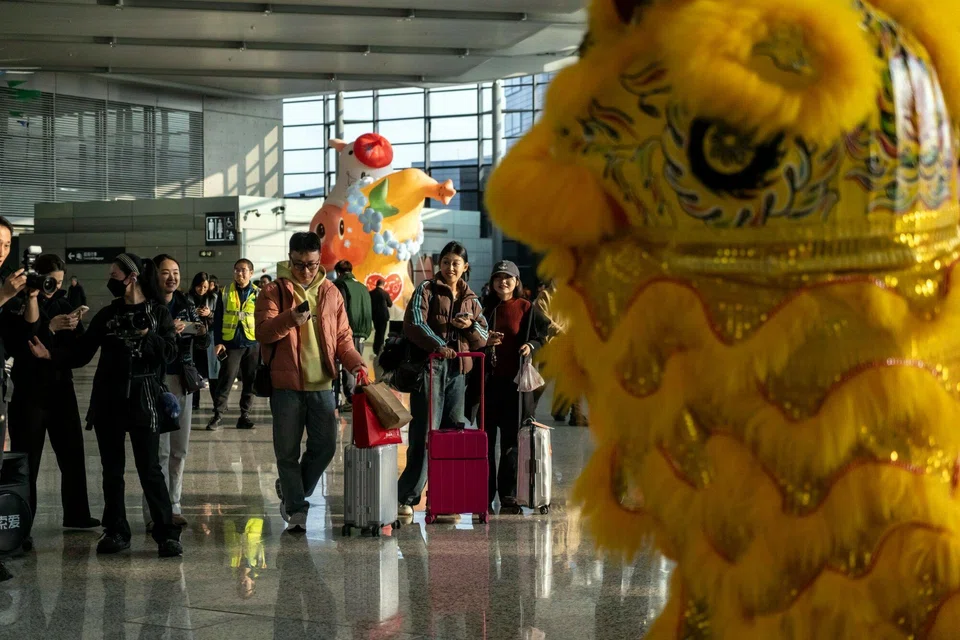
THAILAND has regained its status as the top destination for Chinese tourists, driven by demand for Chinese New Year travel, while interest in Japan has plummeted following government warnings.
The shifting travel patterns for the upcoming holiday highlight how diplomatic ties and safety perceptions are reshaping the spending habits of Chinese consumers, diverting flows away from North-east Asia towards South-east Asia and emerging destinations such as Uzbekistan.
Roughly half of outbound flights on Sunday (Feb 15) were destined for South-east Asia, according to aviation data provider Flight Master. Among them, 157 round-trip flights operated between China and Thailand, the highest volume among all outbound routes.
Over the week ending Sunday, China-Thailand routes averaged 148 flights per day, slightly above the same period last year but still below pre-pandemic levels in 2019.
Thailand ranked as the top outbound destination for Chinese travellers during the week, followed by South Korea, Malaysia, Japan, Vietnam, Singapore, Russia, Australia, Cambodia and Indonesia, Flight Master data showed.
Among these markets, Malaysia, Indonesia and Vietnam recorded the fastest year-on-year growth in average daily flights, rising 32.43 per cent, 31.58 per cent and 27.12 per cent, respectively. By contrast, average daily flights between China and Japan fell by nearly 50 per cent.
“We’re extremely busy – customer service can barely keep up with inquiries,” a vendor specialising in South-east Asian tours told Caixin on Monday, adding that the surge in demand had “exceeded our expectations”.
The vendor said the downturn in demand for Japan had redirected a portion of outbound travellers towards South-east Asia, primarily Thailand and Malaysia.
Confidence in Thailand had previously been shaken by a series of incidents, including the disappearance of actor Wang Xing in the country.

The market’s rebound, however, has coincided with a sharp deterioration in travel sentiment towards Japan, after tensions between China and Japan escalated following controversial remarks on Taiwan by Prime Minister Sanae Takaichi in November. Later that month, Beijing urged citizens to avoid visiting Japan, triggering a steep decline in flights to the country.
On Jan 26, China’s Foreign Ministry again warned against Chinese New Year travel to Japan, citing local security concerns and repeated earthquakes in some regions.
New frontiers
Meanwhile, visa-free policies are opening up new frontiers for long-haul travel. Bookings for hotel stays in Uzbekistan during the Chinese New Year holiday quadrupled, the fastest growth among all destinations tracked by travel platform Qunar, while bookings for Turkey increased 1.5 times, the platform said.
One Chinese traveller planning a Chinese New Year trip to Uzbekistan said the country has gained popularity since a mutual visa-exemption agreement took effect last year, while prices remain comparatively low – round-trip airfares of about 2,800 yuan (S$512) and hotel rates around 200 yuan per night, significantly cheaper than domestic destinations such as Xinjiang or popular South-east Asian resorts.
Overall, the outbound market is showing resilience. Data from flight tracker Umetrip showed that international airline ticket bookings for the holiday had surpassed 220,000 as at Monday, marking an average daily increase of 8 per cent compared with the 2025 holiday period.
Passenger volumes on international routes since the start of the travel rush have exceeded 1.82 million, up from a year earlier. CAIXIN GLOBAL
Decoding Asia newsletter: your guide to navigating Asia in a new global order. Sign up here to get Decoding Asia newsletter. Delivered to your inbox. Free.
Share with us your feedback on BT's products and services
TRENDING NOW

High Court rules against Julius Baer’s Singapore trust arm in US$50 million family trust dispute

MSCI proposes standalone status for Indonesia; Jakarta stocks plunge 8%

Once staunchly pro-China, Malaysian Chinese businesses are now distancing themselves from Beijing

No chicken feed: How Malayan Flour Mills built an empire from flour to fowl

