

Thailand says weak baht aiding tourism resurgence and growth

A WEAKER baht is supporting Thailand’s post-pandemic tourism recovery, which is key to shoring up the nation’s economic performance, the country’s finance minister Arkhom Termpittayapaisith has said.
“Thailand is value for money,” he said in an interview on the sidelines of the Asia-Pacific Economic Cooperation (Apec) finance ministers meeting in Bangkok, highlighting the nation’s appeal to travellers looking for bargains. The baht’s prolonged weakness will “surely” help get more foreigners back, he said.
The weakness in the local currency – South-east Asia’s second-worst performer this year – may linger through 2024, he said, adding that it’s still competitive, and that the central bank need not worry about capital outflows as much as other economies. The baht fell 0.2 per cent against the dollar in mid-afternoon local time, halting two days of gains.
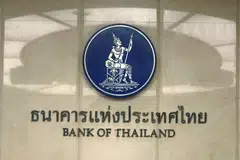
Arkhom’s comments suggest that the benefits of a weaker currency outweigh the negatives at the moment for the tourism-reliant economy, and that the measured approach to tightening monetary policy by the Bank of Thailand (BOT) was appropriate in a world where central banks led by the Federal Reserve are employing large interest-rate hikes to fight inflation.
The finance chief, who doesn’t see the Fed halting rate hikes anytime soon, said the BOT’s gradual tightening – two 25-basis-point increments last quarter – is helping recovery to gain traction, even as inflation is near a 14-year high.
Gross domestic product is expected to rise 3.7 per cent next year, faster than the 3-3.5 per cent pace projected for this year, thanks to the return of foreign visitors, said Arkhom.
Dollar flows
Economists at DBS Bank in Singapore expect the nation’s tourism recovery to gain “further traction” next year and support a 4.2 per cent growth pace. Fitch Ratings sees a Thai expansion similar to DBS’, and said it’s one of the few markets where growth is projected to accelerate in 2023. “The recovery of tourism is gaining momentum,” Fitch said.
As tourism revenue comes back, more dollars will flow in to support the baht and the current account and to rebuild reserves that have plunged to a five-year low due in part to revaluation, he said.
Thailand, where tourism accounts for 12 per cent of the gross domestic product and a fifth of jobs, is betting that “revenge spending” by foreign visitors lured by its broad reopening will rev up recovery. Its growth is trailing regional peers after two years of pandemic kept tourists away, costing billions of dollars in an economy that hosted as many as 40 million overseas a year before the virus outbreak.
SEE ALSO




Thailand is seeing more visitors from neighbouring countries as well as India and the Middle East to help offset the absence of Chinese nationals restricted by Beijing’s lockdown.
Before the pandemic, Chinese nationals accounted for almost 30 per cent of overseas visitors. Thailand said arrivals totalled 6.48 million this year through Oct 9.
Here are other comments by Arkhom from the interview:
- Thailand is considering some targeted stimulus by year-end, and is likely to implement more measures or extend existing ones to protect households from higher energy costs;
- While a net-oil importer, Thailand is a food exporter and doesn’t have to worry about food security unlike other nations;
- Many businesses in Thailand are happy with the baht’s weakness, but the minister has called for better cost efficiency and use of local materials to prepare for when the currency eventually appreciates;
- The current floods will have little effect on GDP, and this year’s affected areas are the equivalent of only a third of the total area underwater during the 2011 floods. BLOOMBERG
Decoding Asia newsletter: your guide to navigating Asia in a new global order. Sign up here to get Decoding Asia newsletter. Delivered to your inbox. Free.
Share with us your feedback on BT's products and services
TRENDING NOW

Once staunchly pro-China, Malaysian Chinese businesses are now distancing themselves from Beijing

Could stablecoins be the future of money?

Grab CEO’s wife Chloe Tong on life with Anthony Tan and finding her purpose

Malaysia suspends sale of Chery Omoda 5 after viral incident; Singapore cars not affected

