

The wealthy should not be expected to bear most or all of Singapore's tax burden: Lawrence Wong
 Add BT as a preferred source
DeeperDive is a beta AI feature. Refer to full articles for the facts.
Singapore
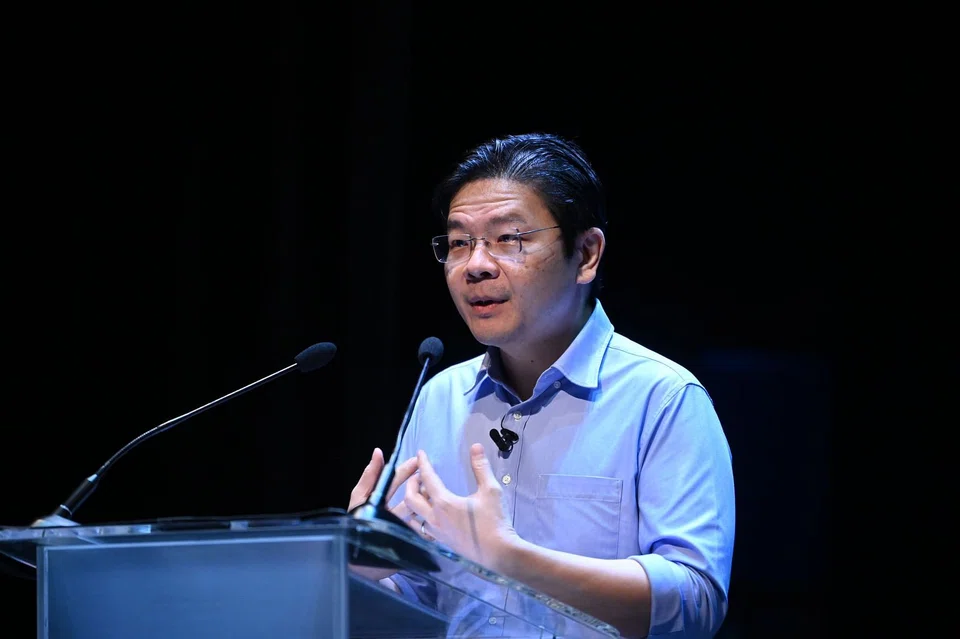
IT is not feasible for Singaporeans to expect that most or all of the country's tax burden should be the responsibility of the wealthiest people as this would be "grossly unfair" for them, said Finance Minister Lawrence Wong.
The government has done a careful assessment of its latest enhancements to the tax regime and there is a limit to how much taxes can increase for the top earners, he said during a televised roundtable on Tuesday night (Feb 22).
In his Budget speech, Wong announced several tax changes including a higher personal income tax rate for top earners, adjustments to property taxes and an extra levy on luxury cars.
"If we start to have the attitude that most of the tax burden, or everything can be borne by the top 1 per cent or 5 per cent, they will feel it is grossly unfair and very soon you won't have the rich to tax in Singapore," he noted.
Asked about the signal the Budget is sending to the wealthy and if they will need to make a greater commitment in society-building, Wong said it was important to always calibrate and find a balance in having a progressive system when raising taxes.
Navigate Asia in
a new global order
Get the insights delivered to your inbox.
"It doesn't mean that tax is only borne by a small group of people. Everyone contributes their fair share but those with greater means contribute more. That's the system we have in Singapore," he explained.
Wong said it was essential to not just look at contributions but transfers as well, which is what the government gives back to people. He noted how the lower-income group gets S$4 in benefits for every dollar of tax they pay. The middle-income earners get S$2, while the higher-income get just 30 cents.
While revenue and spending are 2 sides of the same coin, Wong noted that there is the temptation to only look at spending and the benefits that can be given out.
"Money doesn't fall from the sky or grow on trees. If the government needs to spend more, we need to generate revenue," he said, adding that the government will have to spend more in the coming years on healthcare, an ageing population and for pressing social needs.
"That's why we need to raise revenues, and the expectation is that when we do so, we will ensure a system that is fair and progressive," he said.
Earlier in the session, Wong said the government is doing what it can to ensure wages continue to rise beyond inflation, and that involves investing in new capabilities to keep the economy going.
"That's why the Budget doesn't just deal with immediate concerns, it also sets out bold major moves to better prepare Singapore for a new post-pandemic future," he added. "If inflation were to become more persistent or it turns out higher than expected, we can take actions on the monetary front (and) we can also provide more help to cope with rising prices."
Decoding Asia newsletter: your guide to navigating Asia in a new global order. Sign up here to get Decoding Asia newsletter. Delivered to your inbox. Free.
Copyright SPH Media. All rights reserved.
TRENDING NOW
StarHub hands Ensign InfoSecurity control back to Temasek in S$115 million deal, books S$200 million gain
Singaporeans can now buy record amount of yen per Singdollar
Air India asks Tata, Singapore Airlines for funds after US$2.4 billion loss
Keppel DC Reit posts 13.2% higher Q1 DPU of S$0.02833 on strong portfolio performance

