

There's still life in this bull market
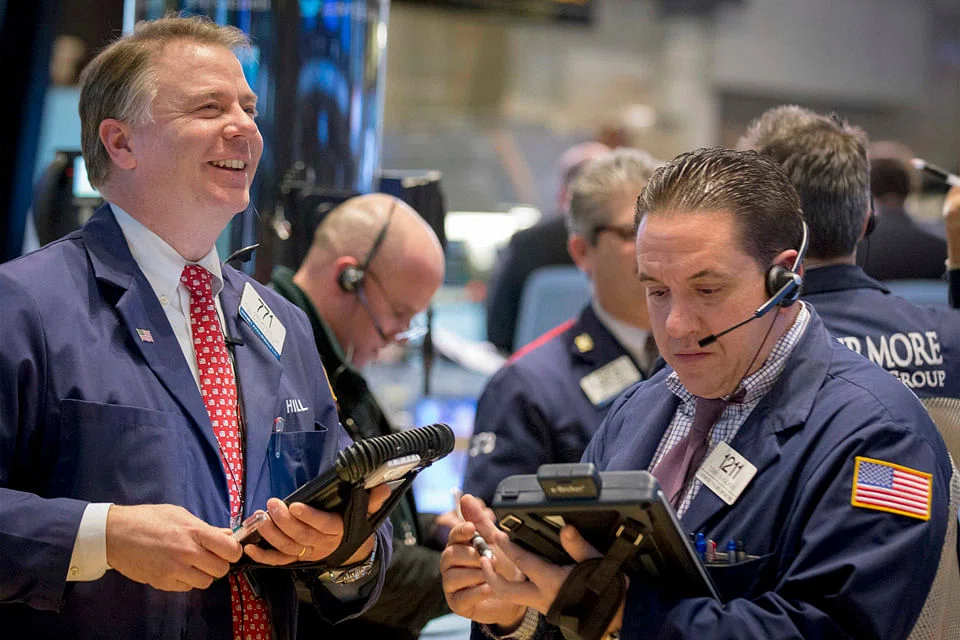
THE six-year-old bull market is roaring again.
Stocks rose last week and the professionals' gauge of the market closed at a record high as traders bet US consumers would soon start spending their savings on petrol.
Gains will likely continue this week as long as there are no shocks from Ukraine, Greece, the oil market or the housing sector.
The Standard & Poor's 500, seen by Wall Street professionals as the definitive measure of big US stocks, closed at 2,096 on Friday, up about 2 per cent for the week and the year. These are hardly historic gains, but the new record is significant because it's proof of life for the bull market.
When the bust in oil-and-commodities markets began in October, the S&P 500 swiftly fell 10 per cent from its peak and many analysts said the bull market in stocks would die alongside the oil market. For the next three months, the bull's ageing legs wobbled as every revival for energy and raw-materials stocks was followed by a plunge. Even when the S&P 500 neared a record at the end of 2014, it was driven by defensive, evergreen companies such as utilities and healthcare giant Johnson & Johnson - stocks associated with dying bull markets.
Ahead of earnings season, traders had feared that the collapse of oil prices and the coincident strengthening of the dollar would trip up corporate growth.
Certainly, it was a poor earnings season for the energy sector, and many, including Chevron, Royal Dutch Shell and BP shut down drilling operations. But the steelmakers and industrial giants that outfitted the US shale boom have fared somewhat better than expected. Last week, one manufacturer, ITT, said its oil unit was among the major drivers of fourth-quarter growth. The world's largest steelmaker by sales, ArcelorMittal, projected weakness in US demand this year, but not an outright bust.
Similarly, the dollar's spike in foreign-exchange markets has eroded the value of overseas earnings in euro and other currencies for multinational corporations, but the effect has not been as devastating as feared. Both Coca Cola and Pepsico rose in the wake of their earnings reports, despite losses in translation of revenue into dollars.
"Even with hedges in place, managements predict this trend will continue in 2015," said analysts at brokerage Goldman Sachs in a review of earnings conference calls. For some multinationals, the Goldman analysts said, there is a silver lining: "Companies that also incur significant costs in non-US locations witnessed an offset to lower revenue on the bottom line."
Once again, corporate America had set the bar low for quarterly earnings and cleared the bar to investor applause. With the majority of fourth-quarter earnings reports tallied, aggregate S&P 500 profits look like they grew 6.6 per cent in the fourth quarter, according to Thomson Reuters. Almost three quarters of companies beat Wall Street targets, according to this analysis.
With oil prices more or less stable around US$50 a barrel, Wall Street is in an ebullient mood.
Traders are rotating back into the stocks considered the riskiest and most economically sensitive. The Russell 2000 index of small capitalisation stocks, which are less global in scope than large caps, hit a record high, recovering from a bear market in the autumn.
Other big winners include the tech sector, where "blowout" earnings reports from Apple and Cisco Systems have encouraged big bets; and the biotech niche, where speculators have sought fortunes ever since the bull market began in 2009. Even cyclical energy and commodities stocks are rising consistently.
For the risky bets to pay off, US growth will have to accelerate. And for that to happen, consumers will have to start spending more. Ever since oil began its descent this autumn, economists have waited for decreased spending on petrol to translate into higher spending on discretionary items such as clothes and meals out. So far, they have waited in vain: In January, retail sales, excluding petrol purchases, were flat with a month earlier.
Some fear that lower oil prices are doing more harm than good to the economy. "There are signs the uptick in retail sales and consumer spending as a result of lower oil hasn't occurred but the reaction in capex and layoffs has," said Oliver Pursche, chief executive of broker dealer Bruderman Brothers. "I think that's a very problematic early sign."
Of course, there is always something of a lag in consumer behaviour. Measures of consumer confidence have responded to the fall in petrol prices by hitting their highest levels in a decade. But the lag between higher sentiments and higher spending this time is longer than usual.
Corporate human-resource departments were so traumatised by the events of the financial crisis that they defied the laws of economics for years - holding off on major rounds of hiring until very recently. Now that corporations and Wall Street are ready to take risks again, the question remains: are consumers?
This week, housing data and minutes from the Federal Reserve's meeting may provide further insight on whether Wall Street's bullish mood is spreading to Main Street.
For now, expect the momentum to keep the bull market alive.
TRENDING NOW

‘If there’s a price to be paid, so be it’: George Yeo says Singapore must safeguard its reputation

South-east Asia has lost Nvidia’s best salesman

CapitaLand, Far East, Sing Holdings team up for S$1.8 billion bid at S$910 psf ppr for Jurong Lake District site

Beyond the greenback, Vietnam’s big borrowers turn to Asian-currency bonds

