

Tokyo inflation accelerates, backing case for BOJ rate hike
Friday’s CPI data add to recent signs of persistent price pressures
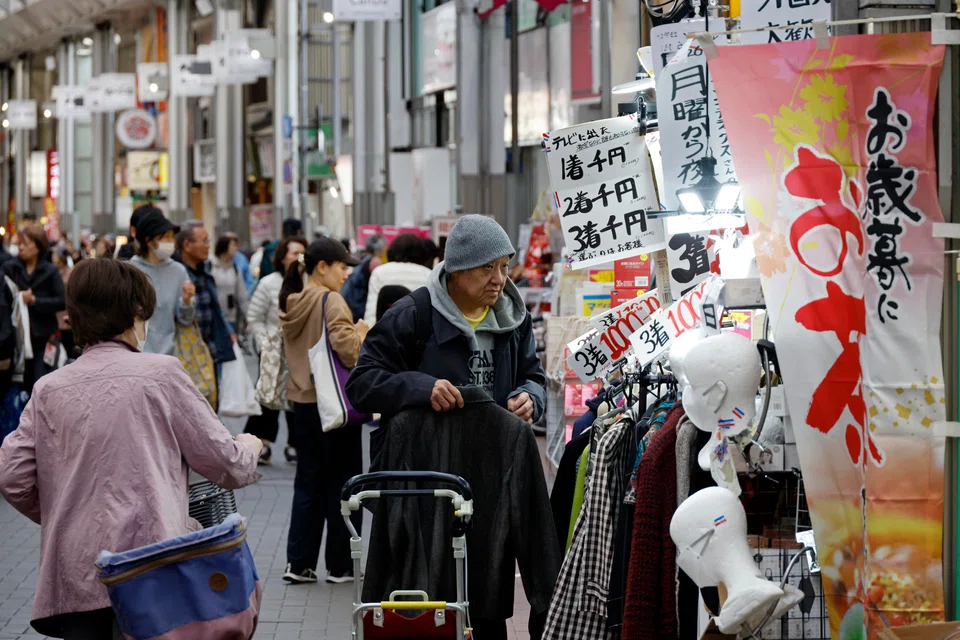
INFLATION in Japan’s capital city accelerated to the fastest pace this year, backing the case for a Bank of Japan rate increase next month as it focuses on keeping price growth around its 2 per cent target.
The consumer price index excluding fresh food rose 2.9 per cent in November from a year earlier in Tokyo, the highest level since July 2025, the Ministry of Internal Affairs and Communications reported on Friday (Nov 27). The result matched the consensus forecast of economists.
Tokyo inflation is a leading indicator of nationwide price trends. The index that strips out both fresh food and energy, a gauge closely monitored by the BOJ as a measure of underlying inflation, climbed 2.5 per cent, while overall CPI rose 2.8 per cent.
Among factors driving gains were rising costs for electricity, up 9.5 per cent, and for city gas bills, which increased by almost 14 per cent.
In both cases, the figures reflect the impact of the end of subsidies on utility bills that Prime Minister Sanae Takaichi’s government rolled out for three months in the summer. Also, price gains for processed food accelerated a tad.
Rice prices dropped almost 34 per cent, the biggest decline in the data going back to 1971. Rice, a daily staple for households, has become a major drag on CPI after being among primary drivers of overall inflation a year ago.

Friday’s CPI data add to recent signs of persistent price pressures and strengthen the case for the BOJ to raise interest rates next month.
The central bank has said its task is now to keep underlying inflation around the current level after reaching its target for the first time since the introduction of the goal in 2013.
Service prices — a key measure of the sustainability of inflation — increased 2.1 per cent from a year earlier, largely unchanged.




Takaichi last month announced plans to reinstate utility subsidies for three months starting in December.
She is also seeking to cut the sales tax on food from April to ease the cost-of-living burden on households. At the same time, the government will scale back gasoline subsidies. Together, those measures complicate the BOJ’s task of gauging underlying inflation.
Earlier this week, the BOJ’s consumer price indicator that subtracts the impact of temporary government steps accelerated to 3.5 per cent, the fastest pace in three years. Service prices charged among businesses also rose by the most in 36 years. BLOOMBERG
Decoding Asia newsletter: your guide to navigating Asia in a new global order. Sign up here to get Decoding Asia newsletter. Delivered to your inbox. Free.
Share with us your feedback on BT's products and services
TRENDING NOW

LNG, stronger regional power links key to Asean’s energy resilience: Shell

Keppel CEO on telco merger: S$34 million StarHub dividend beats M1’s S$3 million contribution

OCBC opens 100-tonne gold vaulting facility to meet growing institutional demand

As Indonesia picks new vice-president to succeed Gibran, investors see risks and opportunities

