

Tories vow to create northern powerhouse ahead of polls
London
THEY were among Britain's most durable stereotypes and, for some, they still are: the flat-vowelled northerner in an equally flat cloth cap, denizen of dark and distant mill towns; and the silver-tongued southerner, the city gent with bowler hat and furled umbrella, emblem of the capital's bright lights and prosperity, the magnet of the nation.
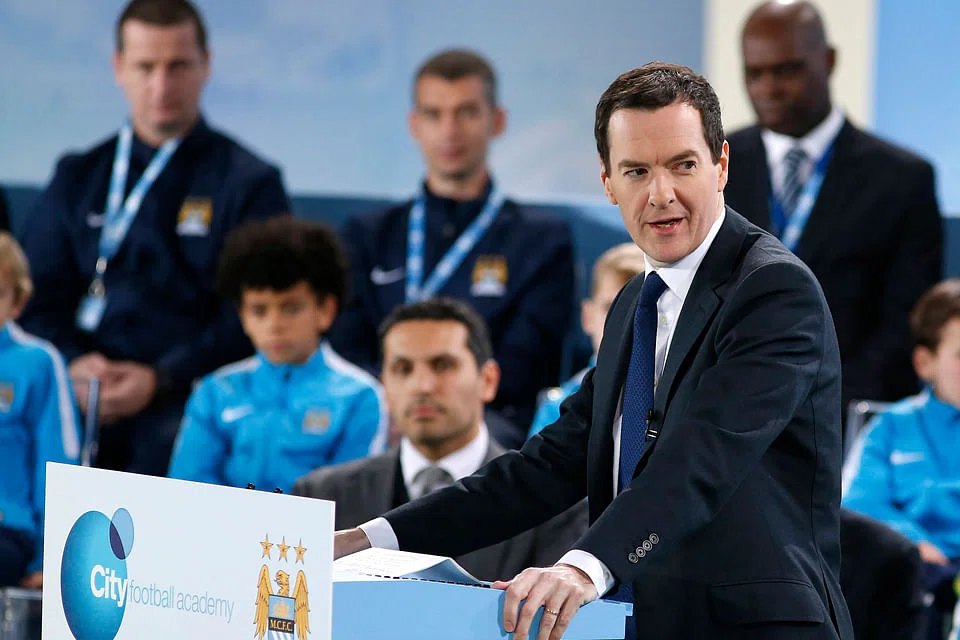
In recent days, the urge to close that unbridgeable gap has seemed to underlie the government's promise to turn a string of cities athwart the Pennine Hills into what George Osborne, the Conservative Chancellor of the Exchequer, has termed a "northern powerhouse" to spread prosperity far beyond London.
Months before a national election in May, some have interpreted the pledge as a none-too-subtle manoeuvre to harvest political gain from northern constituencies that were once the exclusive preserve of the Conservatives' adversaries. Others have depicted the idea as utopian and improbable, a patronising nod to a blue-collar region weakened by post-industrial decline.
But perhaps the main point is that the outlines of the north-south divide have shifted.
Long the draw for ambitious young people from Leeds or Manchester, London now casts a much wider net, a global lure to American bankers and Russian oligarchs, Polish plumbers and Chinese investors. Just last week, it emerged that a firm from Abu Dhabi was buying Scotland Yard - the building in London that houses the Metropolitan Police Service, which is moving to smaller headquarters.
And the notion of a northern powerhouse, girded by new highways and investment in theatre and science, plays into the stirrings of a broader devolution of power from the central government that could be the harbinger of Britain's fragmentation or even its Balkanization.
In a referendum in September, Scottish voters rejected independence by a greater-than-expected majority. But the outcome was widely ascribed to promises by Prime Minister David Cameron of a "new and fair settlement" enhancing Scottish autonomy and heralding reform in other parts of the United Kingdom: England, Wales and Northern Ireland.
With the economic gap widening, the discussion has some urgency.
After the 2008 economic meltdown, the north - once the engine of Britain's Industrial Revolution - endured a sharper decline than the south, while austerity measures could well hurt the north more than the south because northern institutions and cities are more dependent on public spending.
From Birmingham to the Scottish border, moreover, there is an uneasy competition for Mr Osborne's munificence, blending a degree of hubris with rival claims to the northern soul.
"Mr Osborne says he wants to create a northern powerhouse to complement the strength of the capital," columnist Todd Fitzgerald wrote in The Manchester Evening News. "We already have one. It's called Manchester."
But as Paul Linford, a columnist for The Newcastle Journal in the northeast, observed, Mr Osborne's proposal seemed to centre on a "so-called Golden Triangle" linking Manchester and other cities, to the exclusion of other places.
That sentiment was mirrored in the depressed Midlands city of Stoke-on-Trent, where Tristram Hunt, a historian and opposition lawmaker, mused in The Sentinel on long-standing distinctions in northern identity. "Manchester and Liverpool enjoy a fierce rivalry dating back to trade and tax disputes when they were the emerging megalopolises of the 19th century," he said. "Then there is the even older trans-Pennine feud, which, of course, helped fuel a long and bloody civil war in the 15th-century Wars of the Roses."
No one suggested, of course, that history might repeat itself, that glimmers of Balkanization might flare into Balkan-style wars. Indeed, Mr Linford said, if Mr Osborne's promises go unredeemed, "the much-vaunted Northern Powerhouse will remain so much hot air." NYT
TRENDING NOW

He built the Vingroup empire. Now South-east Asia’s richest man is handing some key roles to his sons
Seatrium allocates S$200 million for new share buyback programme
32 companies, 6 individuals bag accolades at Singapore Corporate Awards 2026

Stocks to watch: Mapletree Logistics Trust, Seatrium, Keppel DC Reit, Food Empire

