

Trade deal, holiday season boost China's Dec factory output
Beijing
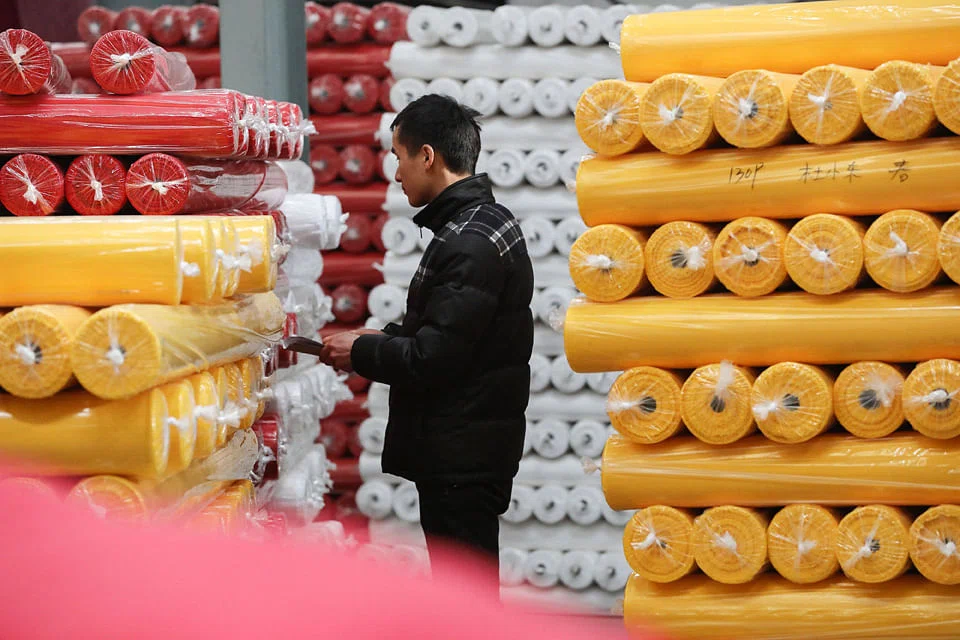
CHINA'S two sets of indices measuring manufacturing sentiment expanded in December on the back of increased demand over the holiday season and just as a "Phase One" deal is about to be inked which is expected to put a hold on further duties on Chinese imports into the United States.
The official purchasing managers' index (PMI), published on Monday by the National Bureau of Statistics, expanded for a second straight month to 50.2 in December, unchanged from November, while a private version of the survey compiled by Markit and Caixin came in at 51.5, compared to 51.8 in November.
PMI readings above 50 indicate expansion, while those below that level signal contraction.
Both readings were better than expected and suggest the world's second-largest economy could be bottoming out after growing at its slowest pace in over 30 years in 2019.
"The upcoming Chinese New Year has boosted the domestic market while the Christmas season bolstered overseas demand," read a statement published by the China Logistics Information Centre, which helps compile the official PMI data. "News about a Phase One trade deal has stabilised market confidence and expectations, which benefit both imports and exports," the statement added.
Liu He, China's special trade envoy, is due to arrive in Washington on Saturday, according to a South China Morning Post report, with an official signing ceremony planned on Jan 15 at the White House. The deal is expected to decrease part of the tariffs in place, with China committing to increased agricultural purchases and some structural changes to its intellectual property protection law.
The better-than-expected PMI readings come on the heels of other improved data such as industrial profits and industrial output in November. Industrial profits grew 5.4 per cent year-on-year after a contraction of 9.9 per cent in October, marking the fastest growth in 2019 except in March.
On a breakdown basis, the PMIs show a sustained recovery across most of the manufacturing sector, with food and beverage, clothing, medicine and automobiles all performing better month-on-month.
The reading "reflects the continued recovery of manufacturing confidence due in part to the easing of US-China trade tensions", Yingke Zhou, a China economist at Barclays Capital Asia in Hong Kong, wrote in a note after the release of the PMI data.
On a month-on-month basis, the sub-index for production gained 0.6 points to 53.2 in December, signalling faster expansion.
Imports and exports improved in December in both sets of PMIs, with the sub-index for new export orders up 1.5 points to 50.3 in the official PMI, the first expansion since June 2018.
"We remain constructive on a near-term recovery," Mr Zhou added.
China pumped out stimulus ahead of the new year by unleashing massive investment in infrastructure, and analysts say more measures should be announced despite the signing of the trade deal, which in effect has little impact on the real economy in the short term. They add that structural challenges remain, with deflationary pressures still hurting margins, employment lagging and demand still weak.
The employment sub-index in the official PMI remained in contraction mode at 47.3.
"We do not think Beijing will overreact to the two consecutive above-50 manufacturing PMI readings, as we believe it learnt the lesson from spring this year, when some headline data pointed to a seeming recovery," Nomura analysts said Tuesday.
"We expect Beijing to roll out more easing measures despite limited policy room in the coming quarters," they added.
TRENDING NOW

‘We don’t want to stay as we are’: CEO Patrick Ng builds a more resilient Huationg
URA to review guidelines on floor space to give developers more design flexibility: Chee Hong Tat

He built the Vingroup empire. Now South-east Asia’s richest man is handing some key roles to his sons

32 companies, 6 individuals bag accolades at Singapore Corporate Awards 2026

