

Traders still pricing two ECB rate hikes by year-end after Iran truce
Many questions remain over the sustainability of the ceasefire agreement
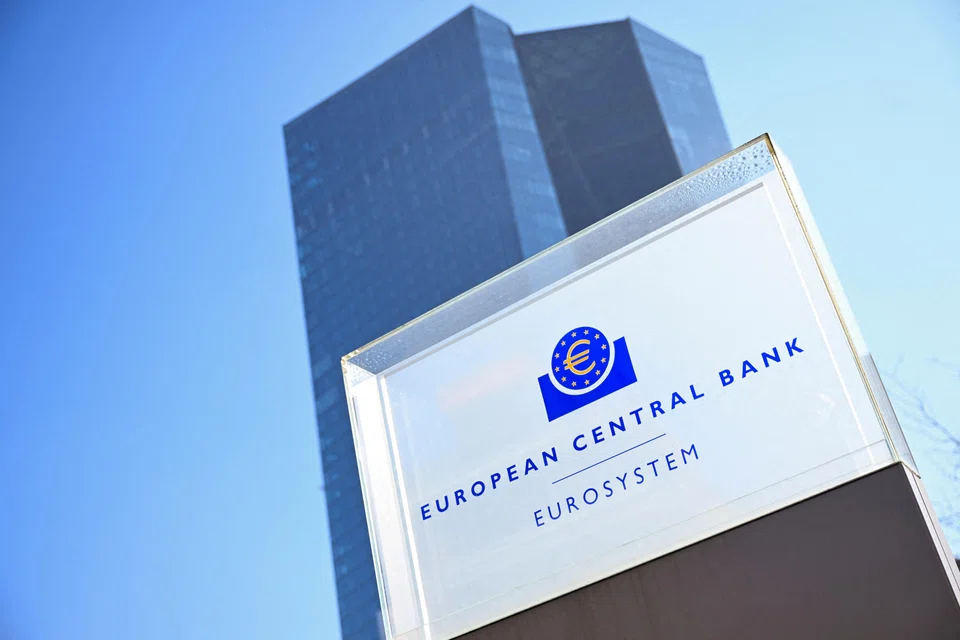
[BRUSSELS] Traders scaled back bets on future European Central Bank rate hikes after a deal for a two-week ceasefire in the Iran conflict but still priced in two tightening moves by the end of the year amid uncertainty over whether a lasting settlement will be reached.
On Wednesday (Apr 8) the key Strait of Hormuz remained shut and Gulf states reported fresh Iranian missile attacks long after the ceasefire was meant to take effect.
A senior Iranian official involved in the discussions told Reuters Teheran could open the Strait on Thursday (Apr 9) or Friday ahead of peace talks.
In March, fears of a protracted conflict driving an energy shock stoked inflation worries, prompting markets to price in a quicker response from the European Central Bank.
Oil fell sharply to below US$100 per barrel on Wednesday, having leapt more than 50 per cent in March.
“The evolution of oil will determine if this rally (in bonds) continues or fades – which of course depends on how the negotiations go,” said Rohan Khanna, head of euro rates strategy at Barclays.
“In the very short term, it may remove the impulse for the ECB to hike rates in April, and the market has repriced that meeting accordingly, but the meeting is still three weeks away and that’s a long time in these markets.”
Germany’s 10-year government bond yield fell 14 basis points (bps) to 2.945 per cent. It had hit 3.13 per cent in late March, its highest level since June 2011, compared with 2.65 per cent at the end of February, just before the outbreak of the war.
“Many questions remain over the sustainability of the agreement. Iranian state media described the ceasefire as a Trump retreat rather than a mutual agreement,” said Gustav Helgesson, macro strategist at SEB.
Money markets priced in a roughly 30 per cent chance of an ECB rate hike in April from 60 per cent on Tuesday and indicated a deposit facility rate at around 2.50 per cent by year-end, rather than 2.75 per cent.
Traders fully priced one hike by June and two by September. The deposit rate is currently at 2.0 per cent.
“ECB rate forwards suggest markets remain on alert, with traders waiting to see developments around the Strait of Hormuz before pricing out further rate hikes,” said Massimiliano Maxia, fixed income strategist at Allianz Global Investors.
Germany’s 2-year yields, more sensitive to expectations for policy rates, dropped 24 bps to 2.491 per cent. They were around 2.0 per cent at the end of February.
“Even if this truce marks the genuine end of fighting, some economic damage is already baked in -– higher inflation in the second half of the year and slower growth for major parts of the global economy compared to the pre-war outlook,” said Kallum Pickering, chief economist at Peel Hunt.
Italy’s 10-year government bond yield dropped 26 bps to 3.725%, with the gap versus safe-haven Bunds tightening to 77 bps.
It had climbed above 100 basis points in March as investors grew concerned about the impact of rising policy rates on heavily indebted countries. REUTERS
Decoding Asia newsletter: your guide to navigating Asia in a new global order. Sign up here to get Decoding Asia newsletter. Delivered to your inbox. Free.
Share with us your feedback on BT's products and services
TRENDING NOW

Looking beyond looming CEO succession, should UOB potentially pursue a transformative merger?
MAS holds monetary policy settings, pausing after two straight tightenings

Once staunchly pro-China, Malaysian Chinese businesses are now distancing themselves from Beijing

Stocks to watch: Kore US Reit, Parkway Life Reit, Raffles Education, Vin’s Holdings

