Trial lawyers walk out across UK over government funding
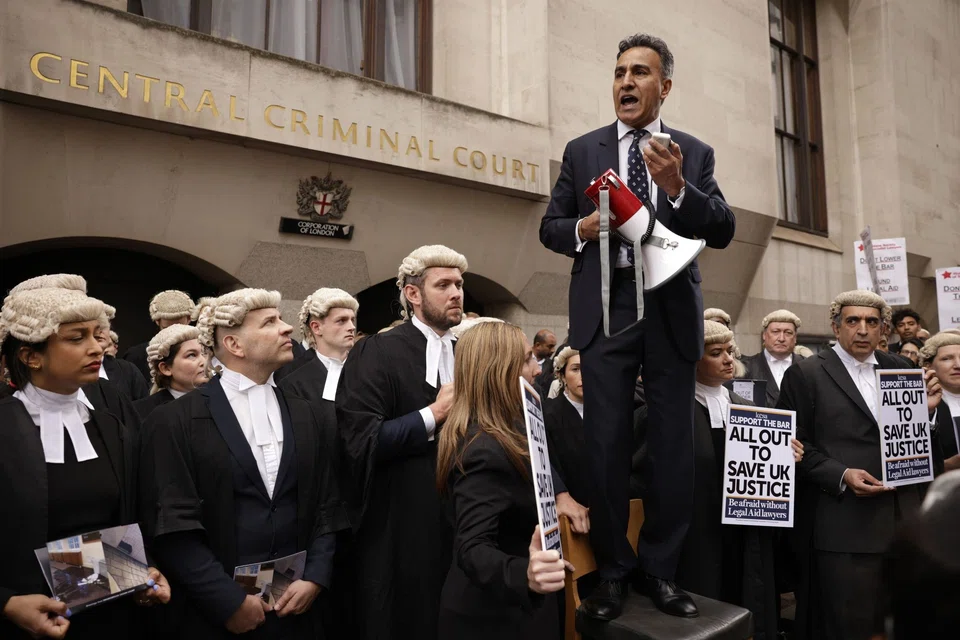
BRITAIN’S criminal trial lawyers will strike across the country on Monday (Jun 27) in a long-running spat over government funding and fees that have collapsed in recent years.
The Criminal Bar Association, which represents thousands of barristers in England and Wales, said around 80 per cent of its members backed the walkout that’ll target 14 days of strike action over the next month.
It’s the latest sector to show its unhappiness with the UK government over a range of issues from pay to working conditions. Around 40,000 railway staff walked out last week in the largest rail strike in 3 decades. Teachers and National Health Service staff are also considering industrial action against a backdrop of rising inflation and low pay rises.
Bloomberg Economics has said that from its research, the UK government would have to pay £14 billion pounds (S$23.54 billion) a year to give public-sector workers the 7 per cent pay raise that some of them are demanding. Bloomberg’s estimate sheds light on the options Prime Minister Boris Johnson is facing to defuse the biggest round of strikes in decades.
Johnson had urged departments to be cautious with pay increases to avoid triggering a wage-price spiral. But the issue isn’t likely to go away, with the Bank of England predicting price increases will accellerate past 11 per cent later this year.
Meanwhile, outside Old Bailey — the country’s most famous criminal court — on Monday, a large group of barristers and supporters gathered to stand in protest against low wage and poor conditions.
“We may wear a uniform, but we’re not a privileged species, we’re the poor cousins of the justice system,” Jo Sidhu, barrister and chair of the criminal bar association, said in a speech outside the court flanked by barristers in powdered horse-hair wigs and gowns.
Among the speakers at the strike was young barrister Alejandra Tascon, who said that her and many people like her were already in hundreds of thousands of pounds worth of debt trying to get into the profession.
“We cannot survive on below minimum wage,” she said. “If we can’t recruit, the rule of law will die.”
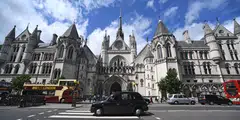

The lawyers are taking the action against repeated government cuts of the legal aid budget and a record backlog of court cases. Pay for criminal barristers has also fallen and many of them are being forced to leave the profession. They are demanding a substantial increase in fees.
Justice Secretary Dominic Raab said the strikes were “regrettable” and that “their actions will only delay justice for victims”. He urged them to accept the offer of a 15 per cent increase in fees.
During the strikes, barristers said they won’t accept new cases.
Earnings from legal aid fell by 23 per cent in one year over the coronavirus pandemic, with over 80 per cent of their members forced into personal debt with government support, according to the union. Junior barristers earn a median income of £12,220 (S$20,783) a year — below minimum wage, they said. BLOOMBERG
Decoding Asia newsletter: your guide to navigating Asia in a new global order. Sign up here to get Decoding Asia newsletter. Delivered to your inbox. Free.
Share with us your feedback on BT's products and services