

Tripartite Global-Asia Insurance Partnership to focus on pandemic and climate risks

Sharon See
Singapore
SINGAPORE has launched a tripartite platform to address structural protection gaps in insurance, with an initial focus on risks brought on by the Covid-19 pandemic and climate change.
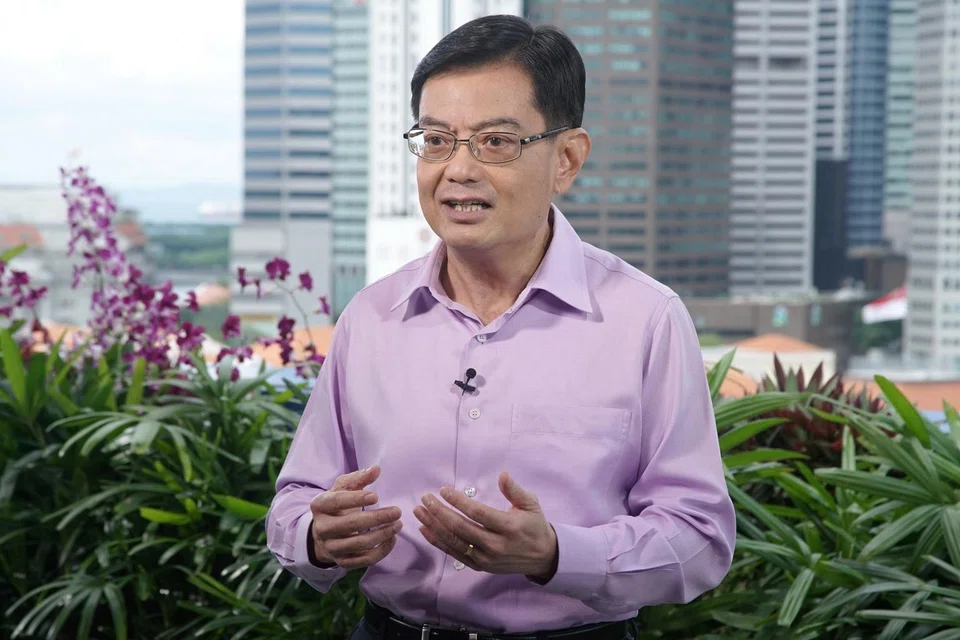
Launched by Deputy Prime Minister Heng Swee Keat, the Global-Asia Insurance Partnership (GAIP) is a three-cornered partnership among the global insurance industry, regulators and academia.
Speaking virtually at the Singapore International Reinsurance Conference 2020 on Monday, Mr Heng said the aim of GAIP is to produce actionable research insight, develop policy recommendations and co-create innovative solutions for the region in three ways.
"There are many structural protection gaps facing Asia, but pandemic risk and climate risk are two critical areas that demand our immediate and collective attention," he said, adding that GAIP is expected to start work in January.
Yoshihiro Kawai, the former secretary-general of the International Association of Insurance Supervisors, will be the inaugural chairman of GAIP.
GAIP will be a "living lab" to incubate new risk-financing solutions for emerging risks in Asia, with a focus on riding the digital revolution and harnessing other new technologies, Mr Heng said.
It also serves as a policy think-tank supporting Asian insurance regulators and policymakers, he said, adding that they hope to expand insurance coverage for long-term needs such as infrastructure, promote the use of technology and data in insurance, and facilitate global dialogue on strategic industry issues.
GAIP will also place a strong emphasis on talent development, to build a pipeline of insurers with skills in areas such as big data and artificial intelligence, while positioning the industry for the future as jobs are being reshaped by technology, he said.
This comes as Asia remains under-insured despite its rapid economic growth over the last few decades, he said.
For example, while Asia has accounted for about half the global economic losses from natural disasters since 1990, insured losses for catastrophes accounted for only 9 per cent of economic loss in Asia, compared to 24 per cent globally in 2019.
The large protection gap in Asia is partly due to the lack of quality data and robust risk models to quantify exposure to natural catastrophes, infectious diseases and other emerging risks.
Governments and companies often under-appreciate these risks, Mr Heng said.
"If there is a silver lining, Covid-19 has raised awareness of future risks and provided greater impetus to close the protection gap," he said.
He added that he hopes the insurance industry can build on this impetus to transform by riding on two shifts - digital transformation and public-private partnerships.
While Asia's growth potential remains strong, Mr Heng said, continued growth will require greater protection against large-scale systemic risks.
TRENDING NOW

Far East Organization’s The Serra Residences sells less than a quarter of units released at average S$3,460 psf

MAS, SGX must address our IPO problem

A bumpy road ahead for some of Singapore’s fresh graduates in their job search

Once staunchly pro-China, Malaysian Chinese businesses are now distancing themselves from Beijing

