

Trump advisers warn Iran conflict may last through end of his term, WSJ reports
Iran continues to insist it has the right to manage traffic through the vital waterway
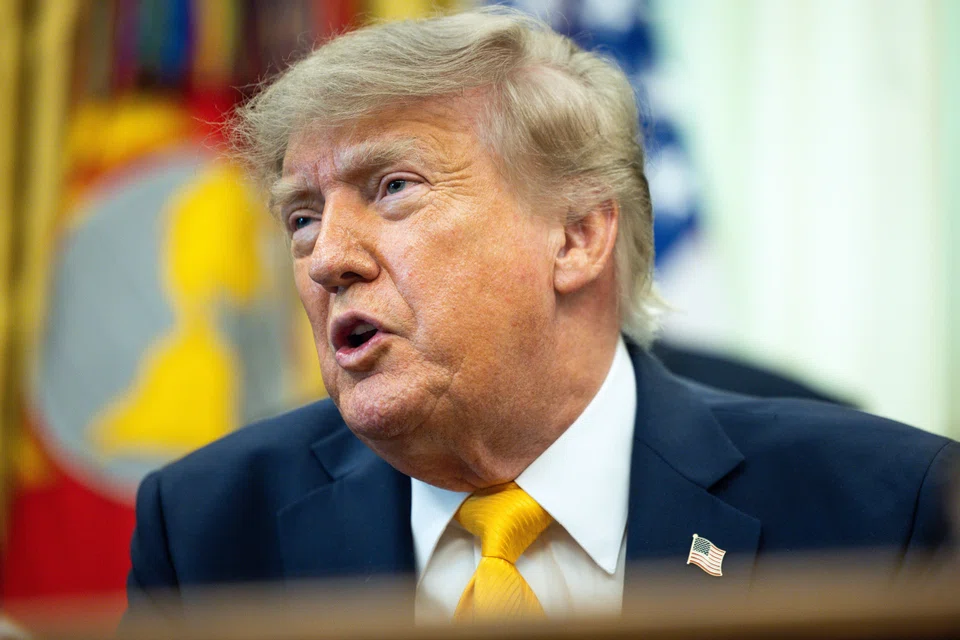
TOP White House advisers, including Vice-President JD Vance and Secretary of State Marco Rubio, have privately warned President Donald Trump that the conflict with Iran could extend through the remainder of his presidency, the Wall Street Journal reported on Wednesday (Sep 9), citing US officials.
The White House did not immediately respond to a Reuters request for comment.
The advisers told Trump in private discussions in the Oval Office and the Situation Room that Teheran could continue to resist US pressure, potentially prolonging the conflict beyond Inauguration Day in January 2029, the Journal added.
The reported warning contrasts with Trump’s own public remarks about the war.
The president said on Wednesday he expected the war to end “immediately after” the US midterm elections in November, arguing that Iran was trying to influence the vote but would be unable to sustain its resistance much longer.
Trump also acknowledged diplomatic talks are still a possibility but were not preferred.
Iran said it was ready for a more intense war and will escalate its counterstrikes if the US continued attacking its territory and infrastructure, according to a senior official from the Islamic Republic.
Teheran has no intention of backing down in the face of an American naval blockade and attacks on its oil tankers, said the official, who asked not to be identified discussing sensitive matters.
Economic pain may be increasing, they said, but the country’s leaders see the war with the US as posing an existential threat that leaves them little choice but to keep fighting.
Iran has been rebuilding its military capabilities since the most intense period of the war ended in April and has enough missiles for a lengthy conflict, the official added.
The comments come as hostilities between the US and Iran show little sign of easing, with the war now into its seventh month.
Overnight, Washington said one of its warships had to evade an Iranian attack, and that it destroyed five of the Islamic Republic’s energy tankers in response.
Teheran then fired around 20 missiles at a Jordanian airbase used by the US and attacked more American navy ships, as well as several commercial vessels.
On Wednesday, Iran’s semi-official Fars News Agency reported that explosions were heard off the coast of Jask near the Strait of Hormuz around 7.20 pm local time — a development that could suggest more US strikes.
The tit-for-tat attacks have pushed up energy prices, with Brent crude climbing above US$100 a barrel on Wednesday and extending its gain this year to around 65 per cent.
US diesel pump prices hit a record last week, adding to pressure on President Donald Trump to end a conflict that’s unpopular with voters ahead of midterm elections on Nov 3.
Many of Iran’s leaders “believe the Trump administration responds only to threats and escalation,” Dina Esfandiary of Bloomberg Economics wrote. “They also think the administration is more sensitive to an escalating war in the lead-up to the midterm elections.”
This week, Iran’s new security chief, Mohsen Rezaee, said its military posture toward US ships and bases had been “fundamentally recalibrated,” signalling a more aggressive stance.
Mohammad Bagher Ghalibaf, the speaker of parliament and lead negotiator with the US in previous ceasefire talks, warned the era of “proportionate responses” was over.
The war, which erupted when the US and Israel began strikes on Iran in late February, has entered a stalemate of sorts, with both sides jockeying for control over the Strait of Hormuz. No official peace talks have been held for months and there’s little sign of the sides returning to the negotiating table.
The US, wary of fuel prices going up even more, and having used up a significant portion of its interceptor missiles, is trying to avoid a return to the full-on fighting of March and early April.
Instead, it’s trying to squeeze Iran’s economy via the blockade and threats to penalise governments and companies that don’t cut ties with Teheran.
Its aim is to force Iran to reopen Hormuz and restart negotiations to end the conflict.
Iran continues to insist it has the right to manage traffic through the vital waterway and is regularly targeting ships that pass through without its permission. That is forcing the US to respond militarily and raising the risk of an escalatory spiral.
The blockade is hurting the Iranian economy. With Teheran hardly able to export petroleum and import many vital goods, inflation has accelerated to almost 90 per cent and the rial is depreciating rapidly.
Economic pressures led to mass protests late last year, triggering a crackdown by authorities that killed thousands of people.
The Iranian official acknowledged the worsening economic pain. Still, they said the country’s leaders believe they have little choice but to keep fighting until they’re confident Washington will be too wary to attack again in future.
Some Iranian officials, including President Masoud Pezeshkian, have said their country should negotiate with the US to ease the economic pressures. Yet even they say the White House must first lift the blockade and go back to the terms of the so-called Memorandum of Understanding, a ceasefire deal signed in June but which rapidly broke down.
“The political elites are locked in a debate over whether to escalate or just resist,” said Esfandiary. “Despite the debate, Iran is deciding how to retaliate faster and more efficiently, suggesting it has developed a menu of responses to US escalation. It seeks to impose greater costs on the US.” BLOOMBERG, REUTERS
Decoding Asia newsletter: your guide to navigating Asia in a new global order. Sign up here to get Decoding Asia newsletter. Delivered to your inbox. Free.
Share with us your feedback on BT's products and services
TRENDING NOW

Grab CEO’s wife Chloe Tong on life with Anthony Tan and finding her purpose
Hwa Seng Builder, two China companies win S$1.2 billion Tuas Road Viaduct phase two contracts

Deal between tycoon friends sparks scrutiny of Philippine power sector
Canada is upping oil flows to Asia, but South-east Asia’s refineries aren’t ready to handle them yet

