Trump and Warsh’s fates are now tied, for better or worse
The new central bank chief is the pick of the US president, who will now own the results
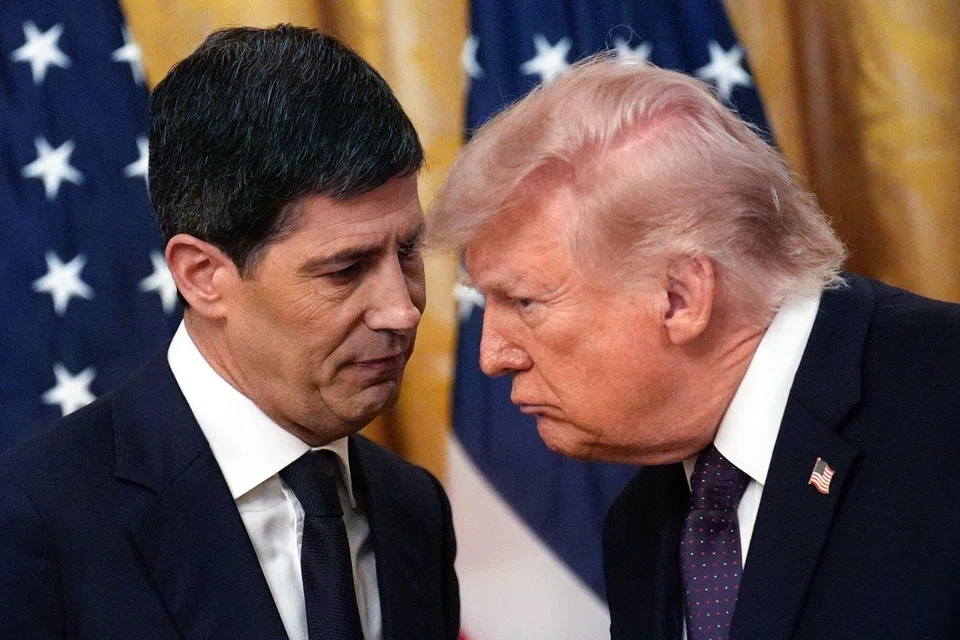
[WASHINGTON] The former US Federal Reserve chair, Jerome Powell, was a handy foil for US President Donald Trump, a target of blame for everything from high mortgage interest rates to the pace of economic growth.
But with Kevin Warsh now installed as the country’s central bank chief – completing Trump’s imprimatur in the top echelon of US economic policymaking posts – the dynamic has changed.
Trump could previously claim that Powell was foisted on him in his first administration by advisers such as Steven Mnuchin, who was secretary of the US Treasury at the time.
Warsh is Trump’s pick, however, and the president now owns the results.
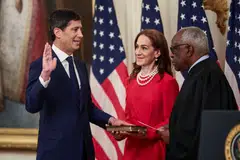
As if to emphasise the stakes, he hosted Warsh at a White House swearing-in ceremony on Friday (May 22) that included Cabinet secretaries, Supreme Court justices and top White House advisers in a pep rally atmosphere.
He said in extended remarks that he wanted Warsh to “do your own thing and do a great job”. “Kevin understands that when the economy is booming, that is a good thing... we want it to boom... we don’t want to see it stifled.”
High stakes for midterms
After campaigning and winning a second term on promises of lowering prices and addressing larger “affordability” issues for US households, Trump has seen his approval rating on the economy slip dramatically.
A reading of consumer sentiment posted about 90 minutes before Warsh’s swearing-in showed a broadly glum mood in America.
That included confidence in the economy among independents – a key voting bloc in the fast-approaching midterm congressional elections – and even Republicans tumbling to the lowest level of Trump’s second term.
The interest rate on 30-year home mortgages has risen back above 6.5 per cent, marking a nine-month high and a continuing weight on an anaemic housing market.
Prices in general have continued rising under Trump, despite his campaign pledges that they would fall from the start of his presidency. Since March 2025, the inflation gauge that the Fed uses to set its 2 per cent target has accelerated from 2.3 per cent annually to 3.5 per cent.
On Friday, 4.5 litres of petrol cost US$4.55 on average, compared with less than US$3 before Trump launched attacks on Iran in late February.
Just how Warsh’s performance as Fed leader in his first few months might shape the prospects of Trump’s Republican Party in the midterms is unclear – and fraught with potential pitfalls.
High inflation is never kind to incumbent parties facing voters anxious about their wallets.
Battling it, however, involves tough medicine, usually in the form of interest rate hikes, which are also rarely popular and certainly will not be welcomed by Trump.
Moreover, the Fed remains a diffuse body in which the new chair will have to build his authority over time – all while the world looks for evidence of the president’s influence.
Richard Stern, who studies economic policy at the conservative Advancing American Freedom think tank, described Powell as “a really great scapegoat for Trump for issues that had nothing to do with Powell”.
Now, he said, it is “going to be Trump’s economy”.
“The big thing everybody was concerned with, the price increases, the affordability problem, all of that isn’t going to go away for years, many years, probably,” he added. “And that’s independent of anything Trump is going to do or could do, and it’s independent of anything Warsh is going to do.”
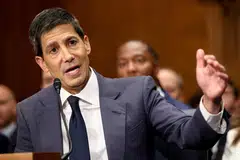
Warsh, 56, a lawyer and financier who served as a Fed governor from 2006 to 2011, has spent the time since then burnishing his chances to return as chair.
His professional mentors have included figures such as renowned monetarist economist Milton Friedman and former secretary of state George Shultz.
Warsh’s work with Wall Street giant Stanley Druckenmiller also made him rich – even beyond his wife’s stake in the Estee Lauder cosmetics fortune.
But it was his social and political ties to Trump that sealed the deal, with the president regretting that he had passed over Warsh for Powell in 2017.
Herding an unwieldy system
Powell, because of Trump’s efforts to undermine the Fed’s standing to set monetary policy free of his influence, has chosen to stay on as a Fed governor.
It is another unusual aspect of Warsh’s opening months as head of the world’s most powerful central bank – the institution other major central banks turn to for US dollars in a pinch.
Even though some Fed chairs have exercised decisive influence, including past leaders such as Paul Volcker and Alan Greenspan, the US central bank is unwieldy by design.
It has a seven-member board of governors based in Washington, and 12 presidents of regional Fed banks all participating in policy debates.
In recent years, the decision-making has drifted towards more consensus-building by the chair.
Warsh has said that he favours a different, no-holds-barred debate approach with more dissent, and a willingness to potentially surprise financial markets with policy decisions free of the forward guidance commonly used in recent years to prepare the public.
Whether global investors are ready for that approach remains an open question.
But if recent Fed meetings were any indication, his colleagues seemed primed to deliver the “family fight” Warsh said he relished during his confirmation hearing.
The April Fed meeting had the most dissents in more than 30 years, and minutes of the meeting showed a majority of Warsh’s new colleagues think interest rates may need to rise.
Until recently, it was the opposite of what Trump said he expects and Warsh had been laying out the case to deliver.
That divided group of officials includes economists with doctorates and different technical knowledge than Warsh, high-level investment professionals with at least comparable experience in markets, and their former leader Powell.
Among the six other governors, three were appointed by former president Joe Biden, including Lisa Cook, who Trump is trying to fire.
Yet, as they debate the next policy moves, investors seem to have made up their mind that interest rates will need to rise in the face of stiffening inflation.
For the long-dated bonds that determine the amount consumers pay to borrow money, yields are already rising. REUTERS
Decoding Asia newsletter: your guide to navigating Asia in a new global order. Sign up here to get Decoding Asia newsletter. Delivered to your inbox. Free.
Share with us your feedback on BT's products and services