

Trump blocks defence company payouts until arms production speeds up
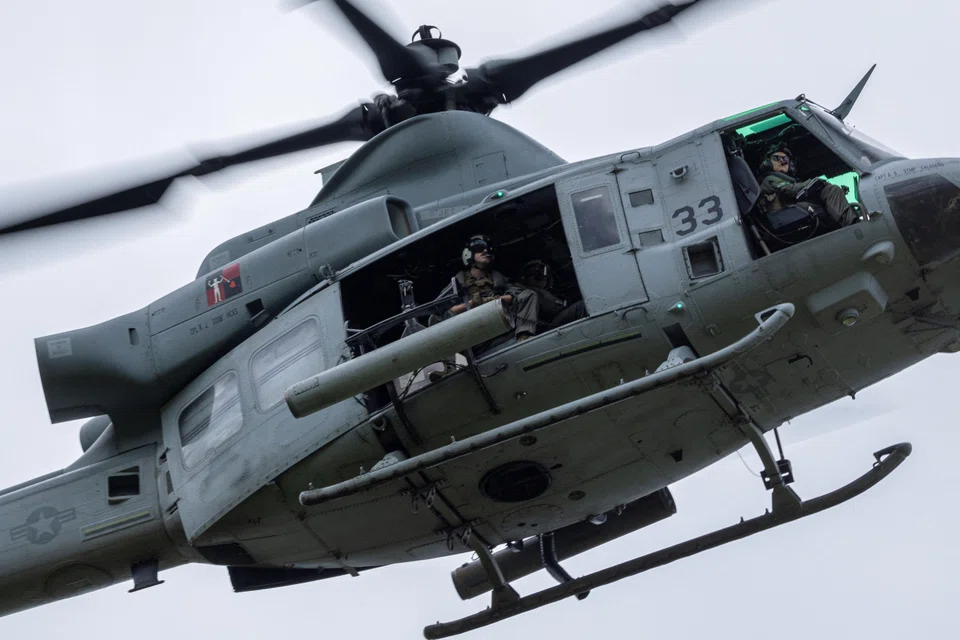
[WASHINGTON] US President Donald Trump vowed to block defence contractors like RTX from paying dividends or buying back shares until they speed up weapons production, a rare presidential strike at Wall Street norms that sent defence stocks lower and signalled sweeping changes for America’s military-industrial complex.
Trump and the Pentagon have criticised the defence industry for what they say are high costs and slow production and have promised dramatic changes to make production of war equipment more nimble.
“Defence Companies are not producing our Great Military Equipment rapidly enough and, once produced, not maintaining it properly or quickly,” Trump posted on Truth Social on Wednesday.
No word on how Trump plans to enforce limits
Trump did not say how he would enforce limits on dividends and buybacks, and defence stocks fell after his remarks, reversing recent gains following the high-profile use of US military equipment to capture Venezuelan President Nicolás Maduro and his wife.
Shares of defence giant Lockheed Martin fell 4.8 per cent, Northrop Grumman slid 5.5 per cent, and General Dynamics fell 3.6 per cent during afternoon trading in New York.
In a second and separate post on Truth Social, Trump wrote: “I have been informed by the Department of War that Defence Contractor, Raytheon, has been the least responsive to the needs of the Department of War.” Raytheon is a unit of RTX.
Raytheon makes the Patriot missile defence system which has been heavily used in Ukraine, as well as Tomahawk missiles for militaries around the world.
An RTX spokesperson did not immediately comment on Trump’s post which sent shares down 2 per cent before recovering and climbing 2.5 per cent in after-hours trading.



Trump decries executive pay packages
Trump also called executive pay packages in the defence industry “exorbitant and unjustifiable,” and said they should be limited to US$5 million, far less than what many executives earn.
The CEOs of the top defence companies typically make more than US$20 million a year through a combination of cash payments and stock grants. Trump did not clarify exactly how the components would be capped.
“From this moment forward, these Executives must build NEW and MODERN Production Plants, both for delivering and maintaining this important Equipment, and for building the latest Models of future Military Equipment,” he posted without naming specific companies or executives.
Share buybacks are common among defence firms, and several pay a dividend. Lockheed in October, for example, raised its dividend for the 23rd year in a row, to US$3.45 per share. At the same time, it authorised the purchase of up to US$2 billion of its shares, raising the total amount promised for repurchases to US$9.1 billion.
Industry groups had been on high alert about the closely held proposal whose language had yet to be made public.
Lockheed’s F-35 fighter jet, one of the most expensive US defence programmes, has been plagued by rising costs and delays. Many big defence programs take much longer to deliver a product than initially promised and at a far higher price.
The US$140 billion Sentinel intercontinental ballistic missile programme that will replace aging Minuteman III missiles, designed and managed by Northrop Grumman, will be years behind schedule and 81 per cent over budget, the US military said last year.
The biggest defence firms, including Lockheed, Northrop Grumman, General Dynamics and Boeing, did not immediately respond to requests for comment about Trump’s comments. REUTERS
Decoding Asia newsletter: your guide to navigating Asia in a new global order. Sign up here to get Decoding Asia newsletter. Delivered to your inbox. Free.
Share with us your feedback on BT's products and services
TRENDING NOW

MSCI proposes standalone status for Indonesia; Jakarta stocks plunge 8%

Palm oil stocks slide after Singapore begins looking into which firms responsible for haze
High Court rules against Julius Baer’s Singapore trust arm in US$50 million family trust dispute

Why is the haze so bad in South-east Asia this year?

