

Trump says there’s a ‘good chance’ of an Iran deal amid pause
However, the US president warns of a return to fighting if no deal is reached
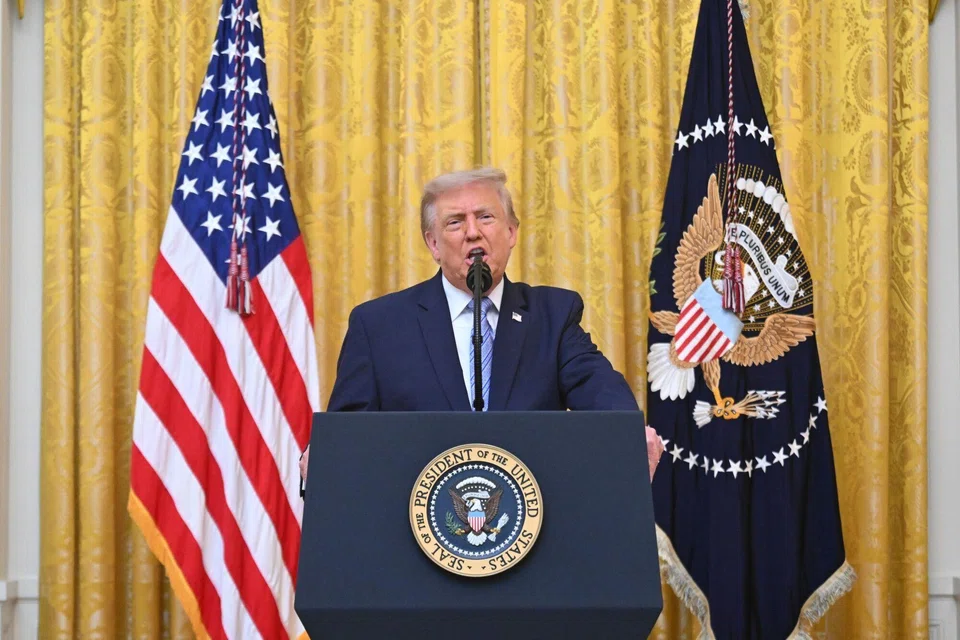
[WASHINGTON] US President Donald Trump said the US and Iran were engaged in diplomatic talks to end the Middle East conflict, but warned that the two sides would return to fighting if negotiations did not yield a deal.
“The only reason they want to meet is because we’ve been hitting them very hard,” Trump told reporters on Monday (Jul 27) aboard Air Force One.
“There’s a good chance that something could happen, and if it does good. If it doesn’t, we go back to doing what we were doing.”
The comments minimise the immediate prospect of a potential military escalation of the war following repeated threats from the US president about carrying out “massive” strikes on Iran.
Still, Trump has repeatedly said talks were progressing and that a deal was close over the course of the war only to have fighting continue.
It is unclear if any substantial negotiations between the US and Iran were taking place.
Trump’s remarks came after the US held off attacking Iran for a third straight day on Monday, despite making threats last week about a major new attack.
Teheran, in turn, paused strikes on Gulf countries such as Kuwait. The two sides had returned to fighting in recent weeks after an interim peace deal signed in June effectively collapsed over the Strait of Hormuz.
Iran’s Foreign Ministry spokesman, Esmail Baghaei, said earlier on Monday that while “it’s possible that mediators share messages from the US side about current developments”, no formal negotiations are currently taking place.

Separately, Oman and Iran are trying to reach an agreement to restart shipping through Hormuz, according to people familiar with the matter, asking not to be identified talking about sensitive matters.
Tensions in the region remain high.
The Iran-backed Houthis claimed on Monday they targeted Saudi Arabian oil facilities with drones, although they did not say when.
Saudi Arabia has not announced an attack from Yemen since Saturday morning, but did say on Monday that it intercepted several drones launched from Iraq at petroleum facilities.
Axios reported on Sunday that Admiral Brad Cooper, the top US commander overseeing the Middle East, recommended stopping strikes because they had reached the limit of their effectiveness, citing sources in the region.
The New York Times also reported that military advisers told the White House not to escalate the conflict because of dwindling stocks of valuable interceptors.
During a meeting last week with Trump, chairman of the Joint Chiefs General Dan Caine said renewing strikes against Iran was possible but would raise concerns about US stockpiles of key munitions, according to a person familiar with the conversation. Worries about depleted munitions were not the primary consideration, the person said.
On Monday, Trump said the US has “a lot of ammunition”, but conceded “I’d like to have more, to be honest”.
He blamed former US president Joe Biden and arms shipments to Ukraine for the depleted US arsenal, and singled out in-demand and hard-to-replace high-end interceptors such as Patriot missiles.
“A lot of equipment’s being built – the Patriots, in particular, are being built,” Trump told reporters. “We’re in very good shape. But for some of the more sophisticated stuff, we’d certainly like that more.”
Iran’s army said it halted its retaliation against US bases and troops in the region as a result of Trump’s decision to hold off on strikes.
The Islamic Republic had been attacking the likes of Kuwait, Bahrain and Jordan on a near-daily basis in the two weeks before the US pause on Friday.
Brent crude fell almost 6 per cent in early trading on Monday to under US$91 a barrel, after climbing 10 per cent last week on the worsening fighting. US Treasury yields also dipped.
Israeli Prime Minister Benjamin Netanyahu is scheduled to meet Trump in Washington on Tuesday. He said he plans to press the US leader on keeping a “constant watch” on Iran’s nuclear programme, one of many issues now in limbo following the breakdown of the interim peace deal.
Iran has said there is no change to the status of the Strait of Hormuz, meaning it is likely to continue targeting commercial ships that do not receive its permission before transiting.
Traffic through the vital waterway – through which one-fifth of the world’s oil and liquefied natural gas supplies flowed before the conflict – remains negligible.
The US, meanwhile, is maintaining its blockade on Iran’s ports.
The lull in fighting came as Iranian and Omani officials met over the weekend in a fresh attempt to resolve shipping through Hormuz. Iran said the talks were constructive and some progress was made, though it gave no details, adding that consultations were continuing.
In recent weeks, Iran tried to persuade Oman to establish a joint management system of the strait that may have effectively tolled ships.
It is unclear if the two are still discussing that, though Teheran has consistently said it wants to control traffic in the chokepoint.
The clashes between the Houthis and Saudi Arabia over the past week have also ratcheted up risks for shippers.
The Houthis, a militant group based in Yemen, fired on vessels in the southern Red Sea after threatening any calling at Saudi ports.
A Saudi-led coalition responded with attacks on Houthi positions in Yemen on Friday and Saturday, leading the group to target the Saudi port cities of Yanbu and Jizan with missiles and drones.
There was no immediate confirmation from the Saudi government or oil giant Saudi Aramco, whose facilities the Houthis said they targeted. BLOOMBERG
Decoding Asia newsletter: your guide to navigating Asia in a new global order. Sign up here to get Decoding Asia newsletter. Delivered to your inbox. Free.
Share with us your feedback on BT's products and services
TRENDING NOW

Philippine power giant First Gen rebuffs foreign offers, plans up to US$2.6 billion in expansion

Vietnam’s data-centre investment rush faces reality check on power and site constraints

Singapore should prepare for prolonged haze until November, says Grace Fu
Is stagflation returning? That mostly depends on the Iran war

