

Trump threatens Iran with power plant strikes over Hormuz oil blockade
Israeli cities have been hit by Iranian missiles, with dozens injured
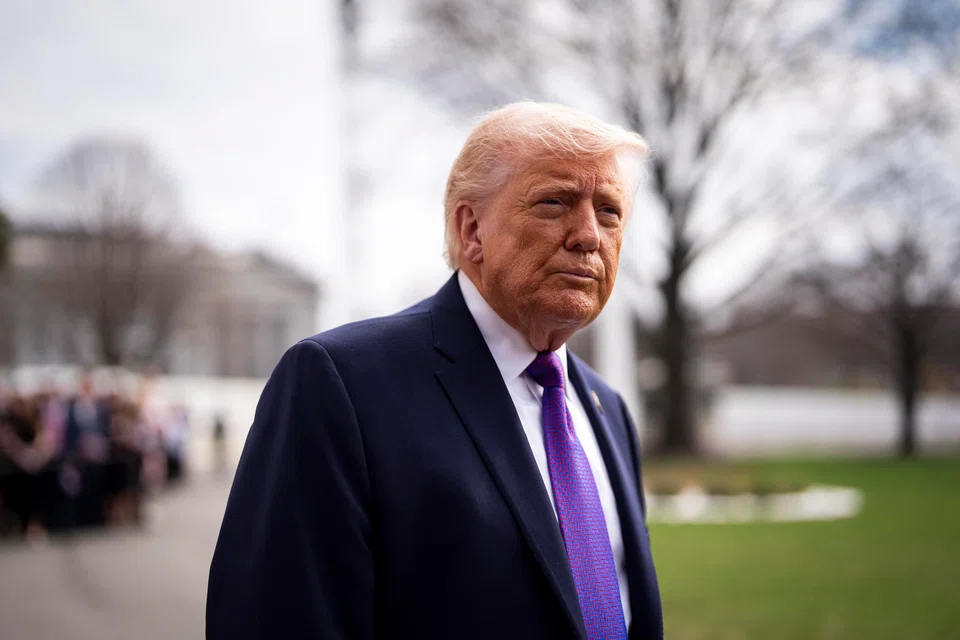
[TEL AVIV/JERUSALEM/WASHINGTON] US President Donald Trump on Saturday (Mar 21) threatened to “obliterate” Iran’s power plants if Teheran does not fully reopen the Strait of Hormuz within 48 hours, a dramatic escalation barely a day after he talked about “winding down” the war.
In a post on social media, he said: “If Iran doesn’t fully open, without threat, the Strait of Hormuz, within 48 hours from this exact point in time, the United States of America will hit and obliterate their various power plants, starting with the biggest one first!”
Trump’s ultimatum would expand the scope of US strikes to infrastructure that affects daily civilian life in Iran.
The threat of Iranian attacks has kept most ships from getting through the strait, a narrow waterway that serves as the conduit for around a fifth of global oil and liquefied natural gas supplies, threatening a global energy shock. Its near-closure sent European gas prices surging as much as 35 per cent last week.
Iran’s Khatam al-Anbiya military command headquarters said on Sunday that if the US attacks Iran’s fuel and energy infrastructure, then Iran would target all US energy, information technology and desalination infrastructure in the region.
Energy prices spiked last week after Iran responded to an Israeli attack on its major gas field by hitting Qatar’s Ras Laffan Industrial City, which processes around a fifth of the world’s liquefied natural gas, causing damage that will take years to repair.
The threats to Gulf infrastructure came as the conflict entered dangerous new territory.
Israeli officials said Iranian forces had for the first time fired long-range missiles, expanding the risk of attacks beyond the Middle East, even as an Iranian strike injured dozens of people not far from Israel’s nuclear site.
Israeli military chief Eyal Zamir said that Iran launched two 4,000 km range ballistic missiles at the US-British military base Diego Garcia in the Indian Ocean. The Israeli military said it was the first time Iran had used long-range missiles since the US and Israel began attacks on Feb 28.
“These missiles are not intended to strike Israel,” Zamir said in a statement on Saturday. “Their range reaches European capitals; Berlin, Paris, and Rome are all within direct threat range.”
A source at Britain’s defence ministry said the attack had occurred before the government gave specific authorisation on Friday for the US to use British military bases to carry out strikes on Iranian missile sites.
More than 2,000 people have been killed during the war. In Israel, 15 people have been killed in Iranian strikes.
Trump sends mixed signals
Trump and his administration have sent mixed messages about US goals throughout the war, now in its fourth week, leaving America’s allies struggling to respond.
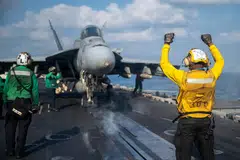
Trump’s ultimatum on Saturday was the most abrupt shift yet. His rhetoric pivoted from a drawdown to an explicit 48-hour countdown to strike Iran’s power infrastructure, even as US Marines and heavy landing craft continue heading to the region.
Iran’s largest power plants include the Damavand power plant near Teheran, with 2,868 megawatts (MW) of capacity; the Kerman plant in south-eastern Iran (1,910 MW); and the Ramin steam power plant in Khuzestan province (1,890 MW), according to industry and energy databases.
The country’s sole nuclear plant at Bushehr on Iran’s southern coast produces about 1,000 MW.
Earlier this month, Trump raised the idea of destroying Iran’s power grid even while downplaying the notion.
“We could take apart their electric capacity within one hour, and it would take them 25 years to rebuild,” Trump told reporters on Mar 11. “So ideally, we’re not going to be doing that.”
American voters appear increasingly concerned that the war could expand. Energy price shocks are fuelling inflation, hitting consumers and businesses hard. This is a major political liability for Trump as he seeks to justify the war to the public before the November elections, in which control of Congress is at stake.
Trump has also accused Nato allies of cowardice over their reluctance to help open the strait. Some allies have said they will consider it, but most say they are reluctant to join a war that he started without consulting them.
Southern Israel struck
The Israeli military said on Sunday that it was conducting strikes in Teheran, hours after attacks on southern Israel.
Late on Saturday, Iranian missiles hit the southern Israeli cities of Dimona and Arad, injuring dozens of people, including children, in separate strikes.
Iran’s Revolutionary Guards said in a statement early on Sunday that they targeted “military installations” and security centres in southern Israel.
Israeli military spokesperson Brigadier General Effie Defrin said in a post on X that the country’s air defences were functioning but did not intercept the strikes.
“We will investigate the incident and learn from it,” he said.
Israel’s secretive nuclear reactor is about 13 km south-east of Dimona. Both cities lie near several military sites, including Nevatim Air Base, one of the country’s largest.
“This has been a very difficult evening in the battle for our future,” Israeli Prime Minister Benjamin Netanyahu said in a statement released by his office following the strike on Arad. “We are determined to continue striking our enemies on all fronts.”
Iranian nuclear site hit
Iranian media said US and Israeli forces had attacked the Shahid Ahmadi-Roshan Natanz enrichment complex on Saturday morning.
Technical experts found no radioactive leaks, and nearby residents were not at risk. Israel said it was unaware of such a strike, while the head of the International Atomic Energy Agency said it was investigating.
Iranian media later reported strikes on a passenger terminal in the southern port of Bushehr and an empty passenger ship at nearby Kharg Island. The island, where Iran loads nearly all its oil exports, is seen as a potential target if Washington decides to hit Iranian energy or to use ground troops to seize it.
Iran said it fired drones at US bases in the United Arab Emirates and Kuwait that were used to stage attacks on Iranian islands in the Gulf. Saudi Arabia on Saturday ordered Iran’s military attache and four other Iranian diplomats to leave the country.
Israel also attacked Beirut, saying it was targeting the Iran-backed Lebanese Hizbollah militia, part of the deadliest spillover from the war on Iran. Hezbollah fired on Israel in support of Teheran on Mar 2.
Israel said its aircraft had attacked ballistic missile production sites around Teheran. Three members of a family were killed in a strike on a residential building in the city of Ramsar, Iranian media reported. REUTERS
Decoding Asia newsletter: your guide to navigating Asia in a new global order. Sign up here to get Decoding Asia newsletter. Delivered to your inbox. Free.
Share with us your feedback on BT's products and services
TRENDING NOW

Once staunchly pro-China, Malaysian Chinese businesses are now distancing themselves from Beijing

New launch or resale unit? Here’s a guide for homebuyers
The lesser-known prospects in the Asian chipmaking supply chain

Cliff Tan has 7 million followers and a 4-month waitlist. Why won’t he expand his business?

