

Trump's election trump card: a healthy economy
 Add BT as a preferred source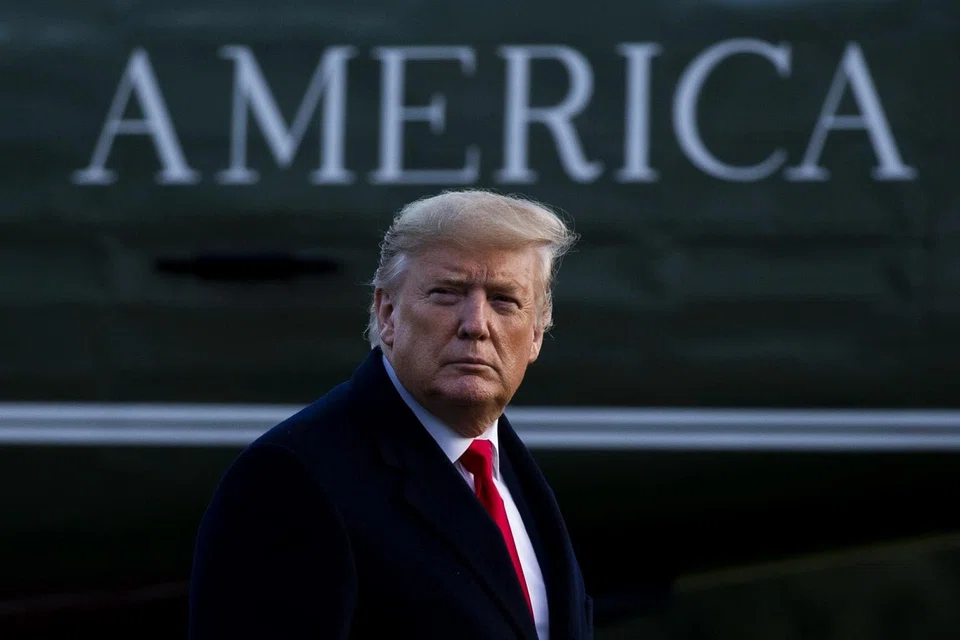
[WASHINGTON] After emerging intact from his impeachment and trial, US President Donald Trump can now trumpet his economic record as he battles to win re-election in November.
The businessman-turned-politician inherited an economy in the upswing from his predecessor Barack Obama, recovering from the ravages of the 2008 global financial crisis.
And rather than falter or die of old age, the expansion has continued through Mr Trump's first three years in office, giving him a trump card in the campaign to win a second term in November.
But there are some chinks in his armour, as well as growing fears about the economic damage done by the coronavirus outbreak in China, which raise doubts about how long the good times can last.
JOBS GAINS CONTINUE
"JOBS, JOBS, JOBS!" the president tweeted Friday following a blockbuster employment report showing the US economy created 225,000 jobs last month. He used the hashtag #PromisesMadePromisesKept.
Navigate Asia in
a new global order
Get the insights delivered to your inbox.
Last year, job growth averaged 175,000, compared to 193,000 in 2018 and 176,000 in 2017, slower than the final three years of the Obama administration
The unemployment rate, now at 3.6 per cent, near its lowest point in 50 years, compared to 4.7 per cent in December 2016, Mr Obama's last full month in office.
And joblessness in the Hispanic and black communities has tumbled to historic lows: for African Americans, the unemployment rate fell to 5.9 per cent in December from 7.8 per cent in December 2016; for Hispanics it dropped to 4.2 per cent from 5.9 per cent.
Average hourly earnings increased 2.9 per cent in 2019, keeping slightly ahead of inflation.
RECORD GROWTH
The economy is now in its 11th year of expansion, a record period of growth, but has fallen short of Mr Trump's lofty promises.
After reaching 1.5 per cent GDP growth in 2016, the last year of Mr Obama's term, in 2017 it climbed to 2.3 per cent and the following year to 2.9 per cent, thanks to stimulus from the massive tax cut aimed mostly at corporations and the wealthiest Americans, and increased government spending, particularly on the military.
But growth slowed to 2.3 per cent last year after Mr Trump's trade war with China intensified, which discouraged business investment.
While the US is in better shape than most advanced economies - the eurozone grew only 1.2 per cent - it is unlikely to see long periods of 3.0 per cent or higher as Mr Trump promised.
Treasury Secretary Steven Mnuchin said this week the economy could have hit the target last year were it not for the problems faced by Boeing.
The aerospace giant has been in crisis mode since its top-selling 737 MAX aircraft was grounded in March 2019 following two fatal crashes, which shut down exports of the plane.
The IMF predicts US growth will slow even further this year to 2.0 per cent as the boost from the tax cut fades away.
DEFICITS CLIMBING
The tax cuts approved by Congress at the end of 2017 - the most significant tax reform in 30 years - helped boost GDP growth but also drove government debt and the deficit higher.
The reform cut income taxes on the richest Americans while slashing the corporate tax rate to 21 per cent from 35 per cent.
The budget deficit is projected to breach US$1 trillion by the end of September, according to the Congressional Budget Office, while government debt is expected to represent 81 per cent of US GDP.
Mr Mnuchin said Mr Trump is planning to slash taxes for the middle class as well.
TRADE TENSIONS EASED
Mr Trump has congratulated himself on signing a "momentous" initial trade deal last month to end the long battle with Beijing. But at what cost?
China pledged to buy some US$200 billion in US goods, but tariffs on about two-thirds of the goods traded between the economic powers remain in place.
And the conflict slowed US and global growth and sent domestic manufacturing into a recession.
Mr Trump did fulfill his campaign promise to renegotiate the 1994 continental free trade deal with Mexico and Canada, creating the USMCA.
The new pact, also signed in January, replaces what Mr Trump called the worst trade deal in US history, though experts say it amounts to an update rather than an overhaul.
BOOMING STOCK MARKET
Wall Street has cheered the tax cuts and loosening of regulations by the Trump administration, gaining around 55 per cent since he was elected on November 8, 2016.
That will be another selling point to Americans whose retirement wealth depends in large part on stock prices.
AFP
Share with us your feedback on BT's products and services
TRENDING NOW

Middle East-linked energy supply shocks put Asean Power Grid back in focus

Strengthening Asean’s economic resilience through RCEP’s 2027 review
How China’s young workers are securing their future even as AI disrupts job market, triggers pay cuts

US-China rivalry and the Kindleberger Trap: Why inaction – not escalation – is the biggest risk

