

Trump’s first-term China tariffs survive Supreme Court challenge
Customs data shows importers continue to pay more than US$35 billion a year under the expanded Section 301 tariffs
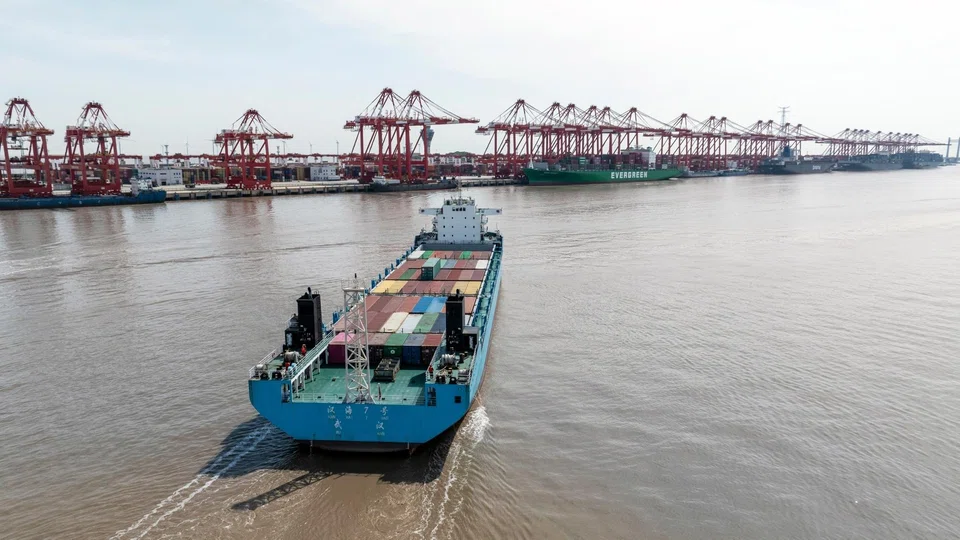
[WASHINGTON] The US Supreme Court declined to put new limits on President Donald Trump’s tariff authority, leaving in place import taxes imposed during his first term on hundreds of billions of US dollars in goods from China.
Turning away an appeal by a group of importers on Monday (Jun 15), the high court without comment let stand a 2025 federal appeals court decision that upheld the duties.
At issue was the president’s power to increase tariffs that were imposed previously under Section 301 of the 1974 Trade Act to address unfair trade practices. A sparingly used provision known as Section 307 authorises the president, acting through the US trade representative, to “modify or terminate” those tariffs at a later point.
The importers said that Trump went too far by using his Section 307 authority to expand tariffs that originally targeted US$50 billion in imports from China in an effort to force that country to change its intellectual property practices. After China retaliated, the administration increased the coverage, eventually affecting US$370 billion in goods by 2019.
Customs data shows importers continue to pay more than US$35 billion a year under the expanded Section 301 tariffs.
The companies told the Supreme Court that Trump was trying to use Section 307 to circumvent Section 301’s more stringent procedural requirements. Section 307’s modification authority permits “minor or modest changes, not radical transformations”, the importers argued.
SEE ALSO



The US Court of Appeals for the Federal Circuit rejected that interpretation in September, saying the term “modify” is “indifferent to degrees of change and contains no inherent limitations”.
The importers asked the justices at least to order reconsideration in light of their Feb 20 ruling invalidating global tariffs Trump imposed last year by invoking a federal emergency-powers law.
The Trump administration urged the Supreme Court to leave the Federal Circuit ruling in place, saying the president did exactly what Congress envisioned by modifying previously imposed tariffs after China retaliated. “It is hard to imagine an action more clearly authorised by a statute,” US Solicitor General D John Sauer argued. BLOOMBERG
Decoding Asia newsletter: your guide to navigating Asia in a new global order. Sign up here to get Decoding Asia newsletter. Delivered to your inbox. Free.
Share with us your feedback on BT's products and services
TRENDING NOW

GCash parent Mynt rises in market debut after South-east Asia’s top 2026 IPO

In the age of AI, what is a university education for?

Singapore to use ‘every legal and regulatory lever’ against companies linked to haze: Shanmugam
‘IPOs are not the only vehicle’: KKR heads for record exits even as firms stay private for longer

