With Trump’s mixed messaging on Iran war end, calm in oil markets may be fleeting
More than three-fourths of the crude oil exports from the Middle East to China, Japan, South Korea and Taiwan pass through the Strait of Hormuz
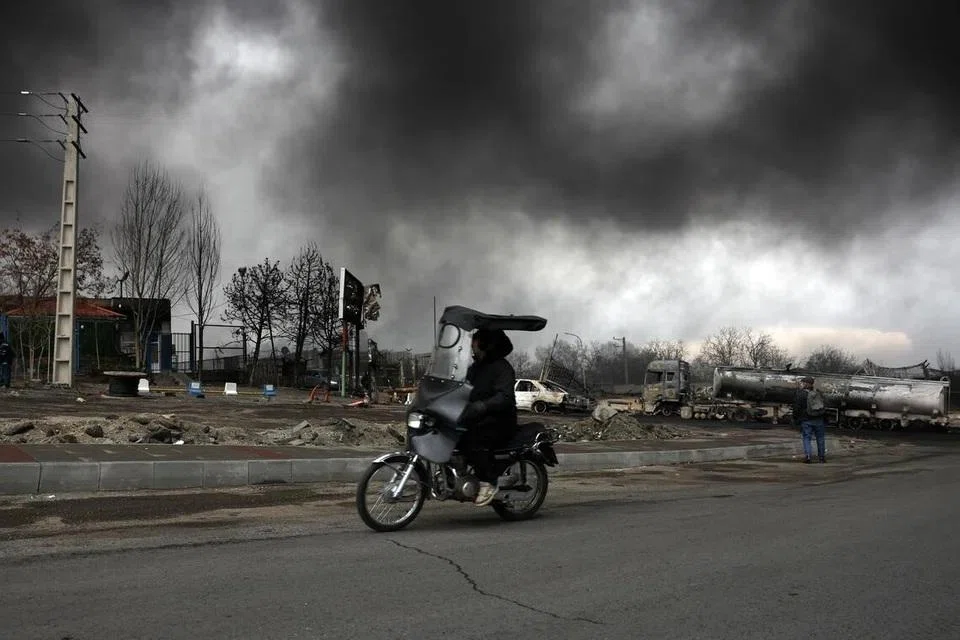
[HOUSTON] The Iran war is not likely to end “very soon” despite US President Donald Trump’s declarations, analysts say. Neither ceasefire nor peace talks are on the horizon, even as Trump asserted that the war was “very complete”.
His comments, however, made to the media on Mar 9 during a visit to Miami, calmed the stock market and steadied oil prices.
“I think the war is very complete, pretty much,” Trump said in a CBS interview. “They have no navy, no communications, they have got no air force.”
But, in his characteristic fashion, he also sent contradictory messages during a news conference a few hours later.
When asked if the war would be over in a week, Trump replied: “No, but soon, very soon.”
“We could call it a tremendous success right now,” he added, “or we could go further, and we are going to go further”.
Raising the pitch on Truth Social, he threatened Iran with heavier strikes if it blocked traffic in the Strait of Hormuz, which carries 20 per cent of the world’s oil and gas, most of which goes to Asia.
“If Iran does anything that stops the flow of oil within the Strait of Hormuz, they will be hit by the United States of America 20 times harder than they have been hit thus far,” Trump said, calling his warning a “gift to China” and other nations.
More than three-fourths of the crude oil exports from the Middle East to China, Japan, South Korea and Taiwan pass through the Strait of Hormuz, where traffic ground to a halt soon after the onset of the war on Feb 28, which also forced key Arab nations to cut their production as they began to run out of storage facilities.
SEE ALSO

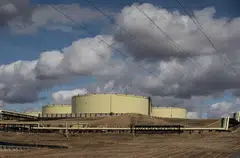

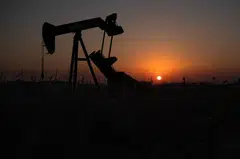
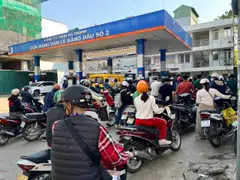
Trump’s demands for Iran’s “unconditional surrender” and his goal of extinguishing its nuclear ambitions also suggest a longer campaign than the “short-term excursion” he had alluded to.
Unlike the American President, who said the war would last four to six weeks in comments made at its beginning, analysts do not see it ending soon.
Iran wouldn’t want a premature ceasefire
It will not be as easy as Trump appears to think, maintains Trita Parsi, the executive vice-president of the Washington-based Quincy Institute for Responsible Statecraft.
“Tehran also has a vote – and there is little to suggest that it will agree that the war is over,” said Parsi, an expert on US-Iran relations, Iranian foreign policy and the geopolitics of the Middle East.
Iran would object to what it would consider a “premature ceasefire out of fear that it would only give the US and Israel time to regroup, rearm and then re-attack Iran”, he said in a post on X.
“If the war ends now, Iran will be in a worse situation than it was before the start of the war,” Parsi noted.
“For the conflict to be ripe for a ceasefire, Tehran believes that enough cost must have been inflicted on the US, regional states, Israel and on the global economy that all states conclude that starting the war was a mistake – and as a result, no state will seek to restart it,” he said.
He added that Iran, in order to accept a ceasefire, will likely demand sanctions relief and release of its frozen funds abroad.
“Much of its infrastructure has been destroyed, its missile capabilities have taken hits, its ability to export oil has been damaged, and most crucially, its prospects for sanctions relief have been obliterated. Indeed, who will and can help rebuild Iran under these circumstances?” he added.
Iran’s Islamic Revolutionary Guards Corps has said it would not allow any oil to leave the region if attacks from the US and Israel continue.
“We are the ones who will determine the end of the war,” a spokesperson said, according to Iran’s state media.
Is Trump afraid of rising oil prices?
Although Trump did not say as much, rising oil prices are a factor in the US President’s calculations as he looks to preserve his Republican Party’s chances in the midterm elections now less than eight months away on Nov 3.
The average national cost of gas on Mar 9 stood at US$3.48 (S$4.43) per gallon, up 48 cents since last week and 58 cents from a month ago, according to the American Automobile Association.
Alarm is already sounding on prices hitting US$4 a gallon, considered a politically sensitive level.
Trump’s remarks suggesting that the end of war was in sight buoyed the oil markets on Mar 9. Oil prices fell, swinging more than US$25 in a matter of hours from a high of nearly US$120 a barrel.
What also helped calm nerves were signals that the US, along with other Group of Seven (G7) industrialised nations, could carry out a coordinated release of strategic oil reserves to keep prices in check.
The G7 could work through the International Energy Agency, which represents 32 oil-consuming nations, to coordinate a release from their stockpiles of around 1.2 billion barrels. The G7 consists of Britain, Canada, France, Germany, Italy, Japan and the US.
The release of reserves was a measure of choice during the first Gulf war in 1991 and as recently as in 2022 after Russia’s invasion of Ukraine.
The US, China and Japan, in that order, hold the world’s largest reserves.
However, oil reserves cannot make up for the shortfall in the supplies of gas which is used for generating electricity and heating, especially in Europe.
Trump had displayed a far more cavalier attitude towards oil prices in his remarks made earlier.
“Short-term oil prices, which will drop rapidly when the destruction of the Iran nuclear threat is over, is a small price to pay,” he said on Truth Social when oil prices breached US$100 a barrel on Mar 9.
“If they rise, they rise,” he had said of oil prices during the first week of the war that began on Feb 28.
He has also insisted that he had drawn up a comprehensive plan for energy markets, promising prices will “drop dramatically” once war objectives are met.
US Energy Secretary Chris Wright also tried to calm fears of disruption stemming from the Strait of Hormuz. “We are not too long away, I think, before you will see more regular resumption of ship traffic,” he said in a TV interview. “This is a weeks, this is not a months, thing.”
The nightmare scenario for the Trump administration would be for the oil prices to keep rising. Policymakers especially dread the prospect of higher oil prices stoking inflation that combines with slowing growth to create stagflation, which is notoriously hard to resolve.
Josh Lipsky, chair of international economics at the Atlantic Council, said the worst was not over for the oil markets. “This isn’t the end of the oil roller coaster,” he said in an analysis.
“No one knows what tomorrow will bring… the bottom line is ships still don’t feel like they can transit the Strait of Hormuz by and large, and that is the single biggest hold-up.”
Goldman Sachs analysts have said oil prices could “exceed the 2008 and 2022 peaks, if Strait of Hormuz flows were to remain depressed throughout March”. Oil prices touched US$150 a barrel in 2008.
The world is faced with the worst oil production crisis ever, warned noted analyst Daniel Yergin, vice-chair of S&P Global and the author of The Prize: The Epic Quest For Oil, Money & Power.
“Current oil prices in the US$90s are far from the worst-case scenario,” Yergin wrote in a Mar 7 op-ed in the Financial Times.
“But right now, the world is looking at the biggest disruption in oil production in history as well as a resounding shock to global gas markets. The key question for global energy markets now is the duration of this explosive war.”
US oil giants to make windfall profits
The US position as the world’s largest producer and dominant exporter of oil and gas gives Trump some wiggle room.
The country pumps more than 13 million barrels of crude oil per day, dwarfing Saudi Arabia and Russia, which produce around 10 million barrels a day each. It is also the leading natural gas producer, extracting more than a trillion cubic metres in 2024.
The combined output by the next largest producers, Russia and Iran, stood at less than that amount.
With rising prices, American oil giants stand to make windfall profits and generate more revenue to fund the war. Additionally, their output is shielded from the war in the Middle East.
“It is not only the supply that we have, it is the security of moving the barrels,” said Carl Larry, a Houston-based energy analyst.
“There will be no US ships that are attacked or delayed to a destination,” said Larry of Enverus MarketView, where he focuses on commodity trading and risk solutions for the oil and gas sector.
Still, although the US is less directly exposed to disruptions from the war in the Middle East, including the strikes on the regional oil infrastructure, supply shocks will eventually be transmitted across the globally-linked oil markets. THE STRAITS TIMES
Decoding Asia newsletter: your guide to navigating Asia in a new global order. Sign up here to get Decoding Asia newsletter. Delivered to your inbox. Free.
Share with us your feedback on BT's products and services