

Trump’s Nvidia deal reshapes US’s China strategy, risks supercharging Xi’s AI push
The Asian nation has challenged America’s chip curbs this year with its own export controls on rare earths
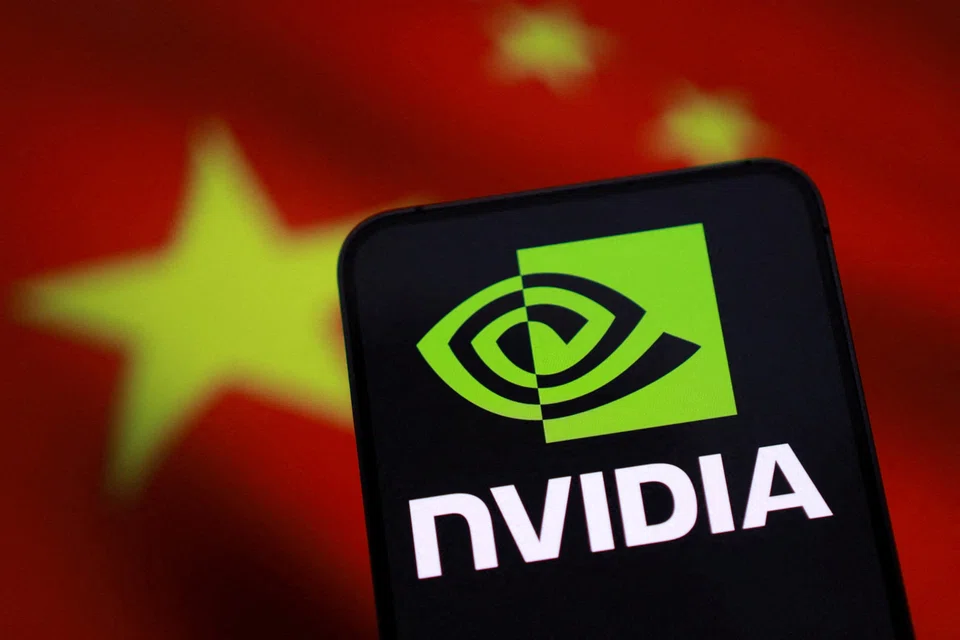
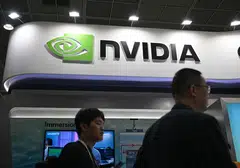
US PRESIDENT Donald Trump’s decision to allow Nvidia to sell advanced chips to China marks more than just a shift in US tech policy. It also raises questions about how far he’ll go to steady ties with Xi Jinping.
The Republican leader granted America’s most valuable company permission on Tuesday (Dec 9) to export its high-end H200 chip to China, watering down years of US national security safeguards. While he pledged Nvidia’s top products would remain off bounds, the move gives China access to semiconductors at least a generation ahead of its best technology.
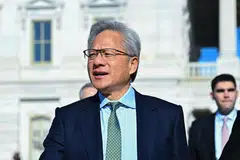
Justifying that decision, Trump vowed to simultaneously “protect National Security, create American Jobs, and keep America’s lead in artificial intelligence (AI)”. That philosophy echoed Nvidia chief Jensen Huang’s claims that depriving Beijing of US chips only helps Chinese firms such as Huawei Technologies catch up, and calls from within Trump’s own Cabinet to get China “addicted” to American tech.
It’s the latest example of Trump putting national security controls once deemed off limits in trade talks on the negotiating table with China. That reversal will test how the US president handles other contentious issues, such as Chinese investment into the US and even America’s position on Taiwan, as Beijing ramps up pressure on the self-ruled democracy it claims as its own.
“Trump’s H200 decision is unconscionable if your frame of reference is great power competition and you view AI superiority as the measure of dominance in the 21st century,” said Ryan Hass, a former US diplomat and senior fellow at the Brookings Institution. Trump appears more focused on maximising opportunities for American businesses, while avoiding conflicts with China, he added.
It remains to be seen whether Beijing will accept the H200 or push for the more powerful Blackwell. When Trump previously eased restrictions on the less advanced H20 chip, authorities in Beijing summoned Nvidia to discuss alleged security risks, signalling to domestic importers that they should steer clear.
Trump decided to let Nvidia sell its H200 chips to China after concluding the move carried a lower security risk because Huawei already offers AI systems with comparable performance, according to a source familiar with the deliberations.
The move would give the US an 18-month advantage over China in terms of what AI chips customers in each market receive, with American buyers retaining exclusive access to the latest products, the source said.
The Financial Times, citing two sources familiar with the matter who were not identified, reported that regulators in Beijing are considering ways to allow limited access to the H200, with buyers perhaps subjected to an approval process to explain why their needs were not met by domestic producers.
SEE ALSO
So far, Trump has claimed Xi responded “favourably” when informed about the move, though they have not publicly spoken since last month. Chinese Foreign Ministry spokesperson Guo Jiakun only said the US and China should achieve “mutual benefits through cooperation” when asked at a regular briefing about the latest development.
China has challenged America’s chip curbs this year with its own export controls on rare earths, a move that temporarily paralysed some US factories and forced Trump to slash tariffs. An October deal struck at a summit in South Korea sealed a fragile truce, with US officials announcing the two leaders will meet four times in 2026 as they seek to avoid further tensions.
The details around China’s latest rare earth licenses are still being hammered out, while Beijing has yet to meet its pledged purchases of US agricultural goods, giving Trump incentive to keep Xi on side.
China is expected to use that leverage to seek concessions from Trump on Taiwan when he visits Beijing in April, said Wu Xinbo, who has advised the Chinese Foreign Ministry. A statement saying Washington does not support Taiwan independence and a commitment to curtail arms sales to Taipei would be high on the list of demands, he added.
“Trump is betting on next year’s Nobel Peace Prize nomination and he is now doing everything to prepare for that,” said Wu, who is director at Fudan University’s Center for American Studies in Shanghai. “Taiwan is a big deal in that case.”
The Trump administration pushed back against suggestions its commitment to Taiwan was waning in its latest National Security Strategy, which said the US would “deny any attempt to seize Taiwan”. That document also removed China as the US’s main foreign policy challenge, while calling for a “mutually advantageous” economic bond.
Trump already put national security concessions on the table, as he worked to seal the trade truce in South Korea. In exchange for China halting its most sweeping export curbs on critical minerals, he agreed to pause for one year a rule that expanded the number of Chinese companies restricted from access to advanced technology.
The H200 approval sparked debate on Chinese social media, with some commentators arguing there’d be high demand given its superior performance compared to leading domestic processors. Others said concerns over Nvidia’s H20 chips still applied, such as security vulnerabilities and the danger of relying on US supply chains.
“The US could lift restrictions and authorise H200 sales to China today, only to ban them again tomorrow,” one commentator wrote. “If China becomes dependent on American chips, it will never possess true security of supply.”
“The H200 is now not just an AI chip but an example of how good or bad US-China relations can be,” George Chen, partner and co-chair of digital practice at The Asia Group, which was co-founded by former US Deputy Secretary of State Kurt Campbell.
Trump’s desire to strike deals in areas where interests align is on display in the Nvidia decision, according to Dexter Roberts, a non-resident senior fellow at the Atlantic Council’s Global China Hub.
“This is a sort of a game changer,” he said, noting it would boost Beijing’s AI and quantum computing capability. “Trump also signalled he’s open to big Chinese investment into the US,” he added, citing the campaign trail comments on electric vehicle plants.
China’s tech self-sufficiency push will continue regardless of access to the H200s, said Laila Khawaja, research director of Gavekal Technologies, calling access to chip-making gear a bigger boon.
“What Xi really wants is for a relaxation in chip tool export controls,” she added. “Xi would very much like China to be able to make Chinese chips onshore, while Chinese toolmakers catch up.” BLOOMBERG
Decoding Asia newsletter: your guide to navigating Asia in a new global order. Sign up here to get Decoding Asia newsletter. Delivered to your inbox. Free.
Share with us your feedback on BT's products and services
TRENDING NOW

S$8 billion wiped off OCBC value as shares slide 5.8% in heavy trade

Grab CEO’s wife Chloe Tong on life with Anthony Tan and finding her purpose
Brookfield denies accusation it cut Soilbuild out of Mapletree deal
8 public officers referred to police over property buys near unannounced MRT stations: Chan Chun Sing

