

Tsipras sticks to anti-bailout stance ahead of eurozone meeting
Athens
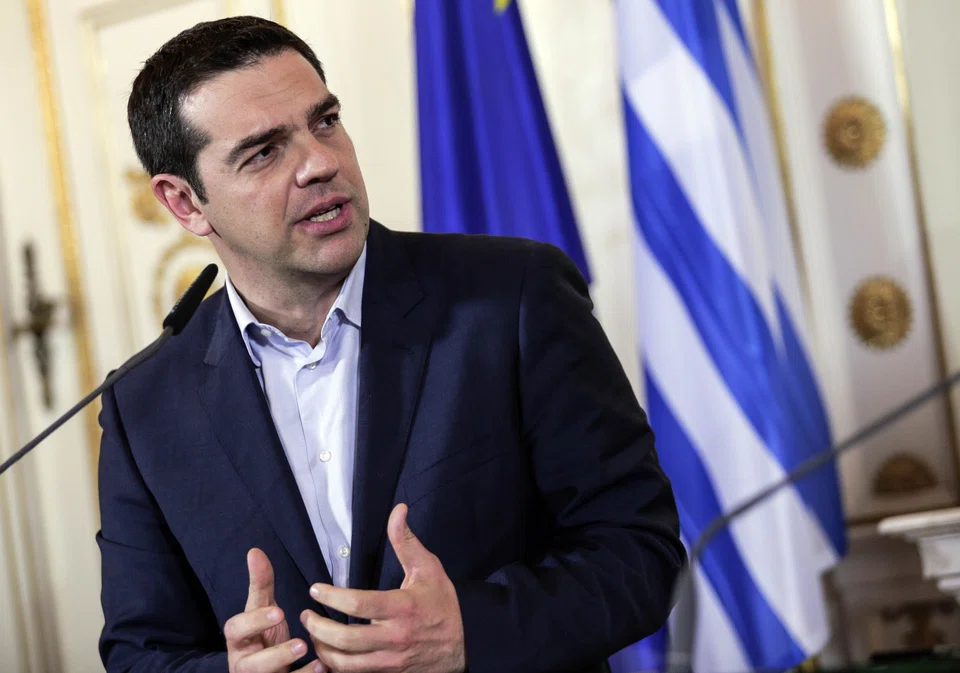
GREEK Prime Minister Alexis Tsipras reaffirmed his government's rejection of the country's international bailout programme before Wednesday's emergency meeting of the euro area's finance ministers to discuss the country's financing needs.
"We need an honest negotiation with our partners that does not condemn the Greek economy and society to unending recession," Mr Tsipras, 40, said in an address to Parliament on Sunday, marking the start of a three-day debate on his government's policy platform.
The leader of Greece's anti-bailout governing coalition vowed to increase the minimum wage, restore the income tax-free threshold, halt infrastructure privatisations, and ask for World War II reparations from Germany, in a speech that sets him on a collision course with the country's creditors.
"It is the irrevocable decision of our government to honour the mandate of the Greek people and negotiate an end to the European Union's austerity," said Mr Tsipras.
"Mr Tsipras's tone was defiant and highly emotional, striking pronounced nationalist notes, from an emphasis on national dignity to his announcement that he will be seeking WWII reparations from Germany," according to Stathis Kalyvas, a professor of political science at Yale University.
The premier is seeking to keep Greece financially afloat while breaking free from the shackles of its international bailout programme, which expires at the end of this month. He said he aims to reach an agreement within 15 days on the "bridge programme", which will ensure the country's financing until June, amid doubts about Greece's ability to pay its bills as at the end of this month. "We aim to work with our partners in Europe to achieve these goals." Greece's public debt stands at more than 320 billion euros (S$490.4 billion), making it Europe's most-indebted country when measured against output. "Greece wants to service its debt, which is now over 180 per cent of GDP. It's impossible to service as long as our partners insist on austerity," Mr Tsipras said.
The next showdown with Greece's EU partners is scheduled for Wednesday in Brussels, when Finance Minister Yanis Varoufakis faces his 18 euro-area counterparts in the emergency meeting.
In a lengthy list of policy actions, Mr Tsipras said on Sunday evening the government plans to restore the tax-free threshold for individual workers to 12,000 euros a year and gradually raise the minimum wage to 751 euros a month through 2016. Both measures would reverse changes made by previous governments as conditions of Greece's bailout programme. He said he is committed to maintaining balanced budgets, and that he is willing to negotiate terms that will make Greece's debt sustainable. "What we will not negotiate is the history and the dignity of our people," said Mr Tsipras. His Syriza party swept into power on Jan 25 with promises to challenge the terms of the bailout programme provided by the EU and the International Monetary Fund.
Mr Tsipras told lawmakers in Athens that the government hopes to strike a more lasting arrangement with international creditors by June, even as he vowed to give a Christmas bonus to low-income pensioners, forbid foreclosures of primary residences, abolish current property tax, and rehire some public servants who were dismissed during the crisis.
"I am not in favour of handing over money to the Greeks," Austrian Chancellor Werner Faymann said in an interview with the Kurier newspaper before Mr Tsipras' speech. "Who's supposed to pay for that? I do, however, support negotiations over technical credit conditions so that the country will have more room to manoeuvre to exit the crisis." BLOOMBERG
READ MORE: Greece exit risk draws global concern
TRENDING NOW

Nvidia reinstates Jensen Huang as CEO; Trump says move poses no national security risk

Indonesia’s coal tycoon Low Tuck Kwong replaced as Bayan Resources president-director

Nvidia surges 33% after reinstating Jensen Huang, reviving AI trade; stocks soar in US and Europe

Consider lowering homeownership barriers for some non-resident foreigners

