

TSMC’s Q1 revenue jumps 35% year on year, beats market forecasts
The results top a LSEG SmartEstimate of NT$1.1 billion from 20 analysts
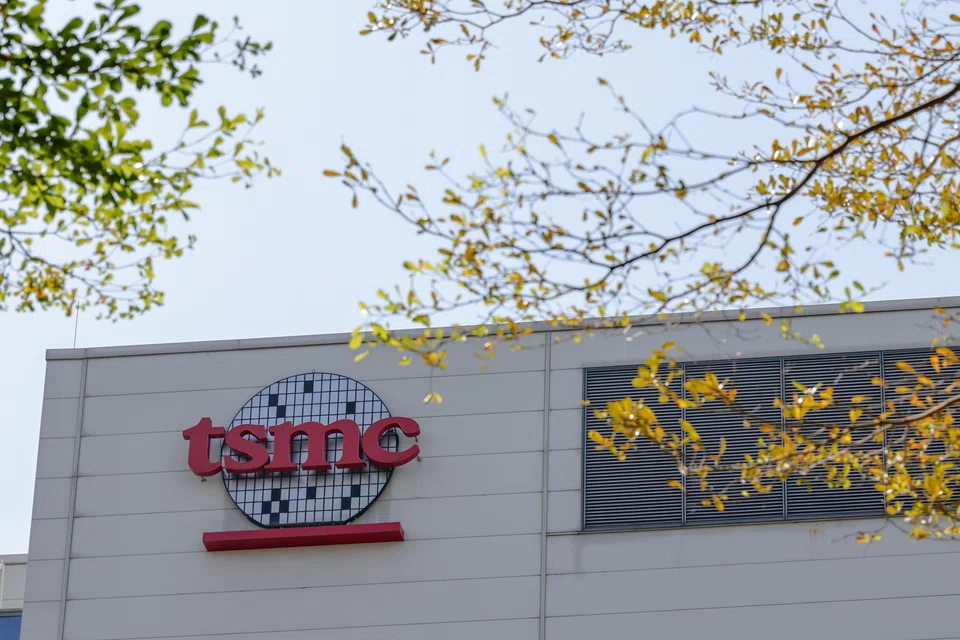
[TAIPEI] The world’s largest contract chipmaker, Taiwan Semiconductor Manufacturing Company (TSMC), reported first-quarter revenue of NT$1.13 trillion (S$45.5 billion) on Friday (Apr 10).
This was a 35 per cent year-on-year rise which beat market forecasts on surging interest in artificial intelligence (AI) applications.
Its revenue for the January-to-March period of NT$1.13 trillion is higher than NT$839.3 billion in the year-ago period. The brief statement gave no other details.
The results topped a SmartEstimate by the London Stock Exchange Group (LSEG) of NT$1.1 billion from 20 analysts, and was in line with TSMC’s January guidance of US$34.6 billion to US$35.8 billion on its last earnings call.
The company gives guidance only in US dollars.
It will report full first-quarter earnings on Apr 16, and give an updated outlook for the current quarter and the full year.
The company, with customers including Nvidia, has been a major beneficiary of advances in AI.
The technology has more than offset a tapering-off in pandemic-led demand for chips used in consumer electronics such as tablets.
TSMC’s Taipei-listed shares have gained 29 per cent in 2026, versus a rise of 22 per cent in the benchmark index.




Its shares closed up 2.3 per cent on Friday.
Taiwan’s Foxconn, the world’s largest contract electronics maker and Nvidia’s biggest server maker, has also reported bumper sales, with an on-year rise of 30 per cent in first-quarter revenue. REUTERS
Decoding Asia newsletter: your guide to navigating Asia in a new global order. Sign up here to get Decoding Asia newsletter. Delivered to your inbox. Free.
Share with us your feedback on BT's products and services






