Turkey’s Erdogan backs high interest rates in surprise move
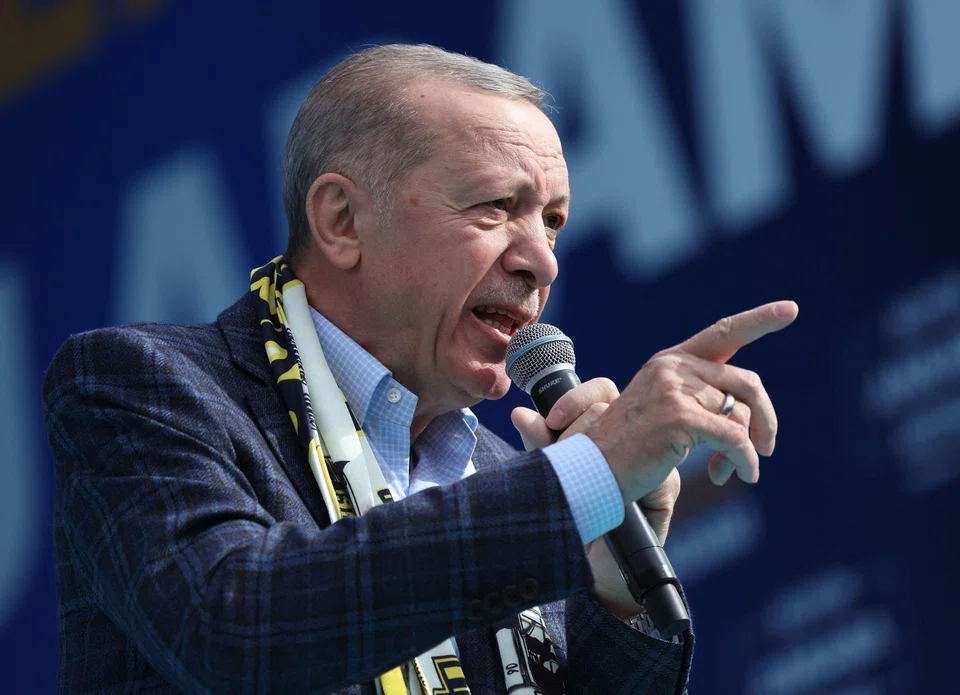
TURKISH President Recep Tayyip Erdogan said “tight monetary policy” was needed to slow inflation, in an apparent change in stance for a leader who’s long frustrated investors by championing ultra-low borrowing costs.
The lira reversed its losses after Erdogan spoke in Ankara, trading 0.1 per cent stronger at 26.78 per dollar as at 3.10 pm local time. It’s still down more than 30 per cent this year.
“We will lower inflation to single digits with the support of monetary tightening,” he said as his government unveiled economic targets for the next three years.
The Turkish president, who won re-election in May to take his rule into a third decade, is known for being a self-proclaimed enemy of high interest rates. He has removed three central bank governors in recent years for not toeing the line.
Erdogan revamped his economic team shortly after his election victory, appointing Mehmet Simsek, a former Merrill Lynch bond strategist, as finance minister, and Hafize Gaye Erkan, who used to work at Goldman Sachs Group, as central bank governor.
While they’ve overseen a sharp rise in rates and an unravelling of state controls over financial markets since June, Erdogan had said his views on monetary policy were unchanged.
“People shouldn’t be under the misconception that the president is moving towards a serious change in interest-rate policies,” he said on Jun 14. “I’m the same.”
The president’s fixation with a growth-at-all-costs strategy and push for low rates triggered a surge in inflation and caused investors to flee the country.
On Wednesday, Erdogan also said his administration would curb consumer demand. Still, he said he won’t “make concessions on economic growth”.
SEE ALSO
Turkey revised down its economic growth targets in the medium-term program. Gross domestic product for this year will be 4.4 per cent, down from 5 per cent in the previous report, according to a presentation by vice-president Cevdet Yilmaz.
The government now sees growth at 4 per cent in 2024, compared to 5.5 per cent before.
Turkey is scheduled to hold local elections in March. The president has for years boosted monetary stimulus ahead of polls and wants to win back the biggest city of Istanbul, now held by the opposition.
The government offered a pessimistic outlook on inflation, sharply revising up its year-end projection to 65 per cent, from 25 per cent.
Year-on-year inflation rate rose faster than expected in August, to 58.9 per cent, underscoring the central bank and Erdogan’s challenge in ending a cost-of-living crisis.
The central bank amended its year-end inflation forecast to 58 per cent in July, more than doubling it from the figure under Erkan’s predecessor.
Monetary authorities expect price growth to peak in the second quarter of next year and slow to 33 per cent at the end of the year. The 2025 year-end projection is 15 per cent.
Those inflation forecasts for the next two years are in line with the government’s.
The current benchmark interest rate is 25 per cent, after the central bank raised it by 750 basis points – more than expected – in late August. The bank has signalled the tightening cycle will continue. BLOOMBERG
Decoding Asia newsletter: your guide to navigating Asia in a new global order. Sign up here to get Decoding Asia newsletter. Delivered to your inbox. Free.
Share with us your feedback on BT's products and services