

UAE cuts economic ties with Iran after missiles target territory
[DUBAI] The United Arab Emirates said it was cutting all economic ties with Teheran after accusing Iran of firing ballistic missiles at its territory, ramping up regional tensions.
The Persian Gulf nation, traditionally one of Iran’s main commercial partners, said it would halt trade and financial transactions with Iran until further notice in light of “escalations that undermine regional and international peace and security,” the UAE said in a statement.
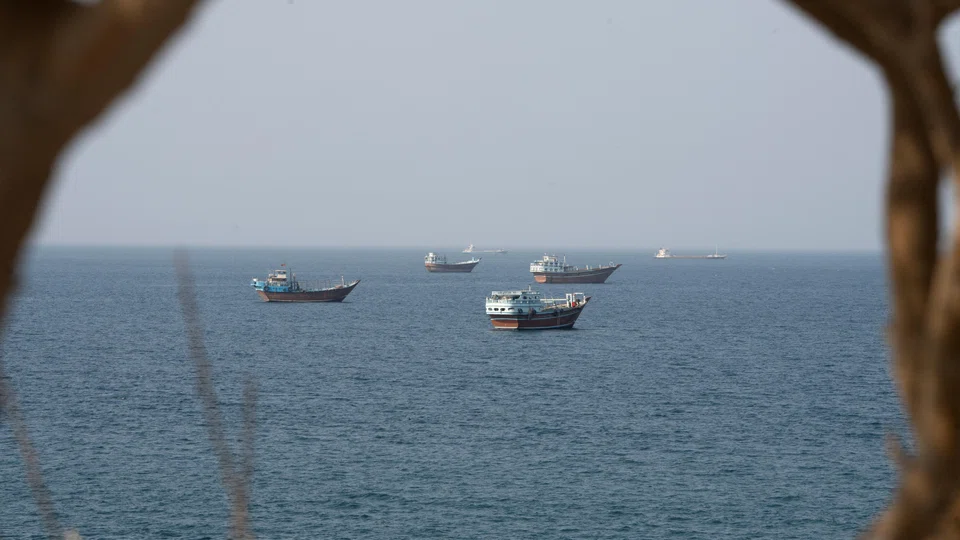
A missile threat alert sounded in Dubai on Tuesday (Aug 18) evening, urging residents to seek shelter. The Defence Ministry later said two projectiles that targeted maritime traffic fell into the sea, with only one reaching UAE waters. Iran denied responsibility for the attack, which would be the first on UAE territory since May.
The UAE and Iran have had close trading ties for generations due to their geographic proximity and deep historic links. The UAE has been Iran’s top trade partner in recent years, with Teheran relying on the relationship for access to foreign goods and hard currency.
The UAE’s distancing will add pressure on Iran at a time when Washington says it intends to further squeeze the Islamic Republic’s economy, which has withstood decades of sanctions. The war has damaged its industrial capacity, curtailed crude exports and driven inflation sharply higher.
US Secretary of State Marco Rubio spoke on Tuesday with the UAE’s national security adviser, Sheikh Tahnoon bin Zayed Al Nahyan, about security and freedom of navigation in the Strait of Hormuz.
“The two discussed a number of regional security issues, including Lebanon, as well as continued US-UAE coordination to hold Iran and its terrorist proxies accountable for ongoing attacks,” Rubio’s deputy spokesperson Tommy Pigott said in a statement on Tuesday.
Brent crude rose for a fourth straight day on Wednesday, trading at more than US$91 a barrel. The global benchmark has surged as prospects dimmed for a swift reopening of Hormuz, through which a fifth of the world’s oil and liquefied natural gas transited before the war.
That war triggered parallel conflicts across much of the region and thousands of people were killed, most of them in Iran, before the two nations reached a ceasefire in June and agreed to negotiate a comprehensive peace deal within 60 days. But the pact was repeatedly violated and both sides had declared it defunct before it expired this week.
“There are no talks or conversations going on, or scheduled, with the Islamic Republic of Iran,” US President Donald Trump posted on his social media platform on Tuesday. “The Naval Blockade remains in full force and effect. The Hormuz Strait is open and operating. All water mines have been removed or detonated.”
Even so, traffic remains well below prewar levels and several ships that have run the gauntlet through the waterway have come under attack in recent days.
“If President Trump wants Iran to back down, there will have to be concessions,” Karen Young, a senior research scholar at Columbia University’s Center on Global Energy Policy, told Bloomberg Television. “And what Iran wants are access to frozen assets and it wants sanctions relief, that would be part of any negotiation. But that’s not part of the talks right now as far as we know.”
Iranian officials have said they are negotiating a deal with Oman on how Hormuz should be managed and its reopening will hinge on the US meeting all the terms it agreed to in June, including an end to the blockade on Iranian port and the unfreezing of its assets.
Trump has struggled to find an off-ramp to a conflict that’s driven up gasoline prices and grown increasingly unpopular in the US, threatening to erode Republican support ahead of November’s midterm elections. He says his primary aim is to ensure Iran never acquires nuclear weapons, which Teheran denies pursuing.
Jake Sullivan, who served as national security adviser under former President Joe Biden, told Bloomberg Television that Trump faces two bad options: continue the war and absorb the economic costs, or strike “a very, very bad deal” as Iran raises the price of reopening Hormuz with new demands. BLOOMBERG
Decoding Asia newsletter: your guide to navigating Asia in a new global order. Sign up here to get Decoding Asia newsletter. Delivered to your inbox. Free.
Share with us your feedback on BT's products and services
TRENDING NOW

Once staunchly pro-China, Malaysian Chinese businesses are now distancing themselves from Beijing

Looking beyond looming CEO succession, should UOB potentially pursue a transformative merger?

Could stablecoins be the future of money?

Grab CEO’s wife Chloe Tong on life with Anthony Tan and finding her purpose

