

UK budget rules should seek to lower debt, parliament committee says
Britain’s public sector net debt has risen from 61 per cent in 2009/10 to 95 per cent of GDP by 2025/26
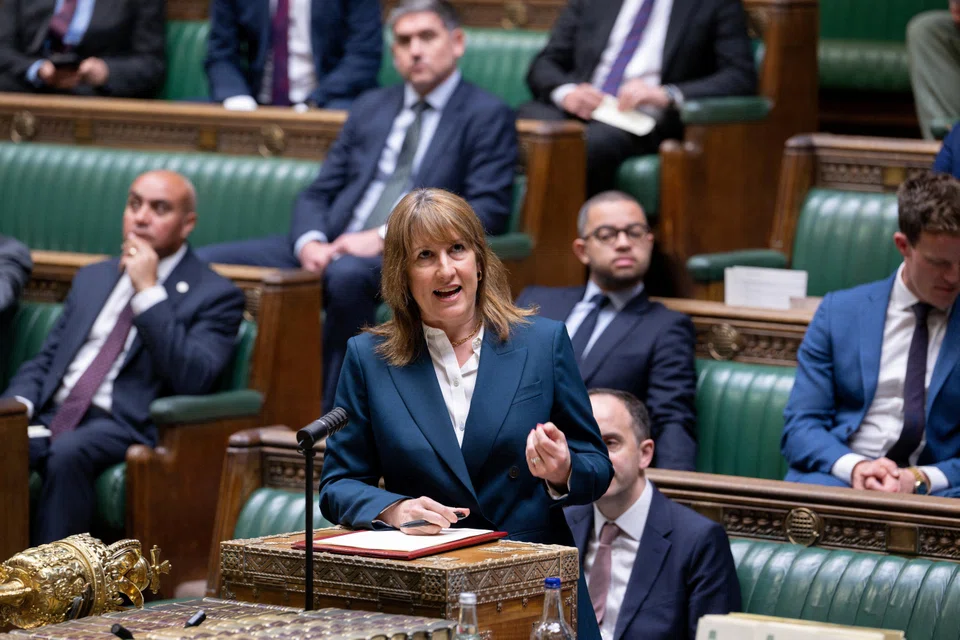
[LONDON] British finance minister Rachel Reeves should explicitly aim to bring public debt below its current level within the next three years, rather than simply halt its current rise, a committee of Britain’s upper house of parliament said on Tuesday.
The House of Lords’ Economic Affairs Committee said Reeves’ fiscal rules - which she set out in October 2024 - were not tough enough to stop public debt rising as a share of the economy over the long term.
“The UK’s fiscal framework is frail. The government’s behaviour must change with significantly larger fiscal buffers becoming the norm and these buffers not being used as a piggy bank that can be ‘raided’,” said committee chair Stewart Wood, a member of Reeves’ Labour Party.
British finance ministers’ self-imposed fiscal rules have loomed over budget decisions since 2010 when the newly created Office for Budget Responsibility took over fiscal forecasting from the finance ministry.
The rules have regularly been tweaked since then but have generally aimed at some form of balanced budget in the medium term as well as lower debt as a share of GDP.
Despite this, Britain’s public sector net debt has risen from 61 per cent of gross domestic product in 2009/10 to 95 per cent of GDP by 2025/26 - mostly due to big rises in the Covid-19 pandemic and the global financial crisis.




Reducing debt faster during normal times and maintaining bigger fiscal buffers against economic shocks was needed to stop future crises causing a longer-term rise in debt to unsustainable levels, the committee said in a report on Britain’s fiscal rules.
“The current fiscal rules have retained a notable flaw from their predecessors: by requiring that debt must be falling by the third year of a rolling forecast, the supplementary target can still be met by promises of policy action which are never fulfilled,” it said.
Under the government’s latest budget forecasts in March, Reeves’ preferred debt measure, public sector net financial liabilities, is on course to rise from 82.4 per cent of GDP in 2025/26 to 82.9 per cent in 2028/29. Headroom against her balanced budget goal amounts to 0.7 per cent of GDP, making it vulnerable to economic shocks. REUTERS
Decoding Asia newsletter: your guide to navigating Asia in a new global order. Sign up here to get Decoding Asia newsletter. Delivered to your inbox. Free.
Share with us your feedback on BT's products and services
TRENDING NOW

DBS, OCBC, UOB rout lops billions off STI as inflation, rate concerns spook investors

Grab CEO’s wife Chloe Tong on life with Anthony Tan and finding her purpose

OCBC sheds S$8 billion in value as shares close nearly 6% down; analysts cautious on banks

Deal between tycoon friends sparks scrutiny of Philippine power sector

