
UK faces £50b fiscal hole, government sources say
 Add BT as a preferred source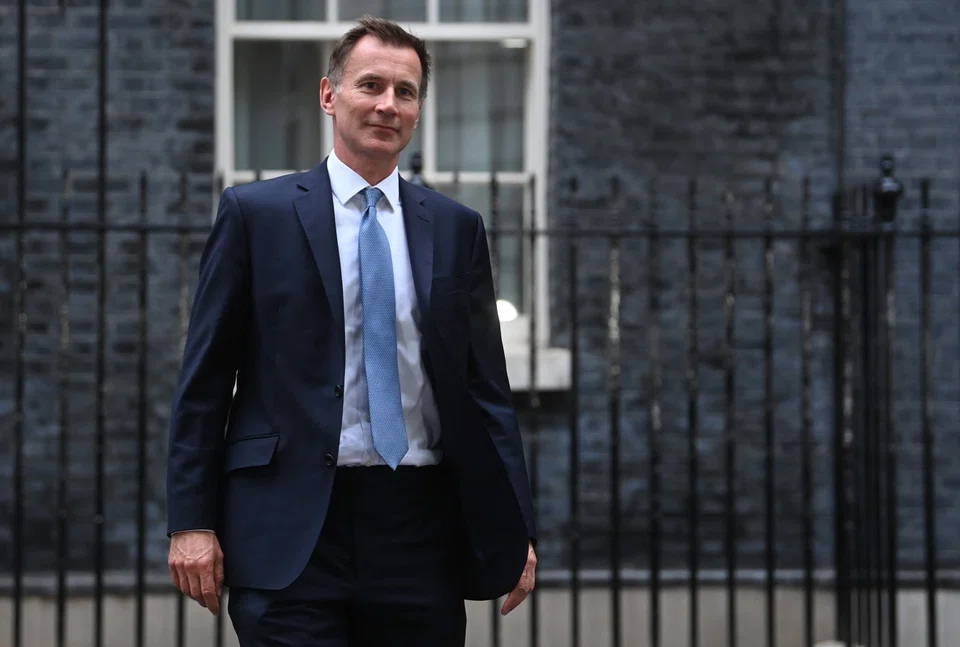
BRITISH finance minister Jeremy Hunt will seek to fill a £50 billion (S$80.4 billion) hole in the country’s public finances with around £30 billion of spending cuts and £20 billion in tax rises, two government sources said on Monday (Nov 7).
Hunt is due to present a fiscal statement to Parliament on Nov 17. He will aim to restore financial market confidence after his predecessor Kwasi Kwarteng’s Sept 23 tax-cutting plan pushed sterling to a record low against the US dollar and ultimately forced Liz Truss to resign as prime minister.
Britain’s Guardian newspaper reported on Sunday that early drafts of Hunt’s statement included up to £35 billion of spending cuts and £25 billion of tax rises, while on Monday the Financial Times gave figures of £33 billion and £21 billion respectively.
Asked about these estimates, two government sources told Reuters that they were within the right ballpark, but that final figures were subject to change.
Britain’s finance ministry declined to comment on either estimate.
Last week a finance ministry source said broad-based tax rises were likely to fill a “fiscal black hole”.
Navigate Asia in
a new global order
Get the insights delivered to your inbox.
Britain’s last set of budget forecasts was published in March, when they showed £28 billion of headroom to meet a government target to reduce debt as a share of the economy.
Most of the £45 billion of unfunded tax cuts which Kwarteng announced were rapidly reversed, apart from a £16 billion pound cut in payroll taxes which took effect on Nov 6.
Short-term government borrowing costs are broadly back to where they were before Kwarteng’s statement, but longer-term borrowing costs are somewhat higher and the economic outlook is bleak.

Last Thursday the Bank of England forecast Britain was at risk of its longest recession in a century, though one much less deep than during the pandemic or after the 2008-09 financial crisis.
These forecasts assumed interest rates higher than the BOE says is likely, but did not factor in any fiscal tightening on Nov 17.
Last month, Britain’s Resolution Foundation estimated Hunt would need to announce £40 billion of fiscal tightening to ensure public debt fell as a share of gross domestic product over the medium term, while also giving a £12 billion buffer against unexpected shocks. REUTERS
Decoding Asia newsletter: your guide to navigating Asia in a new global order. Sign up here to get Decoding Asia newsletter. Delivered to your inbox. Free.
Share with us your feedback on BT's products and services

