

UK GDP growth slows to six-month low as Covid hit hospitality
 Add BT as a preferred source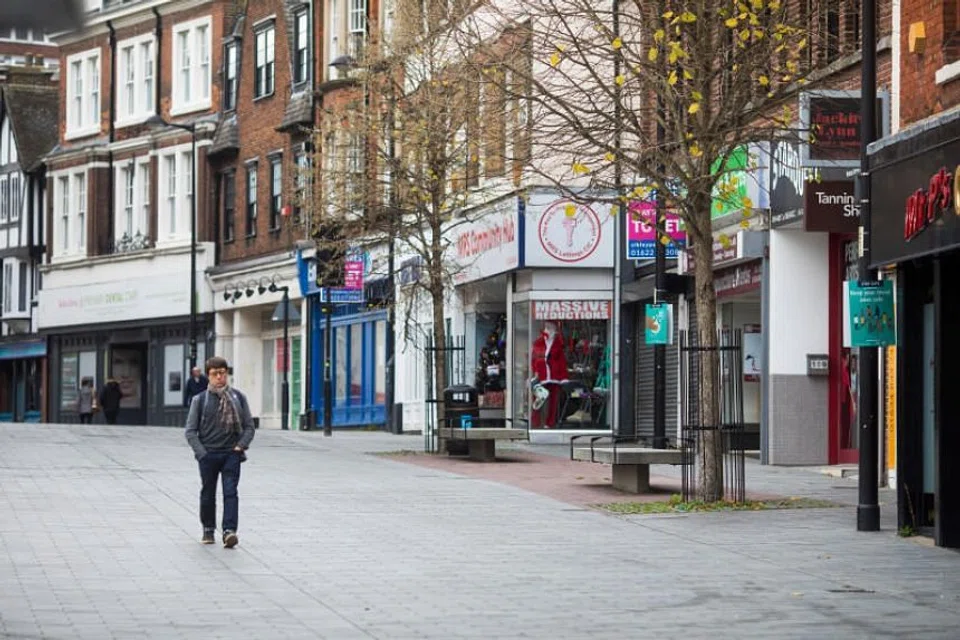
DeeperDive is a beta AI feature. Refer to full articles for the facts.
[LONDON] Britain's economic recovery almost ground to a halt in October as a surge in coronavirus cases dealt a blow to the hospitality sector, official figures showed on Thursday.
Gross domestic product (GDP) rose 0.4 per cent on the month after expanding 1.1 per cent in September, the Office for National Statistics (ONS) said, the weakest growth since output collapsed in April during the first lockdown.
Britain has Europe's highest death toll from Covid-19, with more than 62,000 fatalities, and also suffered the biggest economic hit of any major economy after GDP shrank by an unprecedented 19.8 per cent in the second quarter of this year.
Output in October was 7.9 per cent lower than it was in February, before the pandemic struck Britain's economy, the ONS said, and 8.2 per cent weaker than in October 2019.
Government forecasters do not expect the economy to regain its pre-Covid size until the end of 2022 and the Organisation for Economic Co-operation and Development predicted that Britain's recovery would be weaker than anywhere bar Argentina.
"The economy continued to grow in October, but at a snail's pace. And with the Covid-19 restrictions likely to remain in place for some time, the economy is in for a difficult few months yet," Ruth Gregory, economist at Capital Economics said.
Navigate Asia in
a new global order
Get the insights delivered to your inbox.
Although the economy picked up rapidly after the initial shock of the lockdown, it lost momentum as Covid cases started to rise again in September and accelerated in October.
Government restrictions on socialising in much of the United Kingdom, as well as greater caution from some of the public, led to a 14.4 per cent fall in output across the accommodation and restaurant sector.
Business surveys in October had already shown a slowdown in growth, and most economists think output fell outright in November, when the government imposed a four-week partial lockdown in England, which closed non-essential shops and most hospitality venues.
However, the decline is expected to be much more limited than in the first lockdown, when restrictions were tighter and businesses had less time to adapt.
The end of a post-Brexit transition period will also pose a challenge for many businesses from Jan 1, when exporters will face new border checks for goods they want to sell in the European Union, and potentially tariffs as well.
REUTERS
Decoding Asia newsletter: your guide to navigating Asia in a new global order. Sign up here to get Decoding Asia newsletter. Delivered to your inbox. Free.
Share with us your feedback on BT's products and services
TRENDING NOW
Autobahn Rent A Car directors declared bankrupt over S$50 million each owed to DBS

Amazon’s MGM Studios gains creative control over ‘James Bond’ franchise
UOB’s Wee Ee Cheong says S$4.9 billion Citi deal ‘paying off’ as Asean push accelerates

In taxing wealth, how far can Singapore push property owners?

