UK retailers offer big discounts as shopper confidence wanes
UK retailers are bracing for higher costs linked to the conflict in the Middle East
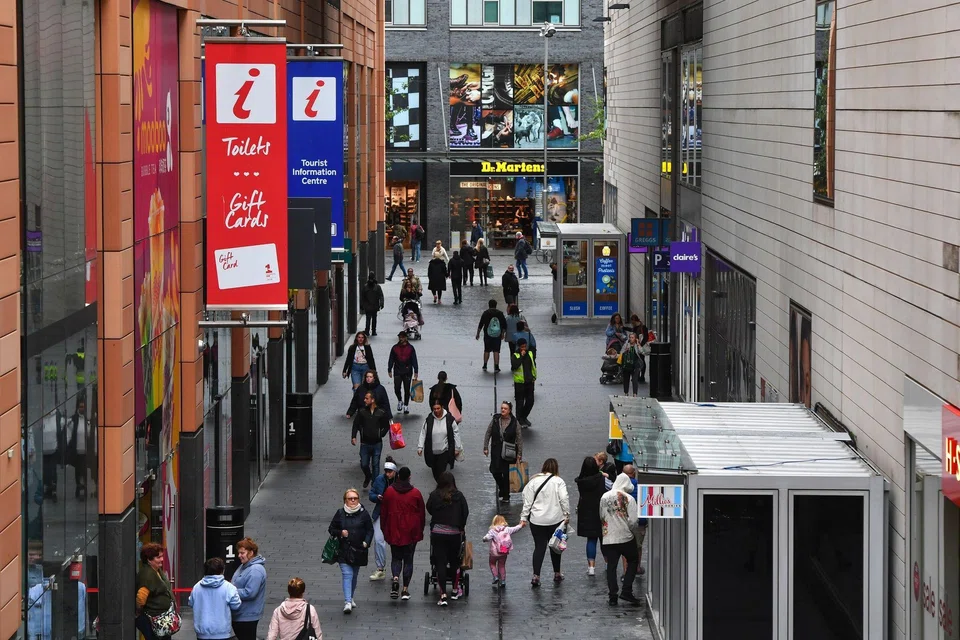
[LONDON] UK retailers are discounting heavily to lure shoppers amid weakening consumer confidence, underscoring the risks facing the sector as it braces for higher costs linked to the conflict in the Middle East.
Overall shop price inflation slowed to 1 per cent year-on-year in April, the British Retail Consortium (BRC) said on Tuesday (Apr 28). Food prices rose 3.1 per cent from a year earlier, compared with a 3.4 per cent increase in March. Non-food prices by contrast fell 0.1 per cent, returning to negative territory after growth of 0.1 per cent in the year to March.
“With weakening consumer confidence, retailers competed harder on price to stimulate more spring spending,” BRC chief executive officer Helen Dickinson said. “While we’re yet to see the full force of the Middle East conflict feeding into consumer prices, it will not be long before it begins to.”
Several retailers including fashion and homeware company Next and grocer J Sainsbury have warned about the fallout from the war in Iran, which has upended energy and shipping markets. That threatens to make imports more expensive at a time companies are already grappling with higher wages and UK taxes, posing a dilemma over whether to absorb or pass on costs to customers.
Though the conflict is already spurring inflation in the UK, the impact has been largely limited to energy and motor fuel. Retailers are bracing for impact from higher fertiliser and commodity prices, and the UK’s Food and Drink Federation now expects food inflation to exceed 9 per cent by the end of the year.
“Increased fuel prices are already leading to higher inflation,” said Mike Watkins, head of retailer and business insight at NIQ, which compiled the data for the BRC. “We can expect a similar impact in the food and non-food supply chains in the months to come.”
Prior to the war, overall UK inflation had been on track to fall to the Bank of England’s 2 per cent target in the second quarter, clearing the way for further interest-rate cuts. Now, however, it’s expected to stay at around 3 per cent and accelerate in the third quarter, raising the possibility of rate increases instead.
Meanwhile data from Worldpanel by Numerator showed like-for-like grocery inflation fell to 3.8 per cent in the four weeks to April 19, the lowest level in a year, as shoppers sought out discounts. Spending on promoted items rose 7.8 per cent from a year earlier, compared with a 0.2 per cent drop in spending on full-priced goods.
Discounter Lidl’s market share rose to a record 8.4 per cent in the 12 weeks to April 19, Worldpanel said, after it added more than half a million shoppers. It remains in joint fifth place in the UK in terms of market share, alongside Morrisons. BLOOMBERG
Decoding Asia newsletter: your guide to navigating Asia in a new global order. Sign up here to get Decoding Asia newsletter. Delivered to your inbox. Free.
Share with us your feedback on BT's products and services