

Ukraine to declare nationwide state of emergency; EU set to ban Russia bonds in sanctions response
This follows Moscow's recognition of 2 breakaway regions; state of emergency, to be approved by parliament, will last an initial 30 days
 Add BT as a preferred source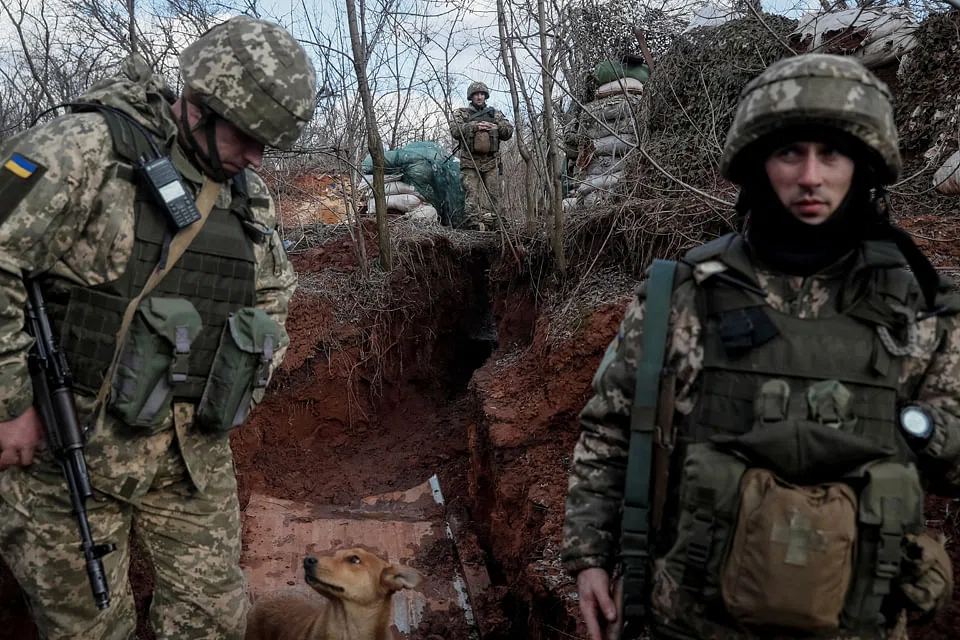
DeeperDive is a beta AI feature. Refer to full articles for the facts.
Kyiv
UKRAINE moved towards declaring a nationwide state of emergency following Moscow's recognition of 2 breakaway regions, as President Vladimir Putin said he remains open to "diplomatic solutions" so long as Russia's interests and security are guaranteed.
The state of emergency - which would allow Ukrainian officials to impose restrictions on movement and media - would last an initial 30 days, with parliamentary approval expected later on Wednesday (Feb 23). A senior security official played down the impact of the measure and called for calm.
Europe, the US and the UK are among those imposing sanctions on Russia for its actions over Ukraine, although the narrow scope of those has seen limited market reaction. In the latest development, the European Union plans to prohibit the purchase of Russian government bonds, putting it in alignment with the US.
Lenders who maintained operations in Russia after the 2014 annexation of Crimea - enticed by the profit even as many peers fled the scene - now face a test after Putin's moves this week ratcheted up tension and drew fresh punitive measures.
Italian and Austrian lenders have actually increased business in Russia since 2015, according to data from the Bank for International Settlements compiled by Bloomberg Intelligence. France's Societe Generale, Italy's UniCredit and Austria's Raiffeisen Bank International are the European banks with the biggest Russian operations.
Navigate Asia in
a new global order
Get the insights delivered to your inbox.
The EU is set to ban the purchase of Russian government bonds as part of proposed sanctions on Moscow. The measures will prohibit the purchase or sale of "transferable securities and money-market instruments issued" by Russia, its government, the Russian central bank or entities acting on the latter's behalf, according to draft documents seen by Bloomberg.
The move is in line with measures unveiled earlier by the US, and it is not clear how big of an impact it will have on Russia, which is benefiting from high energy prices and a high volume of foreign currency reserves.
Measures announced earlier this week included Germany's freezing of the approval of a new Russian gas pipeline, and US sanctions on Russian banks. But none of the measures announced so far directly targets Putin himself, or is expected to have severe medium-term consequences for Moscow, which is sitting on more than US$630 billion in international reserves.
China expressed opposition to sanctions against Russia and criticised the US for inflaming tensions over Ukraine, suggesting its support for Nato's expansion had left Putin with few options.
Beijing did not view sanctions as "the best way to solve problems", Foreign Ministry spokesperson Hua Chunying said on Wednesday at a regular press briefing in Beijing. She also criticised the US and Nato for placing what she said were "offensive" weapons near Russia, asking whether "they ever thought about the consequences of cornering a major power". The tensions around Ukraine have forced China into a delicate balancing act, with close friend Russia on one side and a desire to be seen as a proponent of the United Nations-backed international order on the other.
Treaties Putin has signed with the separatists allow him to deploy troops into the areas they occupy, raising concern their proximity to the line of contact between the separatists and Ukraine's military could trigger a further escalation in the stand-off.
British banks reporting earnings this week have emphasised that they have little exposure to Ukraine and Russia.
"From a financial point of view, our exposures are limited," Barclays chief executive officer CS Venkatakrishnan said on a call with reporters on Wednesday. "We have been out of Russia for many, many years and we have exercised a lot of care and diligence on onboarding Russian entities and Russian clients."
HSBC cief financial officer Ewen Stevenson said the lender had a "very small business in Russia", and its "overall exposure is very, very modest". Futures on Russia's RTS stock index turned lower and the ruble weakened, suggesting the country's markets may be in for another tempestuous session when they reopen on Thursday after the public holiday. Yields on the country's dollar bonds surged, with the rate on 2026 securities climbing to a record.
Elsewhere, investors see limited initial Western sanctions against Russia. The Stoxx 600 Europe Index and S&P 500 futures both added about 0.8 per cent while contracts on the Nasdaq 100 were up more than 1 per cent.
Treasuries extended declines and gold dipped as haven demand eased. Crude oil fluctuated.
Officials from the International Monetary Fund will start an online review of their programme with Kyiv on Wednesday, the Washington-based lender said in a statement. At stake is US$700 million in disbursements the government in Kyiv expects to receive after the mission is completed. BLOOMBERG, REUTERS
Decoding Asia newsletter: your guide to navigating Asia in a new global order. Sign up here to get Decoding Asia newsletter. Delivered to your inbox. Free.
Share with us your feedback on BT's products and services
TRENDING NOW

Shelving S$5 billion office redevelopment plan proved ‘wise’ as geopolitical risks mount: OCBC chairman

Eurokars Group introduces rental car franchises Enterprise Rent-A-Car, National Car Rental, and Alamo to Singapore
20 photos that show how dramatically Singapore has changed in two decades
Singapore’s key exports up 15.3% in March from electronics surge, exceeding forecasts

