

UK’s borrowing overshoot darkens the backdrop for finance minister’s Budget
John Healey is under pressure to show how he can meet his fiscal rules without raising the main taxes
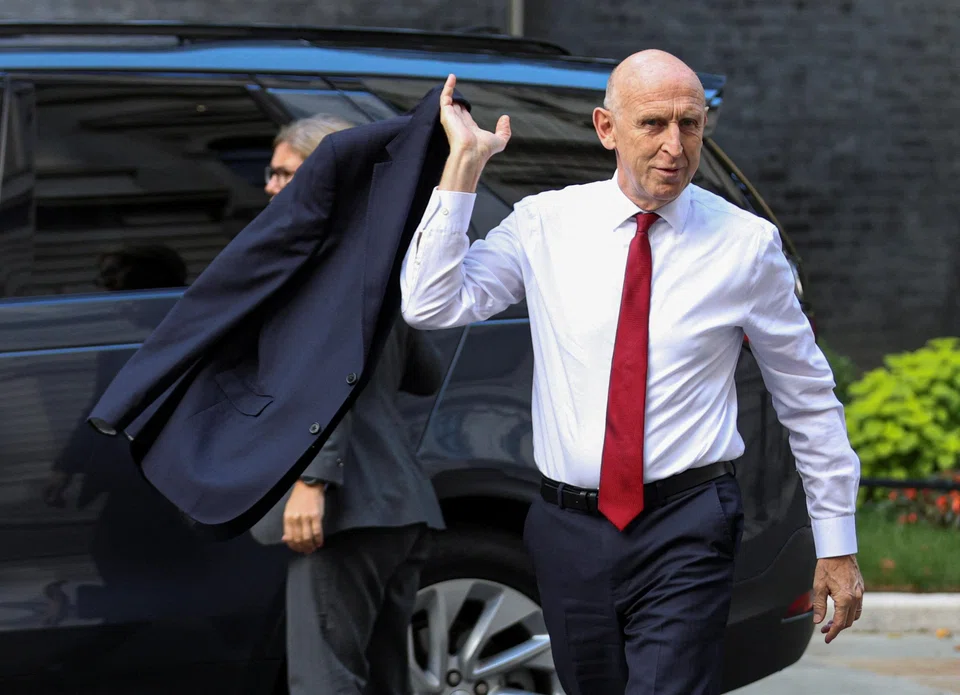
[MANCHESTER] Britain’s government borrowed more than expected in August, pushing the deficit for the financial year to date further above official forecasts and adding to a tough backdrop for Chancellor of the Exchequer John Healey’s first Budget next month.
Public sector net borrowing stood at £18.3 billion (US$24.5 billion) in August, the Office for National Statistics (ONS) said on Tuesday, above all forecasts in a Reuters poll of economists which had pointed to a £15.5 billion deficit.
With investors worried about the possibility of further borrowing by the new government, gilt futures sank 20 ticks after the data before recovering, and yields in the cash market rose modestly as it opened.
Healey will present his Budget on Oct 28. He is under pressure to show how he can meet his fiscal rules without raising the main taxes, having promised to control spending that Tuesday’s data showed is being pushed higher by inflation.
British government bond yields have soared since the onset of the Iran war pushed up global oil and gas prices, reflecting the risk of a damaging rise in inflation caused by Britain’s reliance on imported energy.
The forecasts that underpin the Budget will incorporate the higher government borrowing costs, as well as market expectations for rising Bank of England interest rates, cutting Healey’s room to help families and businesses in the Budget.
Prime Minister Andy Burnham has ruled out raising the rates of income tax, value-added tax, corporation tax or social security contributions, so Healey may have to lean on capital gains, property and wealth taxes to raise revenue.
Fiscal headroom has fallen
“Medium-term borrowing prospects look far more challenging than in March,” said Matt Swannell, chief economic adviser to the Item Club, a consultancy.
The ONS revised up borrowing for each of the previous four months of the current financial year, with the April-to-August cumulative deficit this year coming in at £77.3 billion.



Although this was £2.2 billion less than at the same point a year earlier, it was £8.1 billion higher than the Office for Budget Responsibility (OBR) had expected at this point in the year.
Borrowing for the previous year was revised up by £4.5 billion to £134.3 billion.
In response to the data, Deputy Finance Minister Emma Reynolds reiterated that the government was committed to meeting the fiscal rules with a “buffer against uncertainty”.
That buffer stood at more than £24 billion in March.
“The rise in gilt yields since the OBR’s Spring forecast has halved... Healey’s fiscal wiggle room, leaving just over £10 billion of headroom against the government’s primary fiscal rules,” Swannell said.
Robert Wood, chief UK economist at Pantheon Macroeconomics, said: “The government will also face significantly higher spending pressures if it tries to meet its well-flagged priorities of boosting investment in housing, reforming social care, and increasing defence spending.”
Inflation ratchets up spending
An ONS statistician said that while tax receipts looked strong, this was offset by rising government spending on goods and services and welfare benefits linked to inflation.
The current budget deficit – or the difference between day-to-day spending and tax revenue, which the government must balance in 2029/30 – is £51.9 billion in the year to date.
Again, that is higher than the OBR’s forecast for £47.1 billion at this point in the year. REUTERS
Decoding Asia newsletter: your guide to navigating Asia in a new global order. Sign up here to get Decoding Asia newsletter. Delivered to your inbox. Free.
Share with us your feedback on BT's products and services
TRENDING NOW

Malaysian king buys stake in Singapore-listed mining firm expanding into rare earths

Grab CEO’s wife Chloe Tong on life with Anthony Tan and finding her purpose

Once staunchly pro-China, Malaysian Chinese businesses are now distancing themselves from Beijing

Longer wait times expected as S’pore healthcare institutions report system disruptions

