

UK’s Starmer calls emergency meeting on economy as Iran war risks mount
The energy price shock threatens to push Britain’s inflation rate to 5% later this year
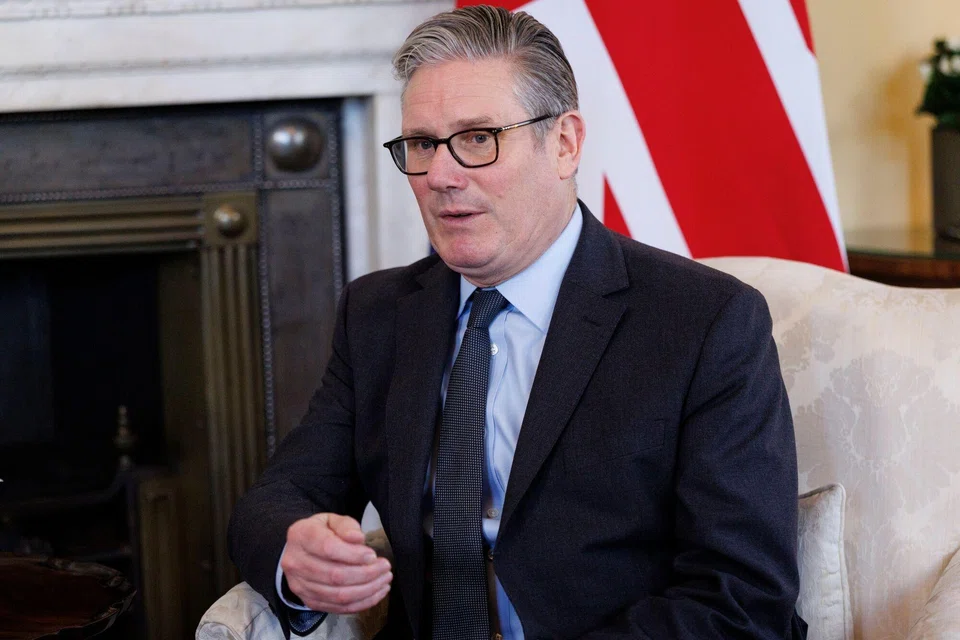
[STOCKPORT, ENGLAND] UK Prime Minister Keir Starmer summoned a national emergency meeting on Monday (Mar 23).
This was to deal with the economic fallout from the escalating war in Iran, as Britain’s government borrowing costs surged to its highest level since the global crisis of 2008.
The storm in financial markets intensified in early trade in the week of Mar 23. This comes after Iran said it would strike the energy and water systems of Gulf neighbours, if US President Donald Trump follows through with a threat to hit Iran’s electricity grid.
Britain’s heavy dependence on imported natural gas, persistently high inflation and stretched public finances have pushed its government bonds into a far steeper decline than those of its international peers.
The so-called “Cobra” meeting – named for a secure Cabinet briefing room used for national emergencies – was set to take place in the afternoon, London time.
Bank of England (BOE) governor Andrew Bailey is due to attend, as well as Starmer’s finance minister, foreign secretary and energy secretary.
“I am asking for every lever that’s available to the government to deal with the cost of living to be discussed at Cobra,” Starmer told reporters.
The finance ministry said that energy security and the resilience of industry and supply chains would also be discussed.
Finance Minister Rachel Reeves has said that it was too soon to say what the impact of the war will be for Britain’s economy. She has resisted calls for sweeping cost-of-living measures for households, saying instead that more targeted support was under consideration.


Housing Minister Matthew Pennycook told the BBC that options included tackling “profiteering that we’re potentially seeing from fuel retailers”. The industry denied that it was happening.
Inflation set to shoot higher
The energy price shock threatens to push Britain’s inflation rate back up, possibly to 5 per cent later this year, said some economists, and deal another setback to the slow-growth economy.
It could also knock Reeves off course from her efforts to repair public finances.
Last week, the government launched a £53 million (S$90.7 million) package for homes that use heating oil to generate warmth. But the pressure for wider measures has added to the unease of bond market investors.
On Monday, British 10-year government borrowing costs surged further past the 5 per cent mark, which was last seen during the global financial crisis almost 20 years ago.
Until last week, the majority of losses had been confined to short-dated gilts, which largely track interest rate expectations.
Bets on the next move by the BOE have shifted violently towards interest-rate hikes, and away from the cuts that were expected until the eve of the war. On Monday, the market priced in nearly four quarter-point rate hikes.
Last week, the central bank said it was ready to act to keep inflation on track for its 2 per cent target. Some policymakers said that an increase in borrowing costs might be needed, but Bailey said it was too soon to say that rates would have to go up.
Jane Foley, senior FX strategist at Rabobank, said: “On top of higher inflation, calls for the government to provide financial support for the economy in the face of higher energy prices is unsettling for the gilts market.
“A rout in gilts, if driven by speculative or overseas investors, has particular capacity to weigh on the pound.” REUTERS
Decoding Asia newsletter: your guide to navigating Asia in a new global order. Sign up here to get Decoding Asia newsletter. Delivered to your inbox. Free.
Share with us your feedback on BT's products and services
TRENDING NOW
LTA proposes combining car COE categories, adding rebate-surcharge system

StarHub to acquire MyRepublic’s mobile business amid ongoing telco consolidation

DBS, OCBC, UOB rout lops billions off STI as inflation, rate concerns spook investors

Grab CEO’s wife Chloe Tong on life with Anthony Tan and finding her purpose

