

Uncertainty persists over which party will form the next UK coalition
Even though the Lib Dems could lose a sizeable number of seats, they are once again expected to be kingmakers
London
WITH four days to go for the UK elections, pollsters, betting shops, markets and businesspeople have become increasingly convinced that another coalition is inevitable.
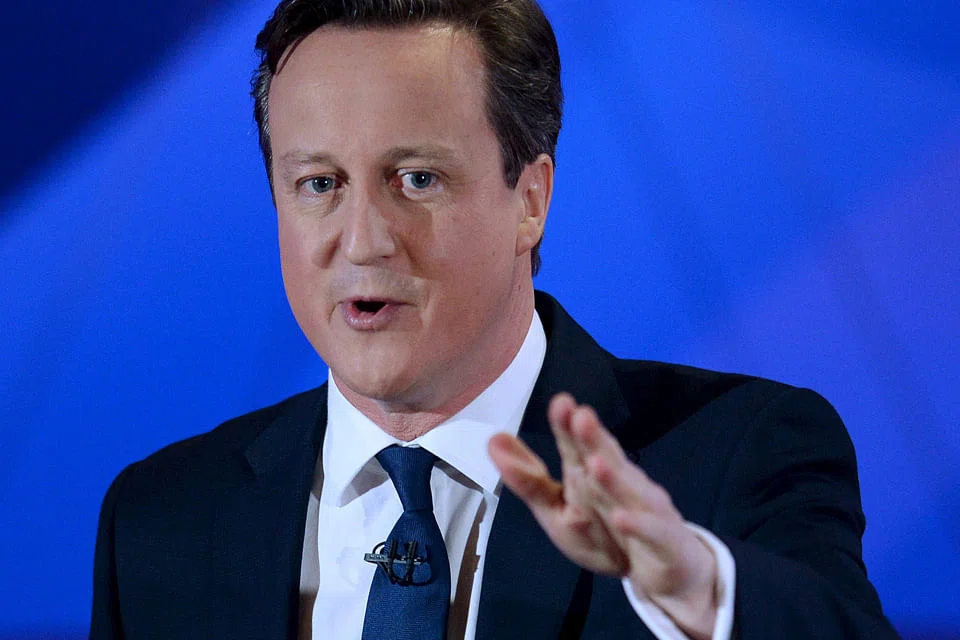
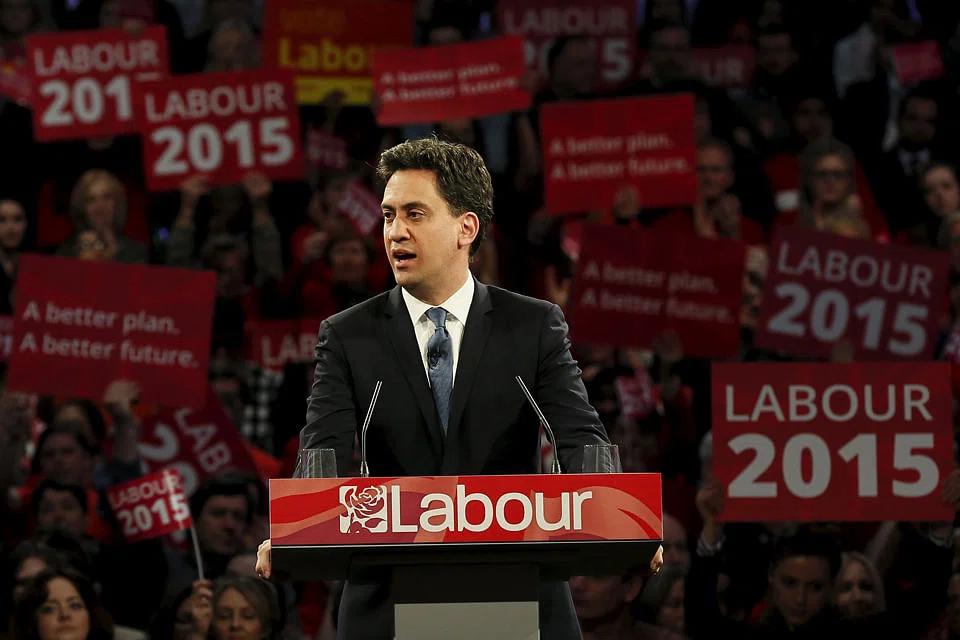
The big question is whether it will be David Cameron leading a Conservative coalition government or Ed Miliband heading a Labour coalition.
The latest cover of The Economist sums up the uncertainty with a face split between a red Mr Miliband on the left and a blue Mr Cameron on the right, stating: "Britain's choice - risk the economy (on the Miliband side of the face) or risk Europe (Cameron).
Illustrating these fears, the sterling which rallied slightly last week, fell back sharply, while latest data show that the performance of the economy and the London property market has also been weaker in the past few months. Such is the concern that the latest US Treasury report to Congress on the international economy states: "The high level of uncertainty surrounding the outcome of the UK general election on May 7, 2015, the potential for difficult coalition talks, and subsequently the design and implementation of economic policy, is broadly perceived as a material downside risk for businesses and investors."
The Economist, in an editorial, thus believes that despite the risk on Europe, a coalition led by Mr Cameron should have a second term. The Conservatives promise a referendum in 2017 on whether the UK should remain in the European Union (EU), but Labour opposes it on the grounds that the people might ignore business concerns and vote for an exit.
"Our decision is based on the economy, where the Conservative-Liberal Democrat coalition has a stronger record than many realise and where Labour poses a greater risk," comments The Economist.
It has become evident that even though the Liberal Democrats (Lib Dems) are forecast to lose a sizeable number of seats, they are once again expected to be kingmakers in a 2015 potential coalition. In a BBC party leader question-and-answer with an audience in Leeds, north England, Lib Dems leader Nick Clegg said that it was "democratic" that the party which wins the most seats should form a government. He made it clear, however, that there were "red lines", one of which was that the Lib Dems were pro-Europe and were against an exit from the EU. The Lib Dems could thus join Labour. Indeed, during negotiations after the indecisive 2010 election, the Lib Dems almost swung away from the Conservatives and chose Labour, even though the latter had fewer members of Parliament.
The final days leading to the election have thus become frantic. The Independent's poll of polls shows that the Conservatives have 33.8 per cent of the vote and Labour 33.7 per cent, very similar to the BBC's model. Translated into the number of seats in Parliament, both parties fall well short of a majority. Predictions based on polls, bookmaker assessments and electoral statisticians are that the Conservatives will only win 280 to 290 seats out of the 650-member Parliament and Labour 265 to 275.
A key example is the prediction of Nate Silver, the US electoral statistician, who has accurately forecast the American elections in the past few years and has studied UK marginal constituency figures and polling results for the BBC's Panorama programme. He estimates that the Conservatives will be 11 seats ahead of Labour at 280 seats. The Scottish National Party (SNP) is predicted to win 50 seats, Lib Dems 26, Democratic Unionist Party (DUP) of Northern Ireland nine and United Kingdom Independence Party and Greens, only one seat each.
If the Lib Dems agree to a coalition with the Tories, it would, on current poll predictions, still fall well short of a majority of 326 seats. A Labour-Lib Dem coalition would be an even-smaller minority government, unless there is a deal with the SNP.
Senior Tories said that Mr Cameron is planning to declare victory if the Conservatives win the most seats. The strategy in the final days is to warn the electorate that Mr Miliband would have to strike a deal with the SNP and attract more English votes for the Conservatives.
Despite numerous overtures from Nicola Sturgeon, the leader of the SNP, Mr Miliband has rejected a deal with the Scottish Nationalists. Len McCluskey, general secretary of Unite, which originally backed Mr Miliband as leader of the Labour Party, gave a broad hint that in the event of a hung Parliament he would expect Mr Miliband to work with "any progressive party". Asked if that definition could include the SNP, Mr McCluskey said that the party had "undoubtedly changed the contours of the political scene". He added that both Mr Miliband and Ms Sturgeon had been "impressive".
Several other Labour politicians have agreed that there would have to be a deal. Mr Miliband has insisted that there would be neither a coalition nor an informal voting accord in Parliament with the SNP, as he fears that fearful English voters will switch to the Conservatives. To be sure, latest polls show that undecided voters are worried that "the Scottish tail may wag the English dog".
Once the votes are counted, however, both parties are expected to seek support from all minority parties. Robert Harris, author and former Sunday Times political commentator, has even suggested that the Conservatives could make a deal with the resurgent SNP. Another left-field view is that of Ian Birrell, a former deputy editor of The Independent and a speech writer for Mr Cameron. He contends that in the interests of the nation, "a Tory-Labour unity coalition may be the only way forward after May 7".
One thing is virtually certain. Post-election, UK politics will be a hive of intrigue and uncertainty.
TRENDING NOW
Singapore expects all parties to honour commitments, says PM Wong after Indonesia cuts gas exports

China’s US$3.5 trillion stock rout deepens as profits sink, major stimulus stays elusive

Gas supply cut from Indonesia accounts for less than 2% of Singapore’s daily gas demand: EMA

Singapore’s central gas buyer affirms Indonesia’s role as ‘important partner’ amid export review warning

