Unemployment in OECD states still above pre-2008 levels
Some 42m are jobless across the OECD, down from 45m last year, says report
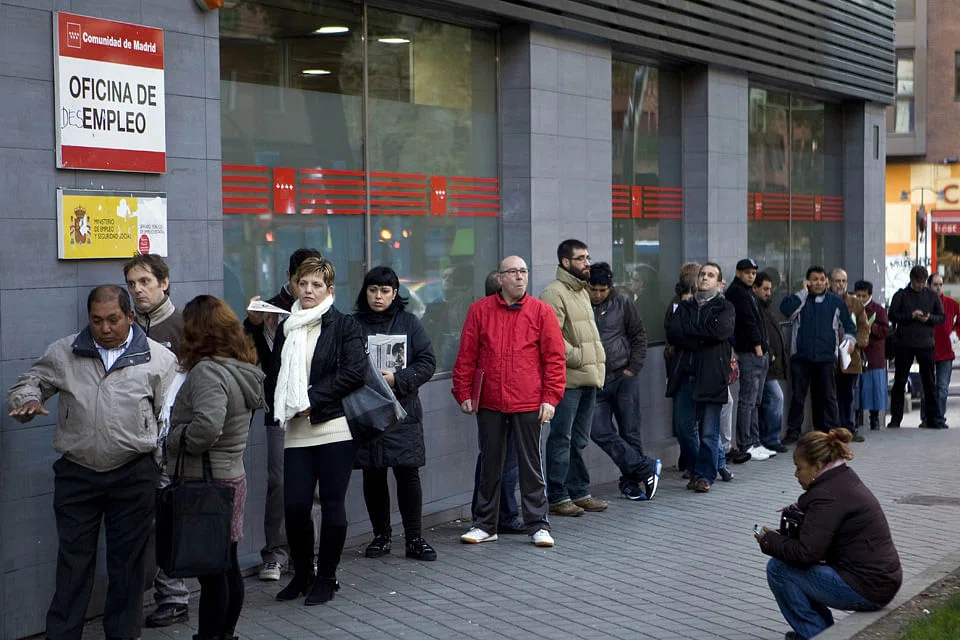
Tokyo
UNEMPLOYMENT among the advanced-economy members of the Organisation for Economic Cooperation and Development (OECD) continues to decline, though it is still well above the levels before the global financial crisis of 2008.
In a new report, the OECD noted that around 42 million people are now out of work across the OECD, down from 45 million last year, but still 10 million more than just before the crisis.
OECD secretary-general Angel Gurria said at the launch of the report in Paris on Thursday: "Time is running out to prevent the scars of the crisis becoming permanent, with millions of workers trapped at the bottom of the economic ladder.
"If that happens, the long-run legacy of the crisis would be to ratchet inequality up yet another notch from levels that were already far too high.
"Governments need to act now to avoid a permanent increase in the number of workers stuck in chronic joblessness or moving between unemployment and low-paid, precarious jobs."
The report suggested that long-term unemployment in the 34 OECD member countries remains unacceptably high.
"More than one in three job-seekers in the OECD have been out of work for a year or more, which works out to 15.7 million people.
"This is an increase of 77.2 per cent since the end of 2007. More than half these people have been without work for two years or more, and their chances of finding work again are shrinking."
Persistently high levels of youth joblessness also remains a major concern, the OECD report added.
"While levels have peaked in the worst-hit countries of southern Europe, youth unemployment remains above pre-crisis level in nearly every OECD country.
"The share of young people neither employed nor in education or training - the so-called NEETs - is still higher than in 2007 in more than three-quarters of OECD countries among 20-to-24 year-olds, and nearly two-thirds of countries among 25-to-29 year-olds."
The OECD report said there was evidence that a person's long-term career prospects are largely determined in the first 10 years of working life; many youths who finished school during the crisis and have struggled to find work since then may find their future career opportunities limited.
Meanwhile, there has been a shift towards more part-time work.
"The share of workers employed part-time has risen from 18.6 per cent before the crisis to 20.6 per cent currently. It is highest in the Netherlands (51.7 per cent) and Switzerland (36.8 per cent), and stands at more than 25 per cent in Austria, Belgium, Denmark, Germany, Norway, Sweden and the United Kingdom.
In many countries, people have chosen to work part-time, but in countries such as Greece, Italy and Spain, many part-timers are looking for full-time jobs.
Wage growth has slowed, the report said; it has fallen from an annual 1.8 per cent between 2000 and 2007 to 0.5 per cent since.
"Wage restraint helped limit job losses during the recession and encourage a rebound in employment after, but slower wage growth and real declines in some countries have also reduced the incomes of many households, further contributing to economic hardship."