A united front against climate change
THE fight against climate change has never been more urgent.
The implications of climate change have been apparent in extreme weather events around the world, with Africa experiencing one of its worst tropical cyclones this year, record heatwaves hitting India and Australia, and massive flooding wreaking havoc from the UK to the US to Middle East.
Singapore has not been spared from these effects either, with the last 10 years marked as the warmest ever in the city-state's history.
Recognising the importance of collaborative global action to combat climate change, governments of 190 countries including Singapore signed the Katowice agreement last December. The Katowice agreement aims to deliver the Paris goals of limiting global temperature rises to well below 2 degrees Celsius.
Here in Singapore, the government announced a slew of initiatives in this year's Budget to protect against climate change and encourage environmental sustainability.
This includes a carbon tax which will see Singapore's largest emitters pay for emissions as well as the recently launched Zero Waste Masterplan.
However, while the government can drive policies at a macro level, change will require the help of businesses - from large corporations to SMEs - and individuals.
In March this year, an estimated 1.5 million school students worldwide turned their back on lessons to stage the biggest wave of climate strikes since the protests began. This was inspired by Greta Thunberg, a 16-year-old Swedish climate activist and Nobel Peace Prize nominee.
Businesses, too, can tip the fight against climate change in our favour by reducing their carbon footprint. More importantly, with their wealth of research and industry insights, they are well-equipped to shape national climate strategies as well as mobilise consumers to adopt energy-conscious behaviour.
Adopting sustainable practices in business operations
Research has shown that a company's commitment to sustainability has a positive impact on its reputation, especially when it comes to consumers. Unilever found that one third of consumers prefer purchasing from companies they believe are doing social or environmental good.
As such, the need to behave responsibly is increasingly becoming an essential element of all business strategies and operations. Companies are learning to integrate social and environmental sustainability into core business activities.
Many organisations across Singapore, have signed the Climate Action Pledge launched last year by the Ministry of the Environment and Water Resources, outlining actions they will take in fighting climate change.
The day-to-day operations of businesses have a huge impact on their carbon footprint, so it is important that companies make a conscious effort to reduce waste and improve energy efficiency throughout their operations.
In line with the government's zero-waste vision, Senoko Energy has launched its own sustainability campaign, which focuses on promoting sustainable use of resources by minimising waste throughout the company's operations.
Recognising the role of company policies and business practices in driving sustainable progress, we are also working on implementing a set of standards outlining the environmental requirements for our contractors and suppliers.
Energy efficiency is another key pillar of climate action and sustainable development. Experts say that improving energy efficiency is a low-hanging fruit - a relatively low-cost, easy way to keep a lid on global warming, while delivering tangible benefits such as jobs and economic growth.
Recognising these benefits, energy companies around the world are increasingly looking for cleaner energy sources and ways to drive energy efficiencies.
Singapore has been actively working to lower its carbon emissions - about 95 per cent of its electricity is generated from natural gas, the cleanest fossil fuel. It is also investing heavily in renewables with solar energy set to contribute 5 per cent of Singapore's peak electricity demand by 2020, more than double of what it is today.
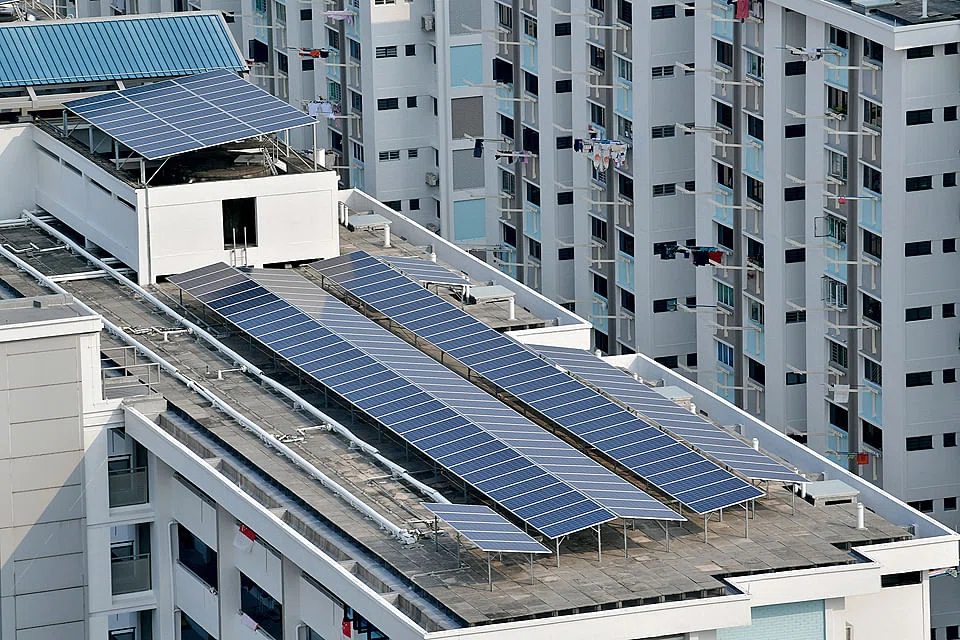
Across the industry, several projects have already kicked in, including the installation of solar panels on public housing rooftops and the development of solar storage technologies to stabilise fluctuations.
The private sector has also shown promise with several companies across different industries switching to clean energy options for their electricity use. But to accelerate this shift, we need collaborative action within the private sector.
Companies in industries such as power generation have a real opportunity to tip the needle in the fight against climate change by not just lowering their own carbon emissions but also helping other businesses adopt cleaner energy.
For example, we have led the way in Singapore's power generation industry by importing clean natural gas to generate electricity and are continuing to invest in efficiency upgrades in the power plant. Last year, we launched our first solar energy project, installing rooftop solar panels on office buildings.
Helping consumers to take ownership of their energy consumption
With the Open Electricity Market completing its nationwide rollout in May this year, consumers across Singapore now have the option of buying electricity from a retailer of their choice.
The privatisation of the energy market also means that electricity retailers are directly engaging with the consumers and have an opportunity to affect their consumption decisions.
One of the ways electricity retailers can drive energy-conscious behaviour is by helping consumers with demand side management technologies that help optimise their energy use. For example, our mobile app helps customers who have elected for an AMI meter track their energy usage and better manage their consumption patterns by providing them with energy consumption data and analytics.
Businesses also have the expertise and industry insights to spread awareness and educate consumers on how they can reduce their carbon footprint in their daily activities. For example, instead of keeping the air-conditioner at 21 degrees Celsius throughout the day, using different modes in the air-conditioner would help reduce energy consumption.
It is also important for businesses to help educate and incentivise consumers to take on more environmentally friendly purchasing choices, discouraging the use of disposables.
Collaborating with stakeholders
In Singapore's march to meet global climate change goals, a holistic approach is key where we will need the collaboration of the government, businesses and individuals.
Businesses are essential partners for the government, collaborating to set industry standards and adopt more sustainable approaches. Companies can also lend their expertise to public institutions by collaborating in research or educational initiatives with local institutions.
In Singapore where we have the knowledge, resources and capabilities available to us, we have the capacity to truly move the needle. The public and private sectors will have to work together to take the steps needed to shrink our carbon footprint today and protect our planet for the next generation of Singaporeans.