

'Unlikely, undesirable' to classify ride-hailing drivers as employees

Janice Heng
Singapore
A NEW Californian law threatens ride-hailing firms' business models by classifying their drivers as employees. Such a move is unlikely and undesirable in Singapore, say experts and stakeholders, who point to existing protections and say such a law could jeopardise livelihoods instead.
"From a worker welfare perspective, having a legislative framework would enhance the basic rights and protections available to them," said Withers KhattarWong LLP partner Amarjit Kaur. But the platform firms would be hit as they are "premised on a flexible and relatively unregulated contractor workforce", she added.
"Introducing such legislation may threaten the viability of platform companies, with the potential unintended outcome of jeopardising the livelihood of workers who are dependent on the gig economy," she said.
Under the new law, set to take effect on Jan 1, 2020, workers are presumed to be employees instead of independent contractors unless the firm can prove three things: They are free from the firm's control; their work is outside the usual course of the firm's business; and they are customarily engaged in an independently established trade of the same sort as the work performed.
The law makes various exemptions, but not for ride-hailing companies such as Uber and Lyft, which have a significant presence in the state. Indeed, it was aimed at ensuring such drivers have protection in areas such as minimum wages, overtime, and sick leave.
Singapore already relies on court decisions to determine if someone is an employee on a contract of service, or a self-employed person on a contract for service," said a Ministry of Manpower (MOM) spokesperson.
Factors used by Singapore's courts include the degree of control exerted by the firm; the firm's ability to decide on hours of work; and whether the worker must use provided equipment and tools, comply with prescribed procedures, follow a fixed schedule, and carry out work without getting a replacement.
Noting that the Californian law contains numerous exceptions for other classes of self-employed persons, the spokesperson added: "Such an approach could lead to other issues such as defining these occupations and determining which occupations are subject to which tests. This could lead to greater confusion."
From firms' point of view, if such workers are classified as employees, "the business model may not work as cost, flexibility and responsiveness will be negatively affected", said Singapore National Employers Federation executive director Koh Juan Kiat.
Element of freedom
Nor would such a move help workers, he added. Self-employed persons have more freedom, and can hold more than one job or drive for more than one firm - which they could not do if reclassified, "as they cannot be employees of two companies".
"For the Grab drivers, I doubt they would, in the first place, want to be an employee as they would not have their freedom anymore," agreed HR Law Academy executive director Arthur Khong, who sees "no necessity" to follow California's lead.
A Deliveroo spokesperson noted that only one in five of their riders cite Deliveroo as their main source of income, adding: "There is no other type of work that allows people to work whenever or wherever they want; no other work that allows people to both plan where to work but also cancel right up to the last minute if they wish; no other type of work that allows people to work for a competitor at the same time."
Those are not concerns for Ben Su, 38, who delivers solely for foodpanda as his main job. He previously delivered for several firms but faced issues such as shift conflicts.
Yet while he might seem an ideal candidate to be classed as an employee - lacking competing demands that require the flexibility of being an independent contractor - he is ambivalent about the idea: "There are pros and there are cons."
Having previously been a full-time employee in another sector, he does not miss making Central Provident Fund contributions. Nor does he feel a lack of benefits: "I used to have all the employee benefits but to be honest, in the past I hardly used them."
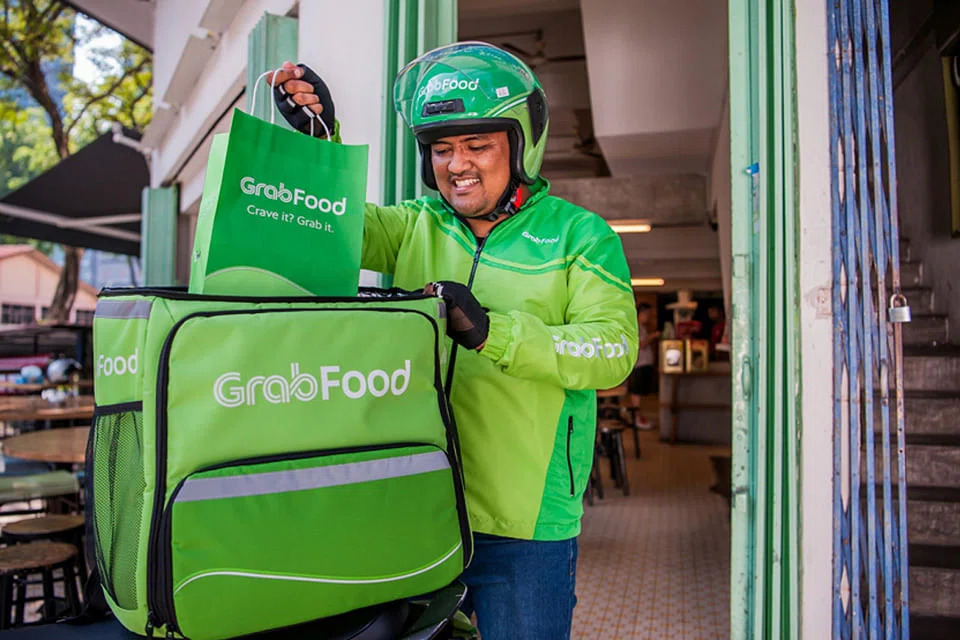
Full-time GrabFood rider Alfishar Adha, 25, appreciates having the freedom to choose his own schedule and jobs, which he doubts would be possible in formal employment: "You can get online and offline as you wish."
Unlike other apps he has delivered for before, GrabFood does not require riders to sign up for shifts, he noted.
Conversely, Wong Ngiam Chee, 49, drives full-time for both Grab and Gojek - but would not mind becoming an employee of one, if the incentives and benefits were good enough.
Many drivers who drive for two firms do so due to competing incentive programmes, and not because driving for one firm would mean an insufficient number of rides, he added.
Nonetheless, while he would welcome becoming an employee if benefits and terms were improved, he does not feel a need to push for it.
The National Trades Union Congress (NTUC) did not reply directly when asked if Singapore should consider taking a cue from California. But acting director of NTUC's freelancers and self-employed unit Jean See noted the labour movement's efforts to improve support for such workers, as part of the tripartite workgroup on self-employed persons.
These include allowing them to seek mediation and advisory services from the Tripartite Alliance for Disputes, and the possibility of prolonged medical leave insurance to mitigate any loss of income.
The MOM spokesperson said that the tripartite workgroup found that most self-employed persons "recognised that they are their own bosses and therefore do not expect their clients to provide employment benefits or treat them as employees". These workers felt it was more pertinent for the government to address practical issues such as being paid on time and dealing with prolonged illness.
Ride-hailing and delivery firms highlighted efforts to improve safety and welfare, and the attractiveness of being an independent contractor.
"Our independent partners work with us for a variety of reasons: some prefer the option of flexible working arrangements, others to earn an extra income," said Grab regional head of public affairs Lim Yew Heng.
Rider welfare
He noted Grab's driver benefits and protections "above and beyond what is required by regulations", such as free platform-wide accident coverage, medical and dental discounts, and MediSave top-ups by Grab.
foodpanda Singapore launched a Safe Riding Programme in July and works with insurance partners to provide packages for drivers at preferential rates, said managing director Luc Andreani. Moves to improve rider welfare include deals and discounts, as well as social events.
Deliveroo offers free accident and third party liability insurance, fuel discounts, and free online courses.
Instead of reclassifying workers, Ms Kaur suggests the possibility of "a distinct framework that recognises the inherent differences in structure between traditional employment and contingent work". France, for instance, is finalising a law confirming that such drivers are self-employed but have certain additional rights.
But ultimately, primary responsibility falls on platform firms, she said: "They should voluntarily adopt best practices to ensure worker welfare without having to completely overhaul their business model and cost structures, which they might be compelled to do if legislation were effected to switch to a formal employment method."
TRENDING NOW
Motoring tycoon Peter Kwee is back in court: Here are his previous legal battles

Demand, tech capabilities position Apac and AI as Skyscanner’s next growth frontiers: CEO Bryan Batista

Beyond the greenback, Vietnam’s big borrowers turn to Asian-currency bonds

Nvidia’s outlook cut to stable by Moody’s on governance concerns

