

Japan policymaker wants stronger yen; against selling Treasuries
 Add BT as a preferred source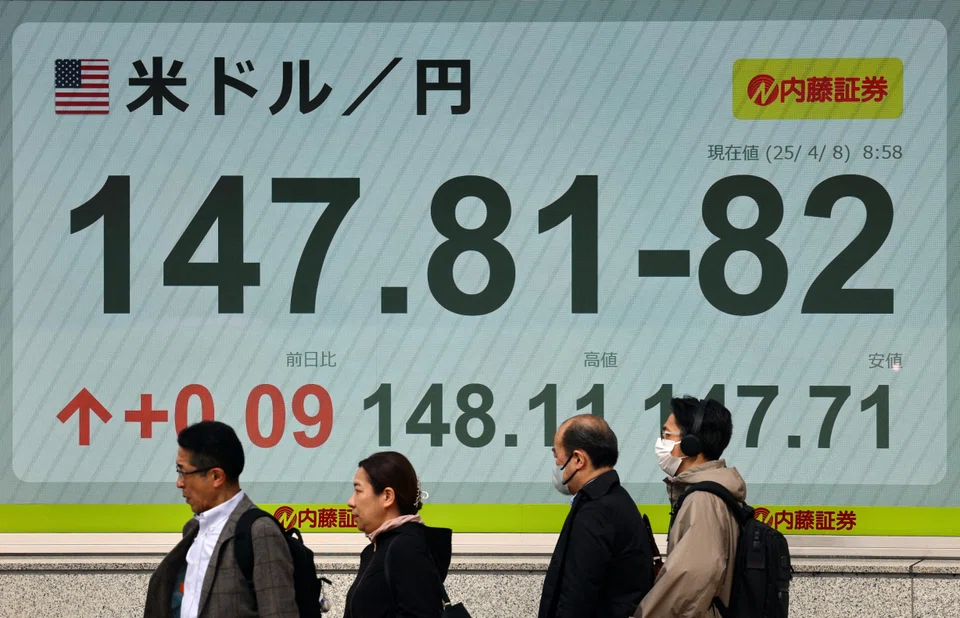
[TOKYO] Japan must strengthen the yen, such as by helping boost the country’s industrial competitiveness, as the currency’s weakness has pushed up households’ living costs, the ruling party’s policy chief said on Sunday (Apr 13).
Ahead of trade talks with the US, Itsunori Onodera, chair of the Liberal Democratic Party’s Policy Research Council, also said that Japan should not intentionally sell its US Treasury holdings, the largest outside the United States, in retaliation against tariffs levied by US President Donald Trump.
“As a US ally, the government shouldn’t think about intentionally using US Treasury holdings,” Onodera told a programme on public broadcaster NHK, rejecting an opposition lawmaker’s suggestion that Tokyo use its huge holdings of US government debt as a negotiating tool in bilateral trade talks.
By blaming the weak yen for accelerating inflation, Onodera could be signalling that Japanese policymakers consider the yen’s downtrend, rather than its recent rebound, as the bigger problem for the economy.
“The weak yen has been among factors pushing up prices,” Onodera said. “To strengthen the yen, it’s important to strengthen Japanese companies.”
The bilateral trade negotiations this week will likely include the thorny topic of currency policy, with some officials privately bracing for Washington to call on Tokyo to prop up the yen.
The slow pace at which the Bank of Japan (BOJ) is raising interest rates from ultra-low levels could also come under fire, sources have told Reuters.
Tokyo’s top trade negotiator Ryosei Akazawa, the minister for economic revitalisation, will meet Treasury Secretary Scott Bessent on Thursday, two people familiar with the negotiations told Reuters.
Japan has historically sought to prevent its currency from rising too much, as a strong yen would hurt its export-reliant economy. But in recent years, as the BOJ continued its ultra-loose monetary policy while the Federal Reserve raised US interest rates, the yen slid to nearly three-decade lows.

Tokyo intervened to buy the yen in 2022 and again last year, when the US dollar had risen to nearly 160 yen. The Japanese currency has recently rallied in a broad-based sell-off of the US dollar, which fell on Friday as low as 142.895 yen, its lowest since September.
The 10 trading days since Trump hit automakers with tariffs were the most convulsive since the pandemic panic of 2020, as prices of stocks, bonds, oil, gold and the US dollar swung wildly.
Selling in Treasuries – the linchpin safe asset in global markets – was the heaviest for decades. A massive wave of selling that hit US government debt in Asia on Wednesday stoked market speculation that China was among those unloading its holdings.
The Treasury sell-off was among the factors that led Trump to announce a 90-day pause on his “reciprocal” tariff plan, with Bessent likely playing a key role.
Japan held US$1.079 trillion in Treasuries in January, followed by China with US$760.8 billion, according to Treasury Department data.
Decoding Asia newsletter: your guide to navigating Asia in a new global order. Sign up here to get Decoding Asia newsletter. Delivered to your inbox. Free.
Share with us your feedback on BT's products and services
TRENDING NOW

Japan Home closing outlets; staff say Valu$ taking over operations

How BYD disrupted Singapore’s car market – and why the strategy is turning on itself
From sales executive to DBS chairman: A look at banking veteran Peter Seah’s career

Timah Partners lands S$60 million facility from lenders including UOB, RHB

