

US and China trade Taiwan warnings before Biden-Xi summit
Aside from the Taiwan flashpoint, there are rising tensions also over trade, human rights and other issues
 Add BT as a preferred source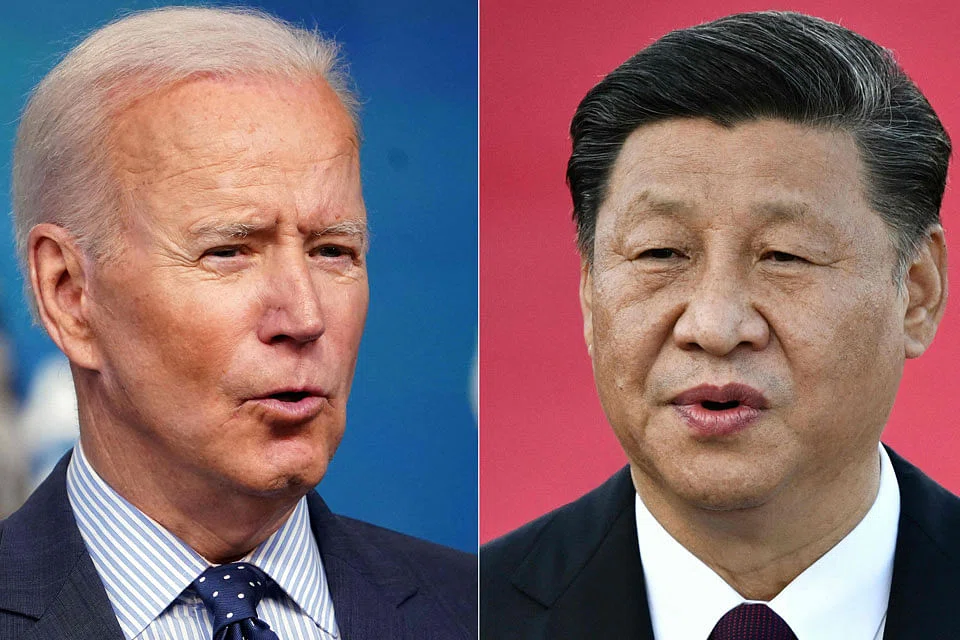
Washington
THE top diplomats from China and the United States have exchanged stern warnings over the flashpoint issue of Taiwan, ahead of Monday's hotly awaited summit between their leaders.
The virtual meeting of presidents Joe Biden and Xi Jinping comes against a backdrop of rising tensions - in part over Taiwan, a self-ruling democracy claimed by Beijing, but also over trade, human rights and other issues.
In a phone call last Friday with Chinese Foreign Minister Wang Yi to discuss preparations for the summit, US Secretary of State Antony Blinken raised concerns over Beijing's "military, diplomatic, and economic pressure" on Taiwan.
Wang warned of the dangers of US actions that might seem supportive of "Taiwan independence". Washington switched diplomatic recognition from Taipei to Beijing in 1979, but an act of Congress passed that year requires the US to provide weapons to Taiwan for self-defence.
The US government is careful not to show that it recognises Taiwan but it enjoys broad, bipartisan support in Congress, with a group of lawmakers visiting the island this month - angering Beijing.
Navigate Asia in
a new global order
Get the insights delivered to your inbox.
"Any connivance of and support for the 'Taiwan independence' forces undermines peace across the Taiwan Strait and would only boomerang in the end," Wang told Blinken, according to a readout of the call released by China on Saturday.
China has ramped up military activities near Taiwan in recent years, with a record number of planes intruding into the island's air defence identification zone in early October.
Washington has repeatedly signalled its support for Taiwan in the face of what it has described as Chinese aggression.
Biden has largely kept the tougher approach on Beijing of his predecessor Donald Trump, with both administrations seeing a rising China as the top challenge of the 21st century.
And while the world's top two emitters of greenhouse gases unveiled a surprise agreement last week to work together on climate change, Washington and Beijing have indicated they will not give ground on flashpoint issues.
US officials have framed Monday's summit as an opportunity to "responsibly manage competition" while trying to cooperate in areas where the two align.
Xi last week warned against the return of Cold War-era tensions in the Asia-Pacific region.
Biden and the Chinese leader have talked by phone twice since the veteran Democrat moved into the White House.
The pair also met extensively when Biden was Barack Obama's vice-president and Xi was vice-president to Hu Jintao. The US president had hoped to meet Xi at a recent G20 summit in Rome, but the Chinese leader has not travelled since the start of the Covid-19 pandemic and instead agreed to virtual talks by the end of the year. AFP
Decoding Asia newsletter: your guide to navigating Asia in a new global order. Sign up here to get Decoding Asia newsletter. Delivered to your inbox. Free.
Share with us your feedback on BT's products and services
TRENDING NOW
Thai and Vietnamese farmers may stop planting rice because of the Iran war. Here’s why

‘We’re not a bubble tea brand’: Chagee aims to double Asia-Pacific footprint to 600 stores by 2027

Heritage food and high drama at The Peranakan Club

Meet the women who run one of Singapore’s most trusted hotel brands

