
US and EU in talks on access to Biden’s green plan benefits
 Add BT as a preferred source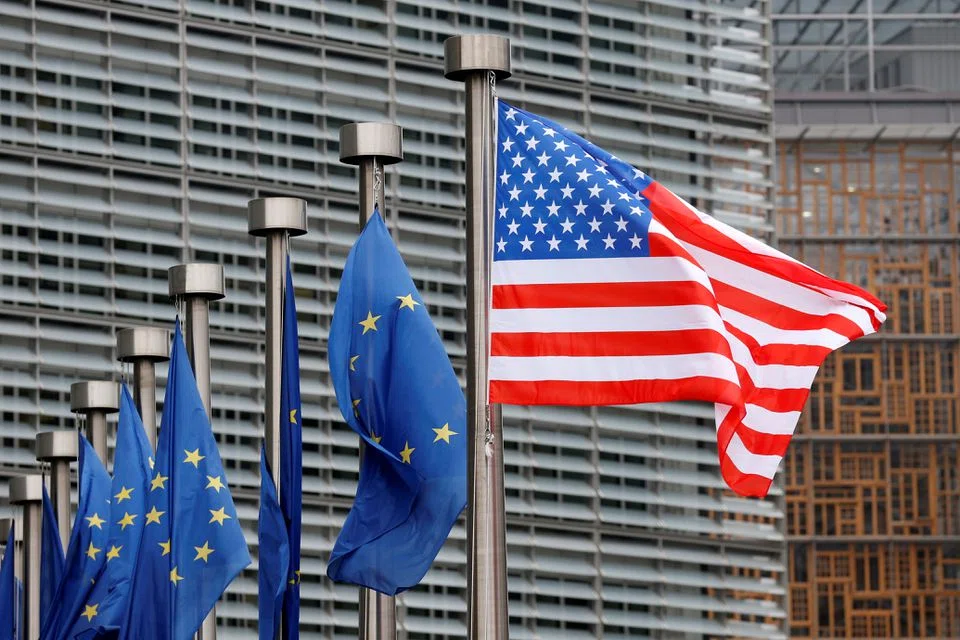
THE US and the European Union (EU) are discussing a possible deal on minerals and critical raw materials, to let the EU qualify for benefits in President Joe Biden’s massive new green investment plan, said sources familiar with the matter.
The Inflation Reduction Act includes about US$500 billion in new spending and tax breaks over a decade, to promote American manufacturing and services. It offers certain exceptions for countries with free-trade agreements with the US.
The law’s focus on spurring American industry angered trade partners from Asia and Europe, who saw it cutting them out of the US market, particularly for automobiles.
It offers consumers a tax credit up to US$7,500 for EVs assembled in North America, as long as the value of the raw materials in their batteries that are extracted or processed in the US, or in countries that have a free-trade agreement with Washington, is at least 40 per cent.
This means that some US partners — such as Canada and Mexico — can meet the law’s content requirements, while other foreign car producers cannot. So a deal on key materials used in electric vehicles (EVs) and batteries could allow the EU to access some of those advantages, the sources said.
Late last year, the US Treasury Department signalled that some benefits could go to countries that had trade agreements with Washington, something the EU does not already have. Treasury Secretary Janet Yellen said earlier this week that the issue could be resolved with new deals related to minerals.
Navigate Asia in
a new global order
Get the insights delivered to your inbox.
“There could be some agreement that has to do with trade in minerals, and critical minerals, and so forth,” Yellen told The Wall Street Journal. “If countries signed up for it, we could find that something like that could qualify in the future as a free-trade area. We’re thinking along those lines.”
The sources said discussions between the US and EU are at an early stage, asking not to be named as the talks are private. They added that any agreement on minerals and raw materials, broadly aimed at reducing reliance on supplies from China, could involve other countries, such as Indonesia and Argentina.
The Biden administration is also considering whether to count the US-led Indo-Pacific Economic Framework, which includes Japan and South Korea, as an agreement that would allow participating countries to benefit from the new law.
The US is likely to want to focus only on extraction and processing critical minerals used in the vehicles, the sources said, while the EU wants any arrangement to also include recycled materials.
Some EU leaders have argued that the Inflation Reduction Act unfairly subsidises American companies and does not comply with World Trade Organization rules. Earlier this month, Belgian Prime Minister Alexander De Croo accused the US of trying to lure green industries across the Atlantic.
The EU and the US have set up a task force to bridge some of those differences, but officials are sceptical that a wholesale fix can be found.
The EU is working on a broader response to the Inflation Reduction Act. This will likely allow for more national investment in domestic companies, reforming how existing EU funds are deployed, and possibly fresh financing to make sure every country in the bloc can keep their companies competitive. EU leaders will meet in Brussels on for two days from Feb 9 to discuss the proposals.
At the World Economic Forum in Davos last week, European Commission President Ursula von der Leyen said: “We need to improve the refining, processing and recycling of raw materials here in Europe. And in parallel, we will work with our trade partners to cooperate on sourcing, production and processing, to overcome the existing monopoly.”
“To do this, we can build a critical raw materials club working with like-minded partners — from the US to Ukraine — to collectively strengthen supply chains and to diversify away from single suppliers,” she added.
The European Commission was not able to immediately comment on the matter. The White House’s National Security Council said it was “committed to continuing to understand (its) partners’ concerns”, without commenting directly on the talks. BLOOMBERG
Decoding Asia newsletter: your guide to navigating Asia in a new global order. Sign up here to get Decoding Asia newsletter. Delivered to your inbox. Free.
Share with us your feedback on BT's products and services

