US annual consumer prices increase less than expected in November
The smaller CPI rise likely reflects delayed data capture late in the month amid holiday discounts
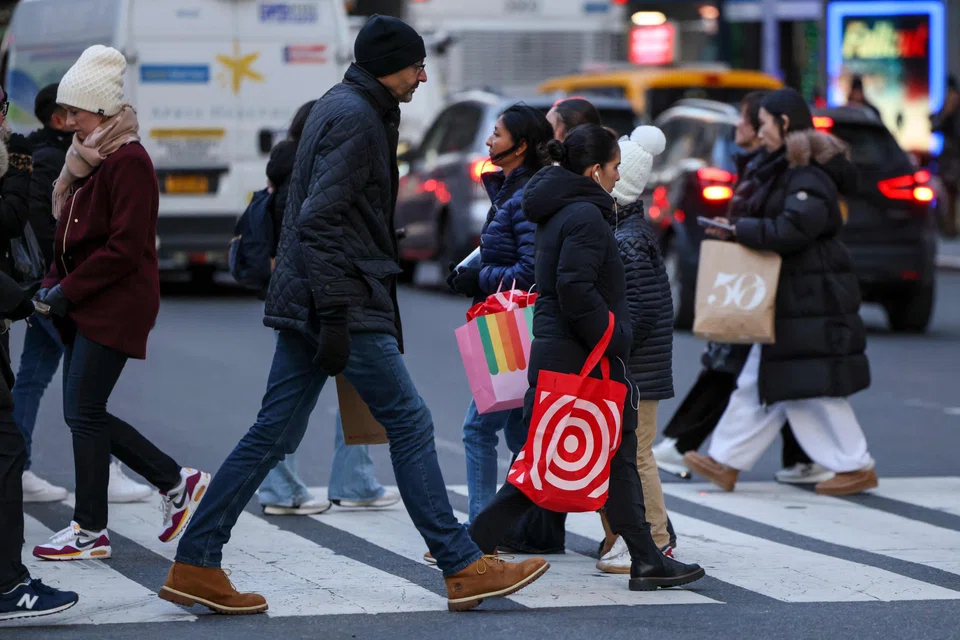
[WASHINGTON] US consumer prices increased less than expected in the year to November, but the moderation is likely technical and Americans continued to face affordability challenges that have been partly blamed on tariffs on imports.
The consumer price index (CPI) rose 2.7 per cent year on year (yoy) in November, the Labor Department’s Bureau of Labor Statistics (BLS) said on Thursday (Dec 18). Economists polled by Reuters had forecast the CPI advancing 3.1 per cent.
The BLS did not publish month-to-month CPI changes after the 43-day shutdown of the government prevented the collection of October data. The October CPI release was cancelled because the price data could not be collected retroactively.
The longest shutdown in history also impacted labour market data, with the government failing to publish an unemployment rate for October for the first time ever. The CPI increased 3 per cent in the 12 months through September.
The statistics agency said it “cannot provide specific guidance to data users for navigating the missing October observations”. Economists advised viewing the CPI and its components on a yoy basis or two-month change.
The smaller-than-expected increase in the CPI was likely the result of data collection being delayed late into the month, when retailers offered holiday season discounts. Economists expect an acceleration in December.
President Donald Trump’s sweeping import duties have raised prices for many goods, though the tariff pass-through has been gradual as businesses worked through inventory accumulated prior to the trade policy tightening and also absorbed some of the taxes.
Samuel Tombs, chief US economist at Pantheon Macroeconomics, calculated that retailers passed on about 40 per cent of tariffs by September. He added, “We expect that proportion to climb gradually to 70 per cent by March and then stabilise.”
Economists say the tariff burden was falling disproportionately on lower-income households, who have little or no savings buffer and have also experienced slower wage growth relative to other workers.




Trump, who won the 2024 presidential election on promises to tame inflation, has in recent weeks alternated between dismissing affordability problems as a hoax, blaming former president Joe Biden, and promising that Americans will benefit from his economic policies next year.
Core CPI increased 2.6 per cent yoy in November. It rose 3 per cent in September.
The Federal Reserve tracks the personal consumption expenditures (PCE) price indexes for its 2 per cent inflation target.
The PCE price measures are calculated from some components of the CPI and producer price index (PPI) baskets. The PPI report for October was cancelled. November’s producer inflation report will now be released in mid-January. The government is yet to set a new release date for November’s PCE price data. Both PCE price measures were well above target in September.
Fed officials last week cut the US central bank’s benchmark overnight interest rate by another 25 basis points to the 3.5 to 3.75 per cent range, but signalled borrowing costs were unlikely to fall further in the near term as they awaited clarity on the direction of the labour market and inflation.
Fed chair Jerome Powell told reporters “it’s really tariffs that are causing most of the inflation overshoot.”
It could take some time for consumers to see lower prices from the White House’s rolling back of duties on some goods including beef, bananas and coffee, economists said. REUTERS
Decoding Asia newsletter: your guide to navigating Asia in a new global order. Sign up here to get Decoding Asia newsletter. Delivered to your inbox. Free.
Share with us your feedback on BT's products and services