US cancels another joint drill with South Korea, cites Iran war-related force constraints
The allies remain in close consultations on resuming the drills
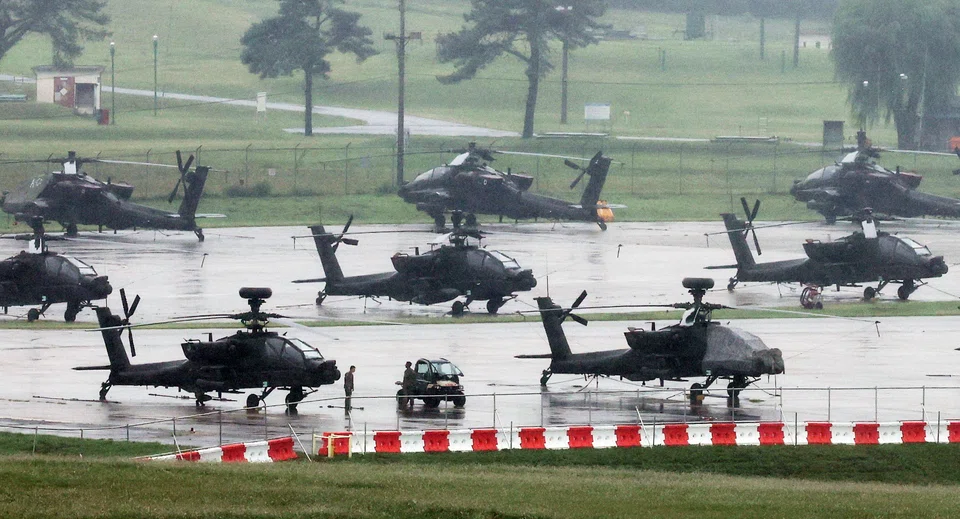
[SEOUL] The United States cancelled a joint amphibious landing drill scheduled for September with South Korea, Seoul’s Marine Corps said on Monday (Aug 24), after Washington cited constraints on the availability of US forces due to the war in Iran.
The US Marine Corps formally notified its South Korean counterpart in June that force availability would be constrained for the division-level exercise, known as Ssangyong, a South Korean Marine Corps spokesperson told a press briefing.
The allies remain in close consultations on resuming the drills, the spokesperson said. He did not specify what measures might be taken to prevent future cancellations or to make up for lost training opportunities.
US Forces Korea did not immediately respond to a request for comment.
The cancellation follows US President Donald Trump’s surprise order to scale back a separate annual joint military exercise that ended on Aug 21, citing the cost and Seoul’s refusal to take part in the Iran war.
Trump also wrote on his Truth Social platform that the Ulchi Freedom Shield drills sent “a signal that was totally inappropriate and hostile, to a Country that, as long as Donald J. Trump has been President, has been unthreatening and respectful.”

Despite the reduction of the exercises, Pyongyang fired 10 short-range ballistic missiles last week and issued a statement denouncing the exercises.
North Korea has long condemned such joint exercises as rehearsals for invasion. REUTERS
Decoding Asia newsletter: your guide to navigating Asia in a new global order. Sign up here to get Decoding Asia newsletter. Delivered to your inbox. Free.
Share with us your feedback on BT's products and services