

US consumer prices up more than expected in September; weekly jobless claims rise
 Add BT as a preferred source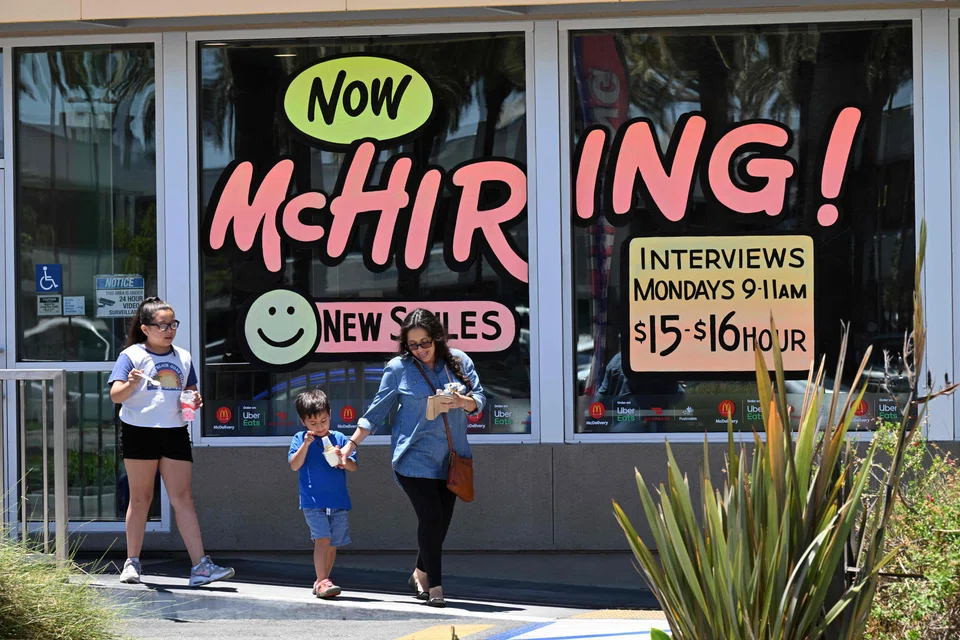
DeeperDive is a beta AI feature. Refer to full articles for the facts.
US CONSUMER prices rose more than expected in September and underlying inflation pressures continued to build up, reinforcing expectations that the Federal Reserve will deliver a fourth 75-basis points interest rate hike next month.
The consumer price index (CPI) rose 0.4 per cent last month after having gained 0.1 per cent in August, the Labor Department said on Thursday (Oct 13). Economists polled by Reuters had forecast the CPI climbing 0.2 per cent.
In the 12 months through September, the CPI increased 8.2 per cent after having risen 8.3 per cent in August. The annual CPI peaked at 9.1 per cent in June, which was the biggest advance since November 1981.
Despite the continued moderation as supply chains ease and oil prices retreat from the highs seen in the spring, inflation is running way above the Fed’s 2 per cent target.
Petrol prices have likely bottomed following last week’s decision by the Organization of Petroleum Exporting Countries (Opec) and allies to cut oil production. Russia’s war against Ukraine poses an upside risk to food prices.
Stubbornly high inflation and a tight labour market have allowed the US central bank to maintain its aggressive monetary policy stance for a while. The government last week reported solid job growth in September, with the unemployment rate falling back to a pre-pandemic low of 3.5 per cent from 3.7 per cent in August.
Navigate Asia in
a new global order
Get the insights delivered to your inbox.
Financial markets have almost priced in another three-quarters of a percentage point rate increase at the Fed’s Nov 1-2 policy meeting, said CME’s FedWatch Tool.
The Fed has, since March, hiked its policy rate from near zero to the current range of 3.00 per cent to 3.25 per cent. Minutes of the Fed’s Sep 20-21 meeting published on Wednesday showed policymakers “expected inflation pressures to persist in the near term”.
Excluding the volatile food and energy components, the CPI climbed 0.6 per cent in September after having risen 0.6 per centr in August. The so-called core CPI jumped 6.6 per cent in the 12 months through September. The core CPI rose 6.3 per cent year on year in August.



Underlying inflation is being largely driven by higher costs for rental accommodation. Government data on Wednesday showed the weakest reading in producer core goods prices in nearly two-and-a-half years in September. The pass through from producer to consumer inflation could, however, probably take a while.
Some of the inflation pressures are coming from the tight labour market. A second report from the Labor Department on Thursday showed the number of Americans filing new claims for unemployment benefits increased moderately last week. Initial claims for state unemployment benefits rose 9,000 to a seasonally adjusted 228,000 for the week ended Oct 8.
Economists had forecast 225,000 applications for the latest week. The labour market remains tight. There were 1.7 job openings for every unemployed person on the last day of August, and layoffs also remain low.
The Fed’s September meeting minutes also showed policymakers “anticipated that the supply and demand imbalances in the labour market would gradually diminish”, and “that the transition toward a softer labour market would be accompanied by an increase in the unemployment rate.”
Decoding Asia newsletter: your guide to navigating Asia in a new global order. Sign up here to get Decoding Asia newsletter. Delivered to your inbox. Free.
Share with us your feedback on BT's products and services
TRENDING NOW

Air India asks Tata, Singapore Airlines for funds after US$2.4 billion loss

‘Boring’ is the new black: The stars are aligning for a Singapore stock market revival

From 1MDB to ‘corporate mafia’: Is Malaysia facing a new governance test?

South-east Asian markets account for 8.8% of global capital inflows from 2021 to 2024: report

