

US consumer spending beats expectations in April; inflation likely peaked
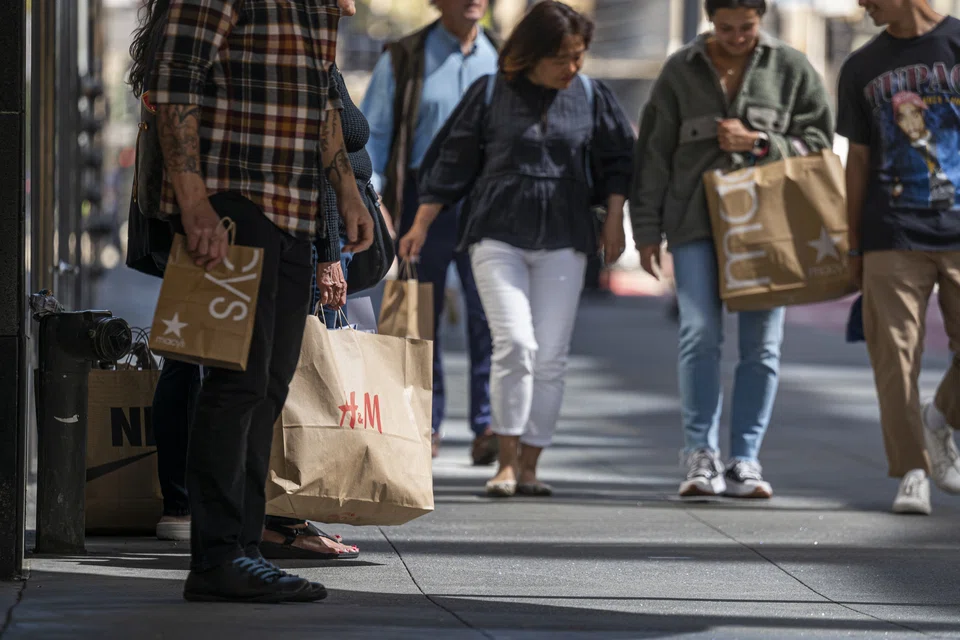
US consumer spending rose more than expected in April, while annual inflation appeared to have peaked, which could help to underpin economic growth in the second quarter amid rising fears of a recession.
Consumer spending, which accounts for more than two-thirds of US economic activity, increased 0.9 per cent last month, the Commerce Department said Friday. Data for March was revised higher to show outlays racing 1.4 per cent instead of 1.1 per cent as previously reported.
Economists polled by Reuters had forecast consumer spending gaining 0.7 per cent. Spending is being supported by strong wage gains, with companies scrambling to fill a record 11.5 million job openings as of the end of March.
The Federal Reserve’s hawkish monetary policy stance as it fights to quell high inflation and bring it back to its 2 per cent target has fanned worries of a recession, sparking an equities sell-off and surge in U.S. Treasury yields and the dollar.
Fears of an economic downturn have also been exacerbated by Russia’s dragging war against Ukraine as well as China’s zero Covid-19 policy, which have further entangled supply chains.
The US central bank has raised its policy interest rate by 75 basis points since March. The Fed is expected to hike the overnight rate by half a percentage point at each of its next meetings in June and July.
Growth estimates for the second quarter are mostly above a 2.0 annualised rate. The economy contracted at a 1.5 per cent pace in the January-March quarter, weighed down a record trade deficit and slower inventory accumulation relative to the fourth-quarter’s robust rate.
Although inflation continued to increase in April, it was not at same magnitude as in recent months. The personal consumption expenditures (PCE) price index gained 0.2 per cent last month after shooting up 0.9 per cent in March. In the 12 months through April, the PCE price index advanced 6.3 per cent after jumping 6.6 per cent in March.
The annual PCE price index increase is slowing as last year’s large gains drop out of the calculation.

Excluding the volatile food and energy components, the PCE price index gained 0.3 per cent, rising by the same margin for three straight months. The so-called core PCE price index increased 4.9 per cent year-on-year in April after rising 5.2 per cent in March. It was the second straight month that the rate of increase in the annual core PCE price index decelerated. REUTERS
Decoding Asia newsletter: your guide to navigating Asia in a new global order. Sign up here to get Decoding Asia newsletter. Delivered to your inbox. Free.
Share with us your feedback on BT's products and services
TRENDING NOW
Easy to rent out, hard to sell: Are buyers losing interest in Singapore’s one-bedroom condos?

GovTech retrenches another 38 staff in second round of layoffs

Stocks to watch: Seatrium, CapitaLand Investment, Keppel DC Reit, Suntec Reit, CLCT, TSH Resources

World’s largest offshore wind platform by Seatrium consortium on track to be completed by 2028

