

US consumer spending flat in March; core inflation still strong
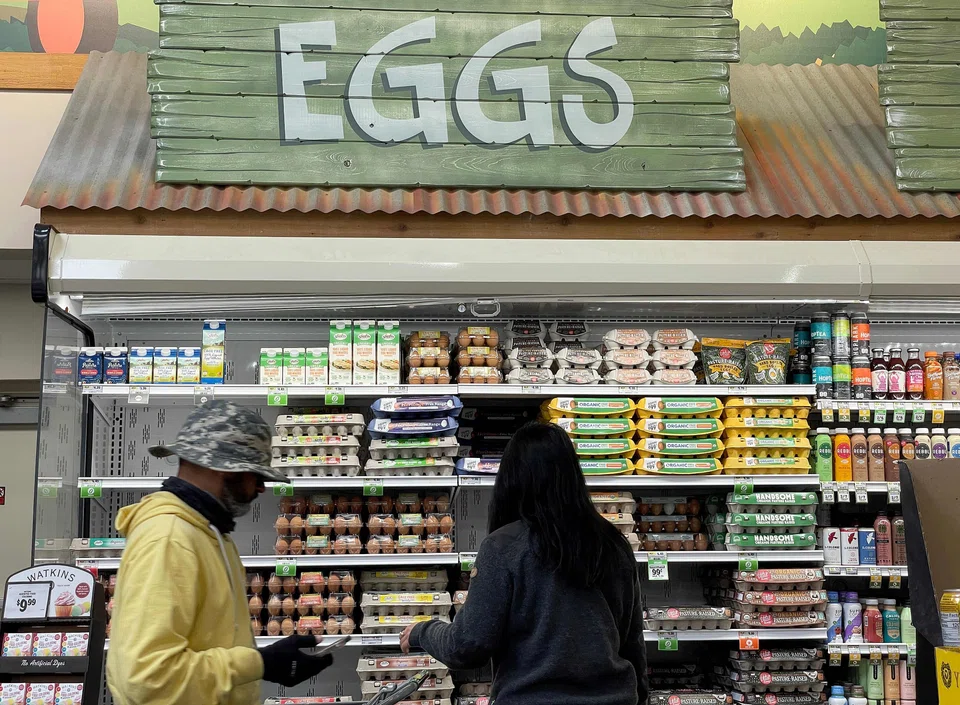
US CONSUMER spending was unchanged in March, while underlying inflation pressures remained strong, which could see the Federal Reserve raising interest rates again next month.
The unchanged reading in consumer spending last month, reported by the Commerce Department on Friday (Apr 28), followed a downwardly revised 0.1 per cent gain in February.
Consumer spending, which accounts for more than two-thirds of US economic activity, was previously reported to have increased 0.2 per cent in February. Economists polled by Reuters had forecast consumer spending dipping 0.1 per cent.
The data was included in the advance gross domestic product report for the first quarter published on Thursday, which showed consumer spending surging at a 3.7 per cent annualised rate in that period after rising at a 1.0 per cent pace in the October-December quarter.
The overall economy grew at a 1.1 per cent pace as the acceleration in consumer spending was offset by businesses liquidating inventories in anticipation of weaker demand later this year. The economy expanded at a 2.6 per cent rate in the fourth quarter.
Last month’s flat reading in consumer spending set consumption on a lower growth path in the second quarter. It likely reflected Americans becoming more averse to higher prices as well as the expiration of a temporary boost to the Supplemental Nutrition Assistance Program (SNAP) benefits authorised by the US Congress to cushion low-income people and families against the hardships of the Covid-19 pandemic.
SNAP is commonly known as food stamps. Researchers from the Commerce Department’s Census Bureau on Thursday estimated the end of the extra benefits had resulted in roughly 32 million people getting smaller monthly SNAP payments. They estimated that a household of four with a net monthly income of US$2,000 was now getting US$600 less in food stamps each month.
The economy is facing several headwinds, including higher interest rates as the Fed fights inflation, and tightening credit conditions, which could crimp both consumer and business spending. A stand-off to raise the federal government’s US$31.4 trillion borrowing cap also poses a threat.
The Fed is expected to increase interest rates by another 25 basis points next week, potentially the last hike in the US central bank’s fastest monetary policy tightening cycle since the 1980s.

The Fed has raised its policy rate by 475 basis points since March of last year from the near-zero level to the current 4.75-5.00 per cent range.
Though inflation remains elevated, it is gradually slowing. The personal consumption expenditures (PCE) price index gained 0.1 per cent in March after rising 0.3 per cent in February. In the 12 months till March, the PCE price index increased 4.2 per cent after climbing 5.1 per cent in February.
Excluding the volatile food and energy components, the PCE price index rose 0.3 per cent after increasing 0.3 per cent in February. The so-called core PCE price index gained 4.6 per cent on a year-on-year basis in March after rising 4.7 per cent in February. The Fed tracks the PCE price indexes for its 2 per cent inflation target. REUTERS
Decoding Asia newsletter: your guide to navigating Asia in a new global order. Sign up here to get Decoding Asia newsletter. Delivered to your inbox. Free.
Share with us your feedback on BT's products and services
TRENDING NOW

Malaysian king buys stake in Singapore-listed mining firm expanding into rare earths

Family offices ‘kept captive’ by relationship managers turn to independent advisers, direct deals

Once staunchly pro-China, Malaysian Chinese businesses are now distancing themselves from Beijing

Could stablecoins be the future of money?

