
US consumer spending, inflation cool in November
 Add BT as a preferred source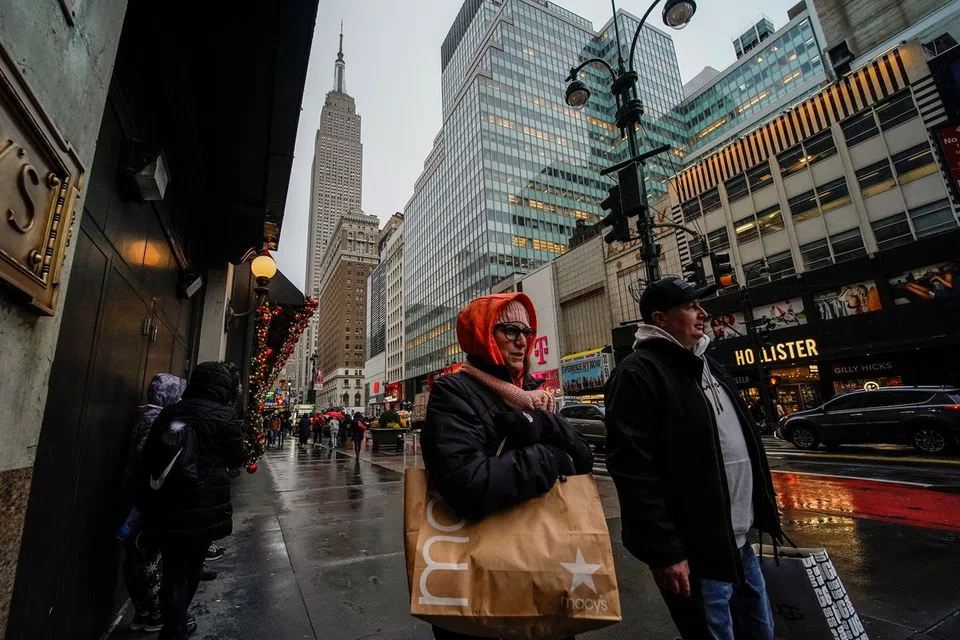
US consumer spending barely rose in November, while annual inflation increased at its slowest pace in 13 months, but demand is probably not cooling fast enough to discourage the Federal Reserve (Fed) from driving interest rates to higher levels next year.
Slowing economic activity amid rising borrowing costs was also flagged by other data from the Commerce Department on Friday (Dec 23) showing a modest gain in orders for locally manufactured capital goods last month. Shipments of these goods, which are a proxy for business spending on equipment, fell.
The US central bank is trying to slow demand for everything from housing to labour as it fights to bring inflation back to its 2 per cent target.
“Consumers are starting to pull back and businesses likely won’t be far behind as the full weight of tighter monetary policy and weaker financial conditions bears down on the economy in 2023,” said Sal Guatieri, a senior economist at BMO Capital Markets in Toronto.
Consumer spending, which accounts for more than two-thirds of US economic activity, edged up 0.1 per cent. Data for October was revised up to show spending surging 0.9 per cent instead of 0.8 per cent as previously reported. Economists polled by Reuters had forecast consumer spending rising 0.2 per cent.
Some of the moderation in spending last month reflected a shift of demand from goods to services. Slowing price increases for some goods also lowered the US dollar amount of consumer spending.
Navigate Asia in
a new global order
Get the insights delivered to your inbox.
Spending on goods fell 1.0 per cent, led by decreases in purchases of motor vehicles. Lower petrol prices also weighed, with additional drags on sales coming from household furnishings and other equipment as well as recreational goods and vehicles.
Outlays on services increased 0.7 per cent, lifted by housing and utilities as well as financial services and insurance. They offset decreases in air transportation services.
US stocks opened lower. The US dollar was steady against a basket of currencies. US Treasury prices fell.
GOODS ORDERS SLOW
Nevertheless, consumer spending is on track to provide another lift to economic growth this quarter, after teaming up with exports to boost gross domestic product in the third quarter. The economy grew at a 3.2 per cent annualised rate last quarter after contracting in the first half of the year.
Growth estimates for the fourth quarter are as high as a 2.7 per cent pace. Consumer spending is being driven by solid wage gains, thanks to a tight labour market, as well as savings accumulated during first year of the Covid-19 pandemic.
The Fed last week hiked its policy rate by 50 basis points to a 4.25 per cent-4.50 per cent range, the highest since late 2007. Fed officials expect the rate to rise to between 5.00 per cent and 5.25 per cent next year, a level that could be sustained for a while.
Higher borrowing costs, fast-depleting savings and diminishing household wealth could stifle consumer spending, and tip the economy into recession next year.
Personal income rose 0.4 per cent last month after jumping 0.7 per cent in October. The saving rate rose to 2.4 per cent from 2.2 per cent in October.
The personal consumption expenditures (PCE) price index rose 0.1 per cent last month after climbing 0.4 per cent in October. In the 12 months through November, the PCE price index increased 5.5 per cent. That was the smallest annual gain since October 2021 and followed a 6.1 per cent advance in October.
Excluding the volatile food and energy components, the PCE price index gained 0.2 per cent after increasing 0.3 per cent in October. The so-called core PCE price index climbed 4.7 per cent on a year-on-year basis in November, also the smallest rise since October 2021, after increasing 5.0 per cent in October.
The Fed tracks the PCE price indexes for monetary policy. Other inflation measures have also shown signs of slowing.
Consumer prices rose less than expected for a second straight month in November. Consumers’ one-year inflation expectations also moderated in December, strengthening views that price pressures peaked several months ago.
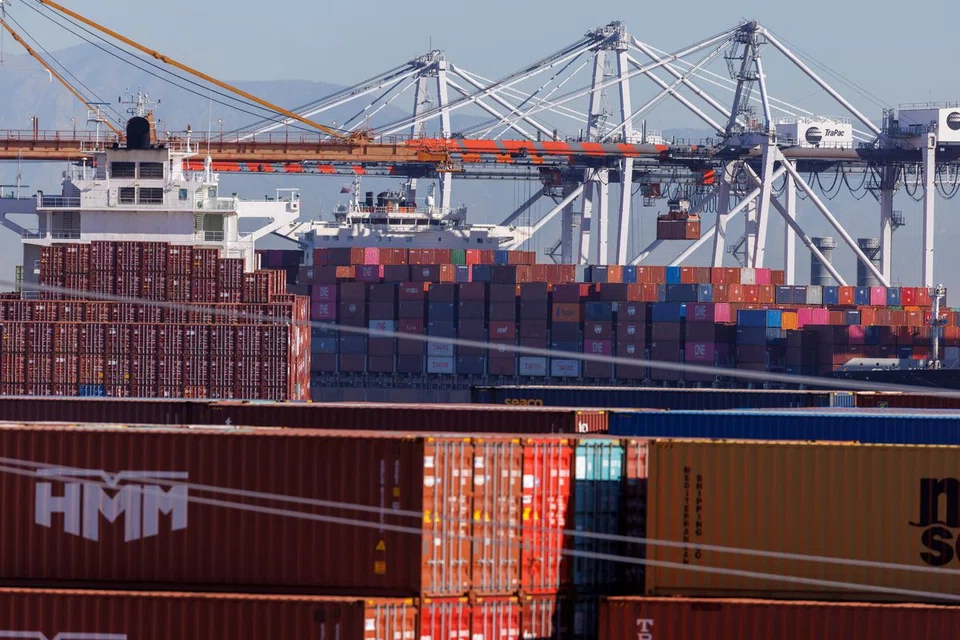
In another report on Friday, the Commerce Department said orders for non-defence capital goods excluding aircraft, a closely watched proxy for business spending plans, rose 0.2 per cent in November. These so-called core capital goods orders increased 0.3 per cent in October. They gained 8.8 per cent on a year-on-year basis.
The data is not adjusted for inflation. Slowing price increases, a strong US dollar and the shift in spending from goods to services likely contributed to the moderation in core capital goods orders. That is hurting manufacturing, which accounts for 11.3 per cent of the economy.
Shipments of core capital goods dipped 0.1 per cent after increasing 1.4 per cent in October. Core capital goods shipments are used to calculate equipment spending in the gross domestic product measurement. Business spending on equipment contributed to the economy’s rebound last quarter. REUTERS
Decoding Asia newsletter: your guide to navigating Asia in a new global order. Sign up here to get Decoding Asia newsletter. Delivered to your inbox. Free.
Share with us your feedback on BT's products and services

