US core capital goods orders unexpectedly flat in January
Business spending on equipment slowed in the fourth quarter
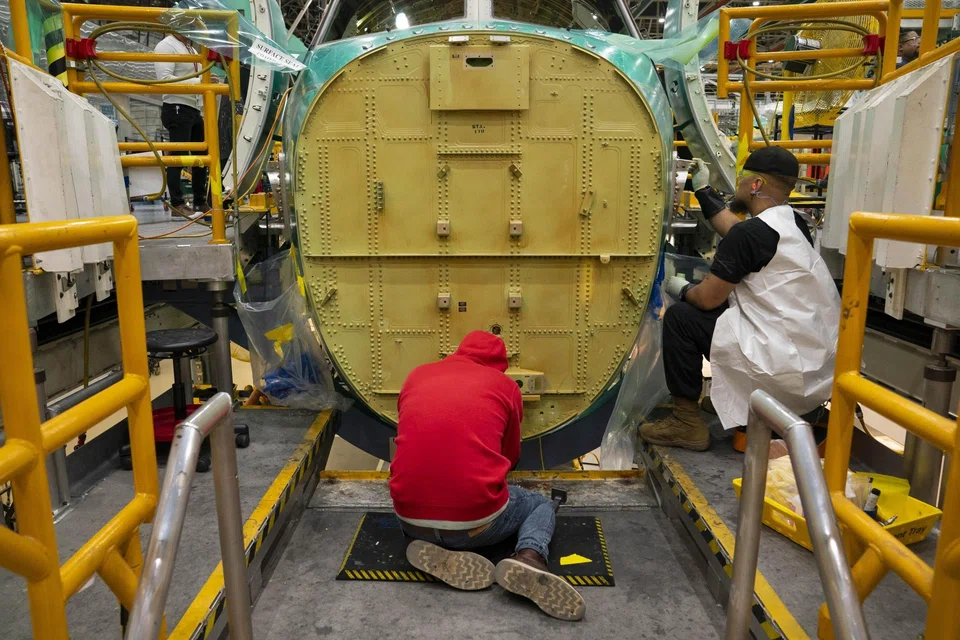
[WASHINGTON] New orders for key US-manufactured capital goods were unexpectedly unchanged in January and shipments of these products fell, pointing to weakness in business spending on equipment early in the first quarter.
The flat reading in non-defence capital goods orders excluding aircraft, a closely watched proxy for business spending, followed an unrevised 0.8 per cent increase in December, the Commerce Department’s Census Bureau said on Friday (Mar 13).
Economists polled by Reuters had forecast these so-called core capital goods orders rising 0.5 per cent. Shipments of core capital goods fell 0.1 per cent after increasing 1.0 per cent in December.
The Census Bureau is still catching up on data releases following delays caused by last year’s government shutdown.
Business spending on equipment slowed in the fourth quarter. Despite the weak start to the first quarter, equipment investment could pick up amid increased spending on artificial intelligence and the construction of data centres.
The government reported on Thursday that imports of capital goods rose to a record high, driven by computers and telecommunications equipment. Business spending on AI and data centre construction is helping to support some segments of manufacturing, which has been constrained by import tariffs.

The US Supreme Court struck down President Donald Trump’s sweeping tariffs, which he pursued under a law meant for use in national emergencies. But Trump responded to the ruling by imposing a 10 per cent global tariff, which he said would rise to 15 per cent.
The Trump administration said on Wednesday it was launching two trade investigations into excess industrial capacity in 16 major trading partners and into forced labour. Manufacturing has lost 100,000 jobs since January 2025, despite the protectionist trade policy. The US-Israeli war against Iran, which has raised oil prices, could hamper manufacturing.
Orders for durable goods, items ranging from toasters to aircraft meant to last three years or more, were also unchanged in January after falling 0.9 per cent in December. REUTERS
Decoding Asia newsletter: your guide to navigating Asia in a new global order. Sign up here to get Decoding Asia newsletter. Delivered to your inbox. Free.
Share with us your feedback on BT's products and services