

US dollar falters after Iran’s offer to reopen Hormuz sends oil lower

[BENGALURU/SINGAPORE] The US dollar whipsawed on Tuesday (Sep 22), weakening after hitting a near two-month high, in the wake of oil prices falling following Iran’s proposal to reopen the Strait of Hormuz within seven days if the US eases military pressure.
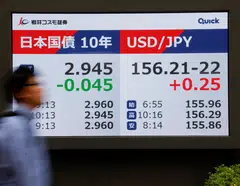
The greenback fell 0.12 per cent versus the yen to 157.15, while the euro was largely unchanged at US$1.146. The pound dipped 0.09 per cent to US$1.3356.
The volatility highlights the web of forces roiling forex markets, at a time when the global interest-rate outlook has been complicated by the prolonged conflict in the Middle East.
The disruption in the Strait of Hormuz has strained global oil supplies and added to inflationary pressures, prompting investors to swiftly reprice assets at the slightest hint of a shift in outlook.
Iran can reopen the strait within seven days if the US eases military pressure and lifts its blockade on Iranian ports, a senior Iranian official told Reuters, following an earlier report from Kyodo News.
Brent crude futures dropped below US$99. A sustained decline in oil prices could ease inflationary pressures, reducing the need for higher US interest rates, which could erode the dollar’s yield advantage over other currencies.
The dollar index, which tracks the US currency against six major peers, was 0.02 per cent lower at 100.4, after touching its highest since late July earlier in the session.
Traders were also weighing whether the Bank of Japan (BOJ) would raise rates quickly enough to close the gap with global peers.
Despite the BOJ’s rate hike on Sep 18, the Japanese currency has been under pressure. Investors view the dissent from two policymakers, who pushed for a more cautious pace, as a warning that additional hikes may be harder to implement.

“Whether the central bank quickens its pace remains contingent on how events unfold. Questions of where neutral and terminal policy rates sit are still open for debate,” said Naomi Fink, chief global strategist at Amova Asset Management.
Hawkish commentary from other global central banks has also left traders questioning the yen’s yield advantage, although the prospect of intervention from Tokyo has kept bearish sentiment in check.
On Sep 18, European Central Bank (ECB) president Christine Lagarde reacted against investor bets for aggressive rate increases, saying a measured response from the central bank would be enough to contain inflation.
“ECB officials have so far maintained a notably hawkish tone, keeping an October hike firmly on the table,” ING’s FX strategist Francesco Pesole wrote.
“Even so, investors appear increasingly willing to embrace the opposite narrative, pointing to further near-term downside pressure on the euro/dollar.”
Markets have priced about a 30 per cent chance that the BOJ hikes its benchmark short-term rate to 1.5 per cent in October and a roughly 50 per cent chance that the Fed will lift its funds rate window by 25 basis points to 4 to 4.25 per cent. REUTERS
Decoding Asia newsletter: your guide to navigating Asia in a new global order. Sign up here to get Decoding Asia newsletter. Delivered to your inbox. Free.
Share with us your feedback on BT's products and services
TRENDING NOW

Malaysian king buys stake in Singapore-listed mining firm expanding into rare earths

Grab CEO’s wife Chloe Tong on life with Anthony Tan and finding her purpose

Once staunchly pro-China, Malaysian Chinese businesses are now distancing themselves from Beijing

Longer wait times expected as S’pore healthcare institutions report system disruptions

