

US dollar gives back gains after rise to two-week highs, yen firms
 Add BT as a preferred source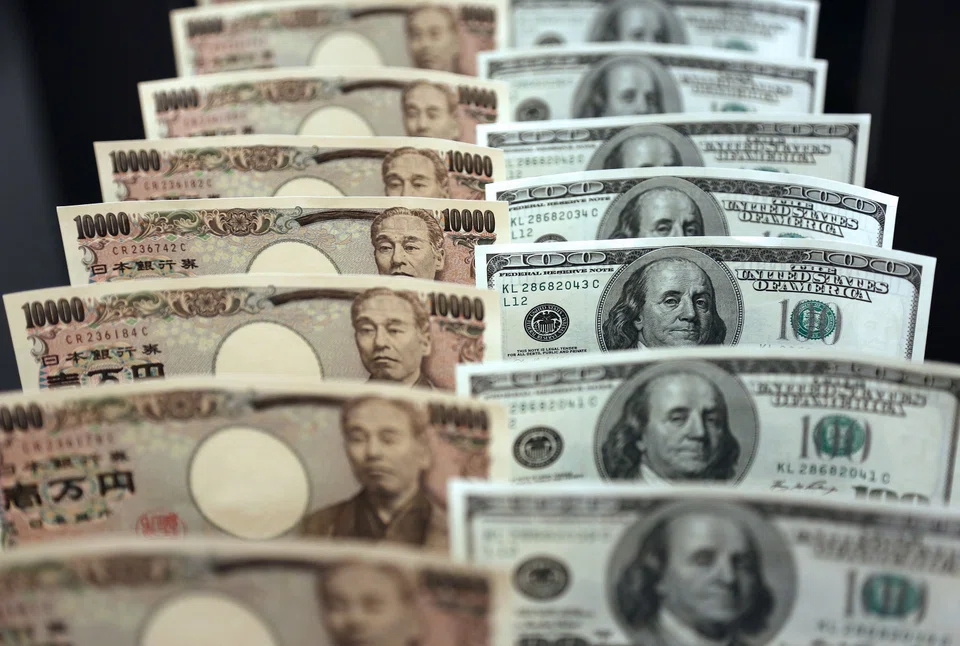
DeeperDive is a beta AI feature. Refer to full articles for the facts.
[TOKYO] The US dollar dipped on Wednesday as investors locked in gains following its steep rise against the yen after intervention warnings from Japanese officials.
The dollar index, which tracks the greenback against a basket of six rival currencies, shed 0.2 per cent to 94.126, moving away from its two-week high of 94.356 set overnight.
However, it remained well above a 15-month trough of 91.919 set on May 3.
The US dollar fell 0.4 per cent to 108.83 after climbing to a two-week high of 109.38 yen early in the Asian session. It moved back toward last week's low of 105.55, which marked its lowest since October 2014.
The euro slipped about 0.3 per cent to 123.90 yen after notching a two-week high of 124.415 overnight after bouncing off a three-year bottom of 121.48 on Friday.
Both currencies had suffered losses in late April when the Bank of Japan held off from expanding monetary stimulus, touching off a rally in the yen that stoked investors' fears that Japan's Ministry of Finance would decide to intervene.
Navigate Asia in
a new global order
Get the insights delivered to your inbox.
Still, many expect that Japan would be wary of conducting direct currency intervention before it hosts a G7 meeting later this month, as Tokyo is sensitive to criticism that it is trying to engineer a weaker yen.
"Japan can't intervene so easily," said Ayako Sera, market strategist at Sumitomo Trust and Banking.
"But the recent comments from officials provided investors with good timing to unwind some of their long positions." Koichi Hamada, a key economic adviser to Prime Minister Shinzo Abe, was the latest to sound a currency market warning.
Mr Hamada said on Tuesday Japan will intervene in foreign exchange markets if the yen strengthens to 90-95 per US dollar, even if that upsets the United States.
"Yesterday's comments from Japanese officials hinting at possible FX intervention to weaken the JPY, combined with the lift in European and US equity markets have undermined JPY," noted Elias Haddad, currency strategist at Commonwealth Bank.
Still, recent dovish comments from core Federal Reserve members and weaker-than-expected job gains in April continue to cap the dollar.
The euro added 0.1 per cent to US$1.13810, though it remained below a 2016 high of US$1.16160 hit on May 3.
The Australian dollar slipped about 0.1 per cent to US$0.7357 moving back toward a two-month low of 73 US cents touched on Tuesday, as oil prices gave up their overnight gains.
The New Zealand dollar stole some limelight, rising 0.6 per cent to 68 US cents, climbing well away from a recent low of US$0.6717.
Markets had sold the kiwi on Tuesday on speculation the Reserve Bank of New Zealand (RBNZ) would introduce new measures to curb Auckland's housing market. When the RBNZ held off from that course on Wednesday investors were quick to unwind those moves.
REUTERS
Share with us your feedback on BT's products and services
TRENDING NOW

StarHub hands Ensign InfoSecurity control back to Temasek in S$115 million deal, books S$200 million gain
Singaporeans can now buy record amount of yen per Singdollar

Air India asks Tata, Singapore Airlines for funds after US$2.4 billion loss

Keppel DC Reit posts 13.2% higher Q1 DPU of S$0.02833 on strong portfolio performance

