US Election 2020: 'It's the economy, stupid'
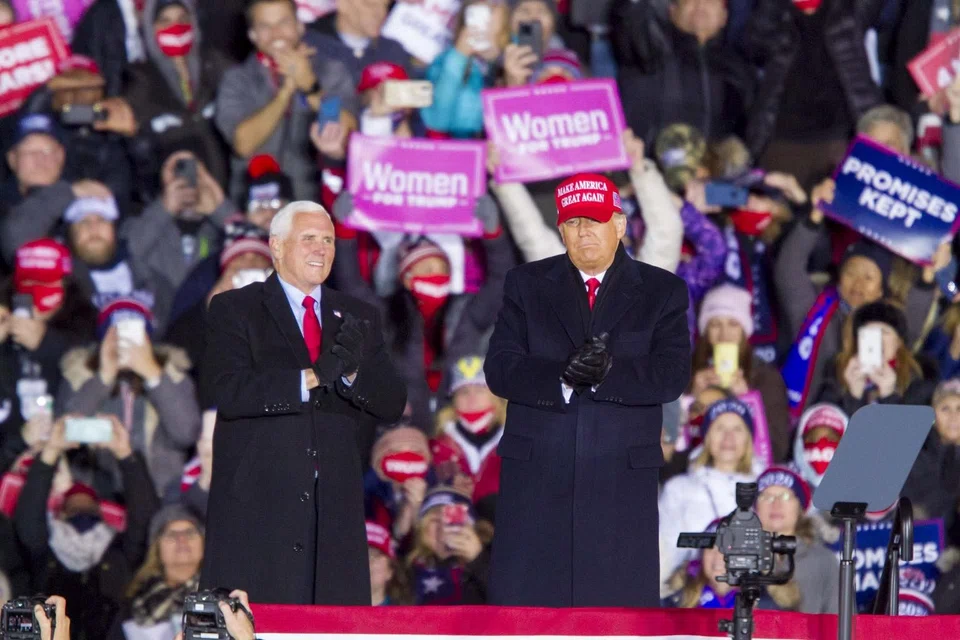
AS the election results rolled in, Democrat hopes of a blue wave sweeping them into power were instead confronted by the reality of a reduced majority in the House, a Republican Senate, and staunch support for the sitting president, Donald Trump.
Both the Democrats and pollsters alike underestimated the Trump campaign's reach and appeal. Predictions of a close fight in Florida and Texas never emerged, and Democrats faced an unexpected challenge to Nevada, where a New York Times poll had predicted that Mr Biden held a six-point lead. The election was not the referendum on the Covid-19 pandemic that pollsters had anticipated and which the Democrats were betting on.
Instead of delivering a knock-out blow to Trumpism, the tight contest signalled that just under half of Americans endorse Mr Trump's populist brand of deregulation, isolationism, anti-immigration, anti-intellectualism and race relations.
And despite losing the national popular ballot, Mr Trump's tally of over 70 million votes is the second highest number of votes recorded in a presidential election behind Joe Biden's (74.6 million and still counting). Key Trump allies, such as Senator Lindsey Graham, have defended their seats, while the Trump-endorsed Marjorie Taylor Greene, who made the pro-Trump QAnon conspiracy theory central to her campaign, won a seat in the House.
While Republicans may not have won the presidency, they are indebted to Mr Trump for securing a record turnout for their party, enabling them to defend their hold on the Senate and make gains in the House. They will also relish how Mr Trump's share of the popular vote, in absolute number, surpassed that of the previous record holder, Barack Obama.
With Trumpism thriving off an "us against them" siege mentality, the stark divisions in the country will serve as an optimal environment for its continued prevalence. It looks like Trumpism is here to stay.
Trumpism's belligerence means that President-elect Biden has his work cut out delivering on the promise he made at the start of his campaign to unite the country and restore its soul. A significant portion of the country simply does not trust a Biden administration, believing it is the harbinger of radical socialism and economy-stifling lockdowns. In order to begin any form of reconciliation, it is clear that his first priority has to be the economy.
The phrase "the economy, stupid" - coined by democratic political strategist James Carville ahead of the 1992 presidential election - has since come to characterise American voters' unwavering fixation on the economy.
This timeless wisdom must now resonate with President-elect Biden and the Democrats. An exit poll published by Reuters shows that the economy dominated the minds of voters, with 35 per cent of them considering it the most important issue in the election, ahead of race relations (20 per cent) and the pandemic (17 per cent).
This helps explain Mr Trump's strong showing. While Democrats campaigned on the moral outrage of the president's conduct on race relations and his ambivalence to the pandemic, Mr Trump has consistently touted the strong economic growth (that he inherited from Mr Obama and continued) under his administration's watch.
In the wake of this election, President-elect Biden is for the second time taking over a tattered economy from a Republican administration, but this challenge is also an opportunity to deliver early victories that can unlock the rest of his agenda.
Congress failed to pass a coronavirus stimulus package before the election and Americans are suffering as the pandemic rages and the economy stutters.
The unemployment rate has settled at around 7 per cent with its downward trend flatlining, and a looming rent crisis threatens to evict 32 per cent of US households. This bleak situation will be a formidable challenge but also an opportunity for the new president to deliver.
When the new Congress meets, Mr Biden's strong bipartisan credentials make him well suited to lead the negotiations on another stimulus package with a Republican Senate. If President-elect Biden is able to deliver on the economy he will go some way in winning over Trump voters, who, according to the exit polls, were four times more likely to name the economy as their primary concern.
Trumpism was born out of the inequitable economic recovery in the wake of the 2008 financial crisis, and by rebuilding the economy that the Trump administration paraded as its signature success, Mr Biden can strip away at the ideology's appeal.
If Mr Biden is able to redress the economic inequality that fuelled Trumpism, especially in the rust belt swing states that have been crucial in the last two elections, he will be able to keep this key demographic blue.
For many Trump voters, Trumpism is more than just the economy; it is an identity that validates their feelings of disenfranchisement with a political establishment that has repeatedly failed them. As Mr Trump's African American friend Kanye West said in the Oval Office, "when I put this ('Make America Great Again') hat on, it made me feel like Superman".
The deep divisions in American politics and society will not evaporate overnight, but because of how the economy is tethered to Trumpism, fixing it will be a good start to healing the divide.
TRENDING NOW
He built the Vingroup empire. Now South-east Asia’s richest man is handing some key roles to his sons
Grab CEO’s wife Chloe Tong on life with Anthony Tan and finding her purpose
What role can Japan play in Asean’s future?
From folding clothes to factory work: Why China is sending humanoid robots to school