

US factory sector slumps to 14-month low as 2025 ends
PMI stays above 42.3, a level ISM says over time aligns with expansion in the overall economy
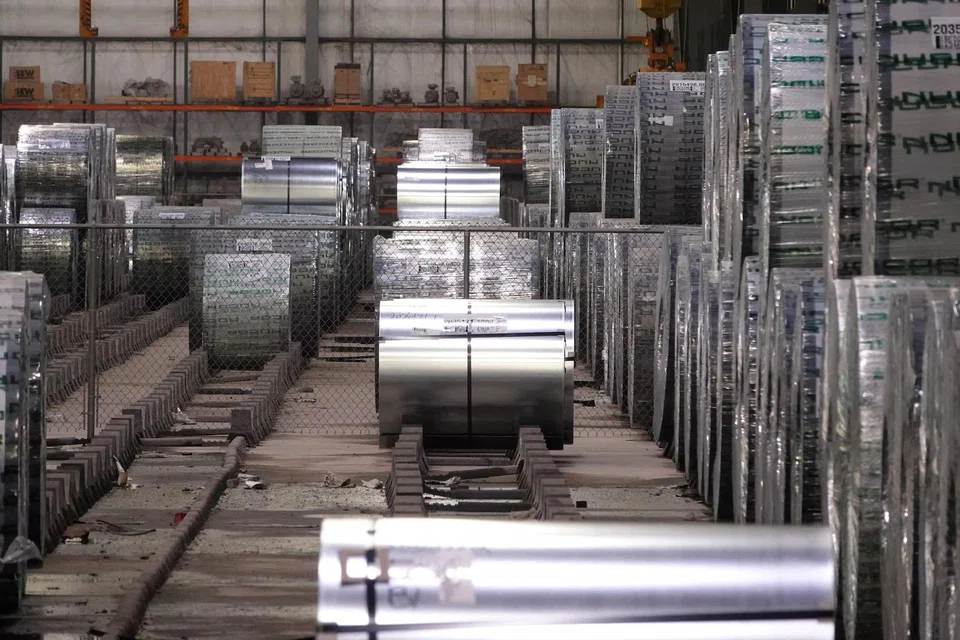
[WASHINGTON] US manufacturing activity contracted more than expected in December, extending its slump to 10 straight months as new orders fell again and input costs kept grinding higher as the sector continues to bear the imprint of President Donald Trump’s import tariffs.
The Institute for Supply Management (ISM) said on Monday (Jan 5) its manufacturing PMI dropped to 47.9 in the final month of 2025 – the lowest since October 2024 – from 48.2 in November. A reading below 50 indicates contraction in manufacturing, which accounts for 10.1 per cent of the economy. Economists polled by Reuters had forecast the PMI would be little changed at 48.4.
Still, the PMI remained above 42.3, a level that ISM said over time was consistent with an expansion of the overall economy. Indeed, the US economy expanded at an above-trend 4.3 per cent annualised rate in the third quarter, and while fourth-quarter activity is expected to have been dented by a record-long government shutdown, economists broadly expect growth to rebound in 2026 thanks to Trump’s tax cuts and the ongoing surge in artificial intelligence technology investment.
Beyond the sectors lifted by the AI boom, though, Trump’s sweeping import duties have undercut manufacturing, even as he touts them as necessary to shore up a long-declining domestic factory base.
Economists have argued it is impossible to restore the industry to its former glory because of structural issues, including worker shortages.
A reckoning over the matter is expected sometime in early 2026, with the US Supreme Court set to rule on the legality of the premise Trump has employed for his tariffs, which according to Yale Budget Lab have raised the average tariff on imported goods to nearly 17 per cent from less than 3 per cent before he arrived back at the White House last January.
At arguments in the case in November, high court justices raised doubts over Trump’s approach, fueling speculation the tariffs would be struck down and cause more chaos as he is widely expected to shift to other trade tactics in the event of an adverse ruling.
The ISM survey’s forward-looking new orders sub-index was little changed at 47.7 in December from November’s 47.4, marking a fourth straight month of falling demand. This measure has contracted in 10 of the last 11 months with demand curbed by the rise in some goods prices because of the tariffs.
Factory input costs, which have contributed to the persistence of inflation that continues to run above the Federal Reserve’s 2 per cent target, remain elevated. ISM’s prices paid index was unchanged at 58.5, higher than forecasts for 57.





Amid the soft demand environment, factory employment declined for an 11th straight month, the sector’s longest hiring slump by ISM’s measure in about five years. The Bureau of Labor Statistics’ gauge of US manufacturing employment dropped in November to the lowest since March 2022. REUTERS
Decoding Asia newsletter: your guide to navigating Asia in a new global order. Sign up here to get Decoding Asia newsletter. Delivered to your inbox. Free.
Share with us your feedback on BT's products and services
TRENDING NOW
Singapore identifies 7 firms responsible for haze fires, notices issued urging action: Grace Fu

Philippine power giant First Gen rebuffs foreign offers, plans up to US$2.6 billion in expansion

DBS remains analysts’ pick ahead of Q3 earnings after Singapore banks’ share slump
Indonesia imposes US$116 million in fines over manipulation of Sinar Mas, Prajogo-linked stocks

