

US government on track to shut down as senate GOP slows spending bill
 Add BT as a preferred source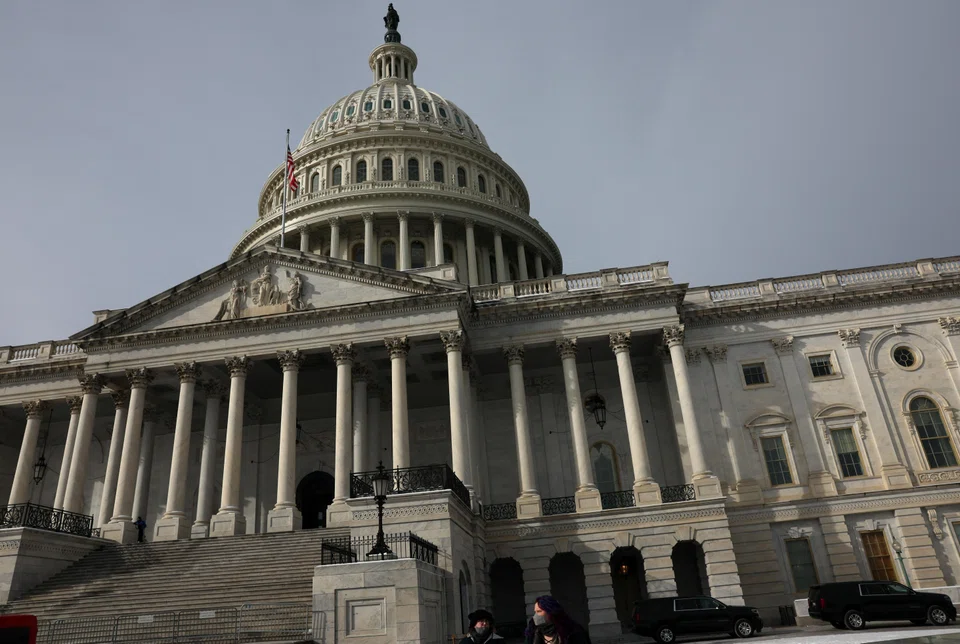
FUNDING for more than half the government was on track to lapse early Saturday (Mar 23) morning in what was expected to be a brief partial shutdown over the weekend, after Republican senators refused to allow quick passage of a US$1.2 trillion spending bill that the House approved earlier Friday.
A partial government shutdown would cap an extraordinary day on Capitol Hill that began with a big bipartisan vote to speed the measure through the House, which set off a conservative revolt and prompted one Republican to threaten a bid to oust Speaker Mike Johnson, R-La., from his post.
The bipartisan legislation ran into similar resistance among Republicans in the Senate, where leaders haggled late into Friday evening over GOP (the Republican Party) demands to hold a series of politically charged votes on proposed changes. As a midnight deadline to fund the government drew closer, it appeared increasingly unlikely that the Senate would act in time to avert a funding lapse.
Lawmakers were expected to resolve their differences in time for a final vote Sunday, and federal budget officials have signaled that a brief weekend funding disruption would not have much impact. But the delay underscored the difficulties that have plagued spending negotiations from the beginning, and was a fitting coda to an excruciating set of talks that are on track to fund the government six months behind schedule.
Earlier Friday, in a 286-134 vote that came down to the wire in the House as leaders scrounged for the two-thirds majority needed for passage, Democrats rallied to provide the support to overcome a furious swell of opposition by conservative Republicans.
Infuriated by the bipartisan spending agreement, the hard right balked, and as the vote was still ongoing, Rep. Marjorie Taylor Greene, R-Ga., began the process of calling for a vote to oust Johnson.



Navigate Asia in
a new global order
Get the insights delivered to your inbox.
The bill’s passage came at a steep political price for Johnson, who was forced to violate an unwritten but sacrosanct rule among House Republicans that Greene alluded to against bringing up legislation that cannot draw support from a majority of their members. Just 101 Republicans, fewer than half, supported it.
That left it to Democrats to again supply the bulk of the votes to push the bill through the House. NYT
Decoding Asia newsletter: your guide to navigating Asia in a new global order. Sign up here to get Decoding Asia newsletter. Delivered to your inbox. Free.
Copyright SPH Media. All rights reserved.
TRENDING NOW

Middle East-linked energy supply shocks put Asean Power Grid back in focus

US-China rivalry and the Kindleberger Trap: Why inaction – not escalation – is the biggest risk

As more Asean states turn to Russia for fuel, will Moscow boost its influence in the region?

How China’s young workers are securing their future even as AI disrupts job market, triggers pay cuts

