US House Speaker McCarthy pitches budget cuts for debt limit vote
 Add BT as a preferred source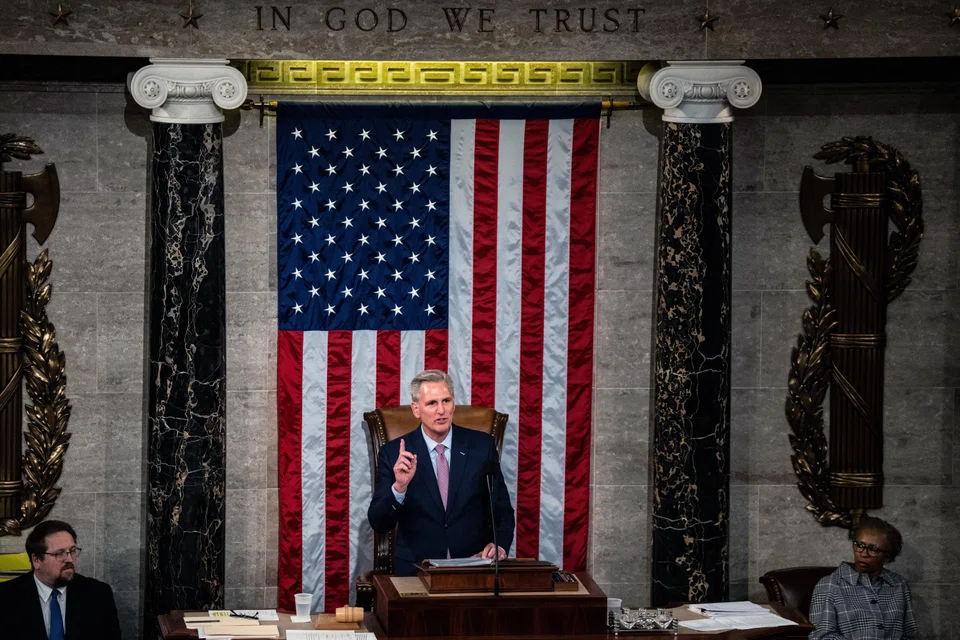
US House of Representatives Speaker Kevin McCarthy on Monday (Apr 17) outlined a federal spending-cut plan being sought by his fellow Republicans with ideas already floated and rejected by Democrats, and warning that these conditions must be attached to an urgently needed increase in the government’s debt ceiling.
His speech comes as the federal government ticks closer to the moment sometime this summer when it will no longer be able to meet its financial obligations. Without action by the divided Congress, that would trigger a historic default that would shake the US and world economies.
President Joe Biden’s Democrats, who also control the Senate, have been at loggerheads with Republicans for months over next steps on the limit, with the White House insisting Congress lift the borrowing limit without conditions, as it did three times under Biden’s Republican predecessor, Donald Trump.
The United States faces a possible default on its debt payments sometime this summer without legislation to increase the current US$31.4 trillion borrowing limit.
McCarthy, the top US Republican, said in remarks to the New York Stock Exchange that he will bring a vote to the House floor “in coming weeks” on a Bill that will lift the debt ceiling to an unspecified date next year.
But he added that “a no-strings attached debt limit increase will not pass” the House. He added that he will seek to roll back federal spending on many programmes to fiscal 2022 levels, followed by spending growth of only 1 per cent each year over the next decade.
“We are seeing in real time the effects of reckless government spending,” McCarthy said in his opening remarks.
Portraying a US economy suffering from high inflation, rising interest rates, supply-chain shortages and problems in the banking industry, McCarthy added, “We must change course before it is too late.”
Before the speech, White House spokesperson Andrew Bates said, “There is one responsible solution to the debt limit: addressing it promptly, without brinksmanship or hostage taking – as Republicans did three times in the last administration.”
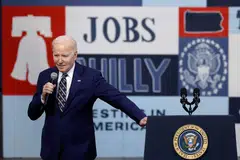
Democrats also have been insisting that McCarthy lay out a specific budget plan.
“A speech isn’t a plan,” Bates said.
McCarthy leads a fractious caucus that holds a narrow 222-213 majority, including a sizeable contingent of hardline members who want sharp spending cuts and dismiss the risks of failure to act on the debt ceiling. So far House Republicans have not produced a proposed budget of their own, a move that Biden contends would be a necessary starting point for negotiations on spending.
The White House last month proposed its own budget, which it said would cut the nation’s deficit by nearly US$3 trillion over 10 years, though it relied on increases in taxes on businesses and the wealthy, rather than spending cuts, to do so.
The nonpartisan Congressional Budget Office last month laid out a range of options to address the debt, which showed that higher tax collections would have significantly more impact than spending cuts.
The cuts McCarthy is proposing would not touch the main drivers of the debt Republicans complain about – the Social Security and Medicare retirement and healthcare programmes that are projected to nearly double in cost over the next 10 years, according to the CBO.
The closer Congress gets to the “X-date” when the federal government will no longer be able to pay its bills, the more nervous investors will become about the economic outlook. The last prolonged standoff over the debt ceiling, in 2011, led to a historic cut in the US government’s credit rating, which rattled markets and raised borrowing costs. REUTERS
Decoding Asia newsletter: your guide to navigating Asia in a new global order. Sign up here to get Decoding Asia newsletter. Delivered to your inbox. Free.
Share with us your feedback on BT's products and services